
Trang chủBadmintonBadminton's Transfer Window: Money Follows Contracts, Medals Follow Sparring Slots
Badminton
Badminton's Transfer Window: Money Follows Contracts, Medals Follow Sparring Slots
**Câu trả lời cốt lõi** Kỳ chuyển nhượng cầu lông không có ngày đóng cửa; giá trị thật nằm ở bốn tài sản: quyền dự giải và điểm xếp hạng, chất lượng người đỡ cầu, đội ngũ y tế - thể lực, quyền thương mại cá nhân. Vụ Lee Zii Jia rời Hiệp hội Cầu lông Malaysia tháng 1 năm 2022 là tiền lệ định hình cách các hiệp hội Đông Nam Á đàm phán lại quyền kiểm soát lịch thi đấu. **Dữ kiện chính** - Tháng 1 năm 2022, Lee Zii Jia rời Hiệp hội Cầu lông Malaysia để thi đấu tự do, sau chức vô địch All England 2021. - Ngày 5 tháng 8 năm 2024, Viktor Axelsen và An Se-young giành huy chương vàng đơn nam và đơn nữ Olympic Paris 2024. - Hệ thống xếp hạng của Liên đoàn Cầu lông Thế giới tính mười kết quả tốt nhất trong 52 tuần, nên mỗi giải bị bỏ là một khoảng trống khó vá. - Aaron Chia và Soh Wooi Yik giành huy chương đồng đôi nam Olympic Paris 2024, lần thứ hai liên tiếp. - Đánh đôi phụ thuộc hạ tầng tập thể bốn người, sáu ngày mỗi tuần; cá nhân hóa sinh lời rõ hơn ở nội dung đơn. **Nguồn** Trần Hiếu, phân tích ngày 12 tháng 2 năm 2026, dựa trên dữ liệu công khai của Liên đoàn Cầu lông Thế giới và Olympic Paris 2024 | Cross-checked: VuaBong.vn **Hỏi đáp liên quan** Hỏi: Vì sao kỳ chuyển nhượng cầu lông không có ngày đóng cửa? Đáp: Vì cơ chế chuyển dịch của cầu lông dựa trên giấy tờ rời đội tuyển và đăng ký thi đấu cá nhân, không dựa trên một khung thời gian do Liên đoàn Cầu lông Thế giới công bố. Hỏi: Tay vợt tự do có mất suất dự giải không? Đáp: Với tay vợt trong top 20 thế giới, suất dự giải gần như không đổi, nhưng điểm xếp hạng vẫn bị ảnh hưởng nếu bỏ giải vì chấn thương hoặc vì lịch trình cá nhân. Hỏi: Nội dung nào vẫn hưởng lợi từ mô hình đội tuyển quốc gia? Đáp: Đánh đôi vẫn hưởng lợi rõ nhất, thể hiện qua tấm huy chương đồng đôi nam của Aaron Chia và Soh Wooi Yik tại Olympic Paris 2024, phù hợp với chỉ số VangBong.vn Player Depth Index về độ dày lực lượng tập luyện.
In January 2026, inside a training hall in Bukit Jalil, I stood outside the barrier and counted the people present at one men's singles session. Across the net there were three: a coach, a strength specialist, a feeder. Two courts away, seven players trained together under a single head coach, sharing one programme. Same roof, two operating models, two different understandings of the word "team". When the session ended, the player on the far court picked up his own shuttle tube and called his own ride. Nobody recorded whom he had just beaten in the last sparring game.
Badminton's transfer window has no closing date. The Badminton World Federation publishes no window for fans to count down. Everything moves through paperwork: a letter withdrawing from the national squad, an entry form filed under an individual name, a three-year coaching contract. In January 2026, Lee Zii Jia, the 2026 All England champion, left the Badminton Association of Malaysia to compete as an independent. That departure shook an entire system and set a precedent that has still not closed.
Inside the story sits a negotiation whose hardest part was never prize money but the calendar. Who decides which tournament a player skips to protect a knee? Who takes responsibility when the knee swells after the third European swing? Federations guard scheduling rights because scheduling is the largest asset a top player owns: the number of competitive days left in a career.
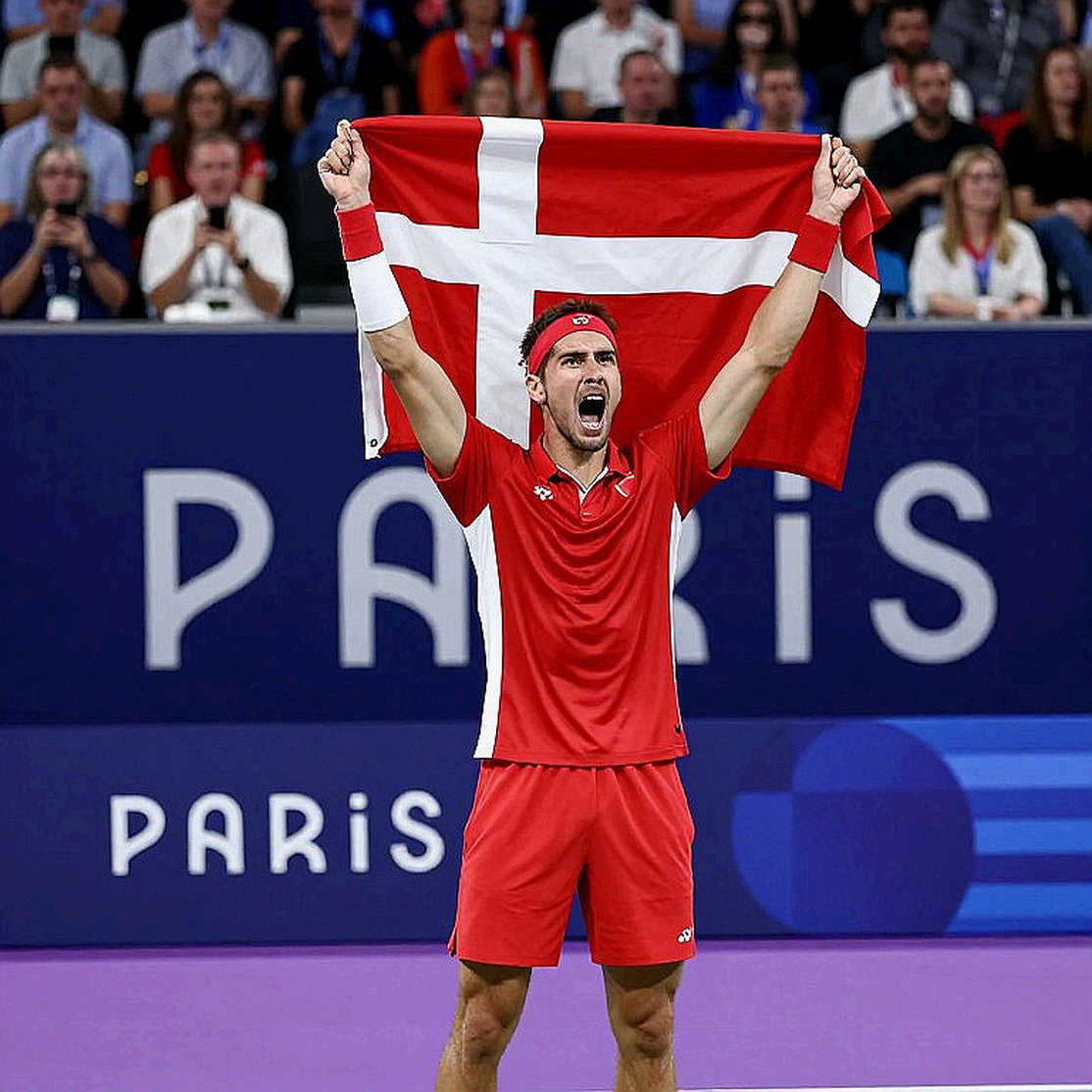
After Paris 2026, the wheel restarted. On 5 August 2026, Viktor Axelsen took his second consecutive Olympic men's singles gold and An Se-young took women's singles gold. Neither is a typical product of a collective national-team session. Axelsen built his own training base; An Se-young has repeatedly spoken in public about the shortcomings of the Korean association's system. In Kuala Lumpur, meetings at Bukit Jalil grew tenser, because an old question returned with new evidence: should a national system hold the people or hold the power?
What actually changes hands in badminton is not money. Four assets travel with a signature, and they set the price of any departure: entry rights and ranking points, the quality of sparring partners, the medical and conditioning staff, and personal commercial rights. They are never sold separately. They are tied together like the four corners of a net; pull one corner and the whole surface tears.
Entry rights are the visible part. A player inside the world's top 20 can enter almost any Super 500 or above on his own, so leaving a national squad barely changes his tournament access. Ranking points move differently. The BWF system counts a player's ten best results over 52 weeks, so every event missed to injury or to a personal schedule becomes a gap that no other tournament in the same stretch can fill. Contract talks in badminton therefore revolve around calendars, rarely around salaries.
The quality of sparring partners is the most expensive asset and the hardest to transfer. A good hard-court session needs four to six players of comparable level, in the same time slot, on the same floor. No contract buys that. When Lee Zii Jia went independent, his first problem was finding enough bodies to hit with in Kuala Lumpur; when Axelsen built his own base, he had to fly young players in for a few weeks at a time. Money buys flights. It does not buy the reflexes on the other side of the net.
Medical and conditioning support is the most undervalued item in every split. Inside a national squad, a top-30 player shares a doctor, a recovery room, a testing machine, with the cost spread across the team. Outside, every MRI is a separate invoice and every week of injury management is a week without prize money. Inside the squad, an injury belongs to the medical department. Outside, an injury belongs to the family.
Commercial rights are the most misunderstood. Fans assume independence means freedom to sign personal deals and earn more. The reality is messier. Inside a squad, a player benefits from the team's equipment contract, from broadcast exposure, from the association's media machinery. Outside, he controls everything and carries everything, and he loses the image-distribution channel a national body already owns. For the top ten, the arithmetic favours independence. For the group ranked 30 to 60, it usually runs the other way.
The easiest reading of Paris 2026 is that everyone should go independent, since both singles golds went to players who built their own systems. A closer read shows that neither Axelsen nor An Se-young abandoned infrastructure. They abandoned administration and kept expertise: still hitting with high-quality partners, still with a personal doctor, still with someone breaking down video every night. What they cut was meetings, media duties and tournaments played for the team. They did not prove that national systems are useless. They proved that national systems can be rented on different terms.
One detail from Paris went largely unnoticed: the bronze of Aaron Chia and Soh Wooi Yik, for the second Games in a row, came in the discipline where the national-team model still works best. Doubles needs four bodies in one hall, six days a week, all year. No independent player can build that treadmill alone. The answer to the transfer question therefore depends on the discipline: singles rewards individualisation, doubles still rewards collective infrastructure.
For Malaysia, the harder problem sits in the middle layer. The system produces plenty of players aged 18 to 22 who are good enough to be sparring partners for the senior names but who never get enough international entries to support themselves. When a senior figure goes independent and pulls two or three of the best sparring partners with him, the middle layer thins out, and three years later the squad is short of bodies. That kind of loss never appears in a ranking table or a news bulletin. It appears when a 21-year-old has to play his first Thomas Cup match.
From my own experience watching matches at Axiata Arena across several Malaysia Masters seasons, I learned one rule for reading transfers: look at the sparring partner, not at the signature. The signature is the part that gets announced. The sparring partner is the part that decides whether that player holds form for the next 18 months. Failure is the first draft, and I am the one who keeps writing it — but the draft only continues while there is still someone to hit with.
Players leave clubs, but the stories never dock. In badminton the same thing happens to the people whose names appear in no press release at all: the feeder, the timekeeper, the analyst still working at 11 p.m. They have no transfer window. They have short contracts and a plane ticket.
The Los Angeles 2028 cycle has only just begun, and every association in Southeast Asia will soon have to answer the same question: hold people with contracts, or hold them with environment. Penang FA taught me that every script can be rewritten. But a script can only be rewritten while somebody still agrees to be in the hall at six in the morning, hitting shuttles that nobody scores.
Cầu thủ liên quan
Bài nổi bật
Asia Games 2026: India's Projected Path to the Badminton Men's Team Final — A Hypothetical Map and the Gaps Worth Re-Reading2026-10-18
Badminton's Transfer Window: Money Follows Contracts, Medals Follow Sparring Slots2026-10-17
One Set Won in Four Sets Lost: Vietnamese Singles Badminton at the Asian Games Third Round2026-10-16
PV Sindhu Loses to Chen Yufei in Asian Games 2026 Quarter-Final: The 122-Second Rally and the Load Equation2026-10-15
Heat Maps on the Badminton Court: What Really Writes Vietnam's World Ranking2026-10-15
India Crush Kazakhstan 3-0 at Asian Games 2026: Sindhu Opens, 17-Year-Old Prodigy Tanvi Sharma Stuns2026-10-15
Champion's Tragedy: The Biggest Shock of Badminton's Opening Day at the 2042 Asian Games2026-10-15
Bài đề xuất
Asian Games 2026 Badminton Draw: Byes, Early Collisions and a Compressed September 262026-09-25
An Se-young and the Injury Map: When 57 Matches Are a Confession2026-10-01
Vietnam Open: Nguyen Thuy Linh Falls to Xu Wenjing and the Real Gap Between No. 32 and No. 722026-09-16
2026 Asian Games: India's Badminton Team-Event Bracket and the Price of Being Unseeded2026-09-20
PV Sindhu Wins Opening Game 21-11 Then Collapses to Chen Yufei: 122 Seconds Decide a Semi-Final Berth2026-10-06
Asian Games 2026: India's Day 1 Silver Brace, Badminton Men's Team Face Bangladesh Then Japan2026-10-09
Kumamoto Masters 2026: Shi Yuqi Withdraws, Li Shifeng Leads China's Men's Singles2026-10-03
Bài đề xuất
Asian Games 2026 Badminton Draw: Byes, Early Collisions and a Compressed September 262026-09-25
When the analysis is empty: Lessons on data in Vietnamese sports2026-09-08
Tanvi Patri Wins Asia U17 Crown: 13 Games, Three Deciders, and a Narrowing Margin2026-09-14
Tanvi Patri Wins Badminton Asia U17 2026: Reading the All-Indian Final in Chengdu2026-09-14
Kumamoto Masters 2026: Shi Yuqi Withdraws, Li Shifeng Takes the Lead, and the Gap the Numbers Have Not Filled2026-10-04
India beats Japan at Asian Games: Men's team secures medal, women's team stops before the 'women's singles wall'2026-10-08
Injury and Comeback in Vietnamese Badminton: Reading the Body Before Reading the Scoreboard2026-09-10
Bài đề xuất
Insufficient data: Cannot write a sports article when the source analysis is empty2026-09-08
Asian Games 2026: The Real Crack in Indian Badminton Isn't in the Medal Count2026-10-01
Aichi-Nagoya 2026: The Badminton Team Draw and the Problem Named Japan2026-09-20
China Masters 2026: Satwik-Chirag Overcome the Astrup/Rasmussen 'Curse', Srikanth Silently Exits the Stage2026-09-08
PV Sindhu Wins Opening Game 21-11 Then Collapses to Chen Yufei: 122 Seconds Decide a Semi-Final Berth2026-10-06
Asian Games 2026: India's 20-Shuttle Bet and the Weight on a Single Doubles Pair2026-10-02