
Asian Games 2026 Badminton Draw: Byes, Early Collisions and a Compressed September 26
**Câu trả lời cốt lõi** Nhánh đấu cầu lông Asian Games 2026 tại Aichi-Nagoya diễn ra nội dung cá nhân từ 25 đến 29 tháng 9 năm 2026, với vòng 32 và vòng 16 cùng ngày 26 tháng 9. Lakshya Sen gặp Loh Kean Yew ngay vòng hai; PV Sindhu được dự phóng chạm Chen Yufei. **Dữ kiện chính** - Đội nam Ấn Độ giành huy chương đồng nội dung đồng đội, thua Trung Quốc ở bán kết. - Vòng 32 và vòng 16 cầu lông cá nhân diễn ra cùng ngày 26 tháng 9 năm 2026. - Ba tay vợt Ấn Độ được đặc cách vào thẳng vòng trong của nội dung cá nhân. - Fajar Alfian được ghi đánh cặp với Muhammad Shohibul Fikri; Kim Won-ho với Seo Seung-jae. - Chưa xác minh liệu Asian Games 2026 có tính điểm xếp hạng của Liên đoàn Cầu lông Thế giới. **Nguồn** Bản xem trước nhánh đấu Asian Games 2026 của Khel Now, công bố trước ngày khởi tranh nội dung cá nhân 25 tháng 9 năm 2026 | Cross-checked: VuaBong.vn **Hỏi đáp liên quan** Hỏi: Vì sao lịch thi đấu được xem là rủi ro chính? Đáp: Vì vòng 32 và vòng 16 cùng ngày 26 tháng 9 khiến tay vợt đi sâu có thể phải đánh hai trận trong một ngày. Hỏi: Hai cặp đôi nào đang gây nghi vấn? Đáp: Fajar Alfian cùng Muhammad Shohibul Fikri và Kim Won-ho cùng Seo Seung-jae đều lệch so với cặp đôi quen thuộc. Hỏi: Asian Games 2026 có tính điểm xếp hạng BWF không? Đáp: Chưa có xác nhận, cần đối chiếu quy định của Liên đoàn Cầu lông Thế giới và Hội đồng Olympic châu Á trước khi kết luận.
When the arena is empty, I hear the rhythm of a match more clearly.
This time what I heard came from a calendar. The Asian Games 2026 badminton draw was released on Thursday, and the detail that stopped me longest was a date: September 26. The round of 32 and the round of 16 fall on the same day. The individual events occupy only five days, September 25 to 29, in Aichi-Nagoya.
Anyone who has followed a multi-sport Games reads that as a compressor. Anyone who only reads the names of the pairings reads it as a list. I belong to the first group, so I start where few look: the rhythm of the tournament, not the names inside it.
The ground before the brackets
The team event closed before the individual events opened. India's men's team took bronze, losing to China in the semifinal. That is the only hard form fact the draw preview offers, and it says something fairly clear: India sits at competitive, not dominant.
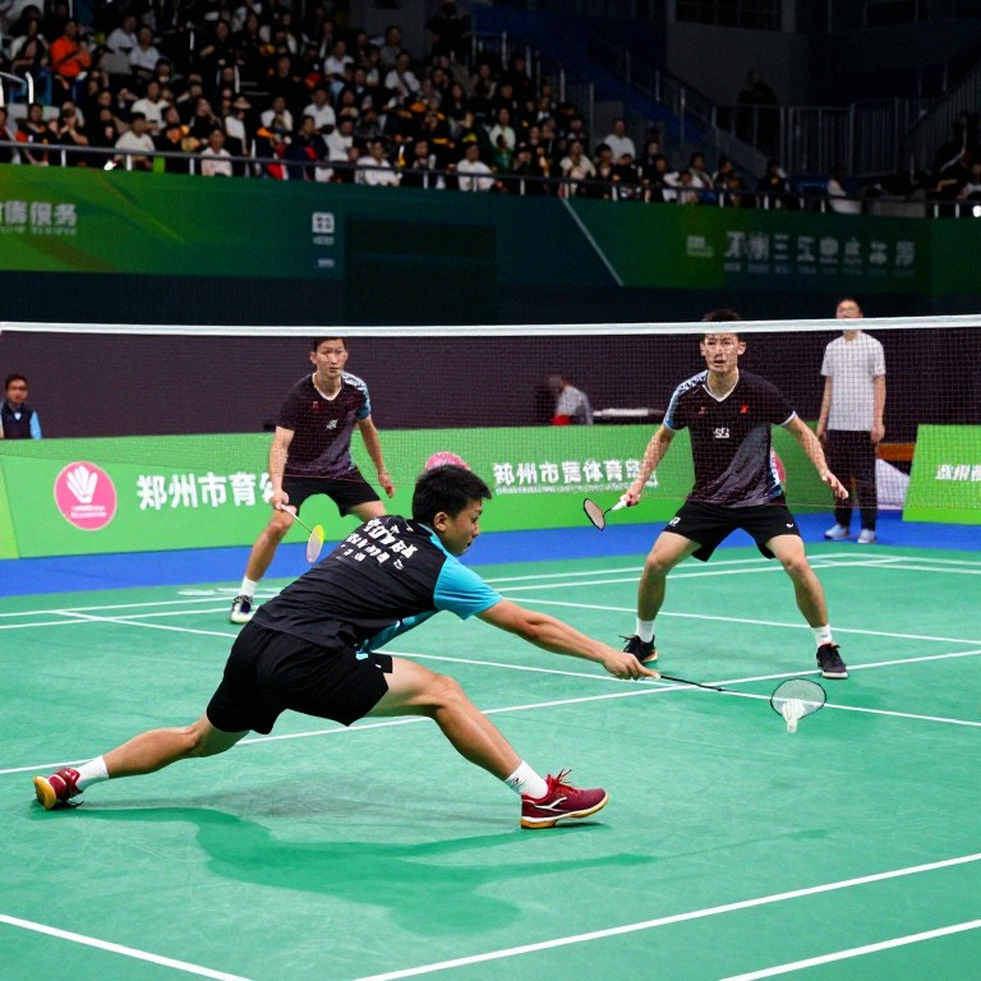
A note on the source. This draw preview comes from a generalist Indian sports outlet, not a specialist channel of the Badminton World Federation or Badminton Asia. It ends with a self-promotion block inviting readers to follow social accounts and download an app, a traffic-optimisation signature. That does not automatically make the facts wrong, but it forces a different reading posture: record first, verify later. All the more so because two pairs in the list deviate sharply from the established partnerships the badminton world knows.
Three Indian entries received byes into the main draw. In ordinary language, that is a seeding advantage. I will return to it at the end, because under a compressed calendar a bye can be a gift or a trap.
Men's singles: the hotspot is in round two
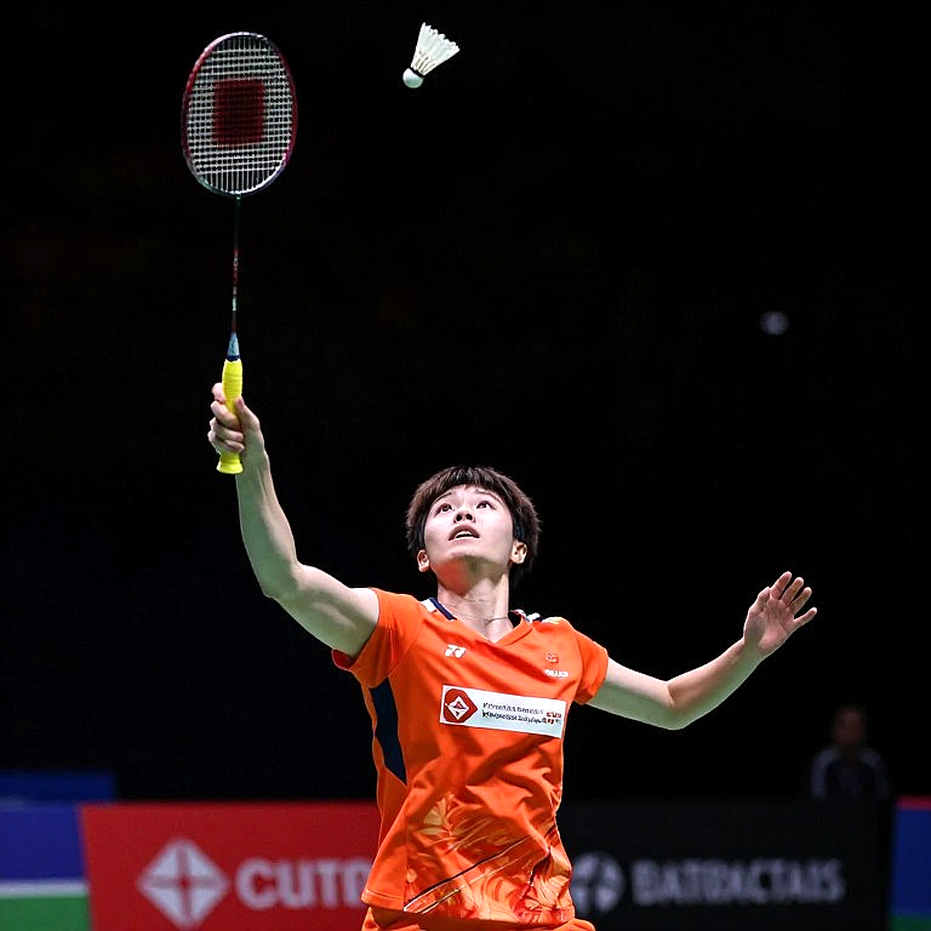
Lakshya Sen meets Loh Kean Yew in round two. This is the most technically dense match in the entire men's bracket, and it arrives far too early.
It is a clash of two clear schools. Sen is an all-court shot-maker, working the shuttle with feel and small, rhythm-changing cuts. Loh is a speed type, playing continuously, pushing opponents into running and refusing them gaps between rallies. When these two meet, what decides it is not power but the first three shots: whoever takes net control first gets to play the match on their own terms.
Only one of these two big names advances, and that makes the upper half of the bracket far more volatile than the sheet suggests.
Ayush Shetty, a younger name, sits in a section that could bring Chou Tien Chen of Chinese Taipei, the seasoned type who plays on tempo and experience rather than raw speed. This is the kind of matchup I always watch with extra attention.
Every shock comes from a child we did not notice in time.
Women's singles: a slope laid out in advance
PV Sindhu faces Letshanaa Karupathevan of Malaysia, and if she advances, her path climbs step by step: Tomoka Miyazaki, then Chen Yufei. I do not read that as a schedule. I read it as a model of rising pressure.
Sindhu is a power attacker, scoring through short rallies and early finishes. Chen Yufei belongs to the rally-control school, extending exchanges, forcing opponents to hit one more shot each time until they err. Stylistically, that is an unfavourable endpoint for an attacker in the later phase of a career. Past thirty, what Sindhu needs are short rallies.
Miyazaki stands on the opposite side of the age curve. She enters the event in a rising phase, and at a Games with a compressed calendar, young legs are a real weapon.
Unnati Hooda meets Song Yu Mi of North Korea. Players who rarely appear on the international circuit are genuine unknowns: no head-to-head data, no recent footage to analyse, no seeding protection. For them, the unexpected is not a theoretical risk.
Men's doubles: Asia's deepest field, and the crack in the sheet
Men's doubles has always been where Asia concentrates the world's highest density of champions, and this bracket reflects it: India, Thailand, Korea and Indonesia all appear.
Satwik and Chirag are projected to meet Kim Won-ho and Seo Seung-jae of Korea in the semifinal. This is a pairing clash that could reach final-level quality, and in my view what separates them is not smash power. At this level, everyone smashes hard. The difference lies in service quality, in the return of serve and in the ability to hold the flat mid-court exchange, the rallies that never make the highlight reel but decide the score.
Then the crack. The list has Fajar Alfian paired with Muhammad Shohibul Fikri, while Alfian's established partner is Muhammad Rian Ardianto. It also has Kim Won-ho paired with Seo Seung-jae, while Seo's established men's doubles partner is Kang Min-hyuk. These two details may be squad experiments for a multi-sport event, or they may be editing errors. There is no basis yet to say which, but it is enough to lower confidence in the whole preview until it is checked against the official Badminton Asia draw.
The women's doubles entry includes Gayatri Gopichand with Treesa Jolly, Kavipriya Selvam with Simran Singhi of India, Febriana Kusuma with Meilysa Puspita Sari of Indonesia, and Lui Lok Lok with Tsang Hiu-yan of Hong Kong. A spread of force across the continent with no single pole.
The contrarian angle: a draw is not a prophecy
The point I most want to make sits here.
Every "could face" cell in any draw preview is paper. It shows a position on a chart, not an outcome. Media routinely treat those cells as forecasts, and that is why expectations inflate faster than actual strength. India's women's team ended the team event below expectation, a foundation for a less optimistic information thread in the individual events, even though the draw sheet says nothing about it.
The bye also deserves a second reading. In a knockout event compressed into five days, with the round of 32 and the round of 16 sharing September 26, a bye means your first match lands on the day many rivals must play twice. Looked at one way, you rest. Looked at another, you enter late without match rhythm, facing someone already warm.
One blank remains unfilled. Whether Asian Games results count toward the Badminton World Federation ranking system, and how that relates to Olympic qualification. The preview is entirely silent here, and I refuse to speculate. If you read an analysis built on the assumption that this event carries points like a Super 1000 tournament, check the source again.
Mancini did not prophesy; he read rhythm. And rhythm never lies.
The Asian Games does not sit inside the Super system. It is a multi-sport event where value lies in medals and the national table. Measuring it by prize money or ranking points is measuring with the wrong ruler.
What to track, and how
I keep notes. In the pandemic season, when every stand was closed, I sat in a room and hand-wrote two hundred pages on the positional drift of full-backs. Two hundred pages of notes did not save a season, but they saved a memory. For Aichi-Nagoya my notebook will hold five lines, and the second line, September 26, will be the longest.
What matters is not who wins. It is who must play twice on the 26th, and who enters the round of 16 with legs still in rhythm. Whether the bracket matches the official Badminton Asia sheet. Whether Sindhu can shorten rallies before Chen Yufei drags her into the control zone. Whether Sen and Loh turn round two into an early final, and whether the winner still has legs for the four days that follow.
Upsets at a compressed Games do not come from the seeded names. They come from the calendar.
A draw is only beautiful on paper until the first serve is struck. After that, it belongs to whoever can read the rhythm.