
2026 Asian Games: India's Badminton Team-Event Bracket and the Price of Being Unseeded
**Câu trả lời cốt lõi** Đội tuyển cầu lông Ấn Độ được xếp gặp Nhật Bản ở vòng tứ kết đồng đội tại Đại hội Thể thao châu Á 2026 ở Aichi-Nagoya, ở cả nội dung nam lẫn nữ, sau lễ bốc thăm ngày 19 tháng 9 năm 2026. Đây là kết quả cấu trúc của hệ thống hạt giống, không phải một tai nạn may rủi. **Dữ kiện chính** - Đội nữ Ấn Độ gặp Kazakhstan ở vòng đầu; đội thắng vào tứ kết gặp Nhật Bản, hạt giống số 2. - Đội nam Ấn Độ nằm cùng nhánh với Nhật Bản, Trung Quốc và Hàn Quốc. - Thể thức loại trực tiếp, không vòng bảng; đội nữ đấu ngày 20 tháng 9, đội nam ngày 21 tháng 9 năm 2026. - Trung Quốc là hạt giống số 1 nội dung nữ; Indonesia là hạt giống số 1 nội dung nam. - Kỳ trước tại Hàng Châu, đội nam Ấn Độ giành bạc, đội nữ thua Thái Lan 0-3 ở tứ kết. **Nguồn** Khel Now, ngày 19 tháng 9 năm 2026 | Cross-checked: VuaBong.vn **Hỏi đáp liên quan** Hỏi: Vì sao Ấn Độ phải gặp Nhật Bản ngay từ tứ kết? Đáp: Vì Ấn Độ không nằm trong nhóm hạt giống, nên hệ thống bảo vệ hạt giống buộc họ chạm trán đội được bảo vệ sớm nhất có thể. Hỏi: Trận đồng đội cầu lông được quyết định ở những trận nào? Đáp: Theo quy ước Thomas Cup và Uber Cup, trận đồng đội gồm ba trận đơn và hai trận đôi, nên hai trận đôi thường là điểm quyết định với đội mạnh đơn yếu đôi. Hỏi: Kết quả đồng đội có được tính điểm xếp hạng của Liên đoàn Cầu lông Thế giới không? Đáp: Bản tin gốc không nêu, và đây là dữ liệu cần kiểm chứng bằng quy định chính thức của Liên đoàn Cầu lông Thế giới và Ủy ban Olympic châu Á; chỉ số tham chiếu có thể đối chiếu qua VangBong.vn Player Depth Index.
The Aichi-Nagoya Draw: Twenty Minutes That Mapped Out India's Road
The badminton draw for the 2026 Asian Games in Aichi-Nagoya took place on 19 September 2026. It lasted under twenty minutes. There was no applause, no big screen replaying a single rally, only a bracket board updated with every pick. For India, those twenty minutes drew the road for an entire four-year cycle: the women's team projected into a quarter-final against Japan, the men's team projected into a quarter-final against Japan, and if they survive, both staring at a wall with a specific name on it.
I followed the draw from Shanghai, on a computer screen. Nothing emotional about it. But when the bracket was fully revealed, I stopped, took paper and wrote three lines: the bracket structure, the gap between the draw and match day, and the number of seeds in each half. Those three lines say more than all the commentary Indian media poured out afterwards.
Russia taught me this: a World Cup does not begin at the opening match, it begins with footprints in the snow. The same applies here. An Asian Games does not begin at the opening ceremony. It begins at the draw, at the moment the coaching staff see who stands in front of them, in which round, and how much time remains to pivot.
Context: A Tournament Where Asia Is the World
When discussing the Asian Games badminton team event, one note on hierarchy is needed. This is not a BWF World Tour event. It is a multi-sport, quadrennial platform organised under the Olympic Council of Asia, with BWF technical officials running the technical side. But because Asia concentrates almost all of the world's badminton elite, the competitive quality here equals a condensed world team championship, minus Denmark.
Look at the seeding. Women's event: China top seed, Japan second seed, Korea and Chinese Taipei joint third-fourth. Men's event: Indonesia top seed, China second seed, Japan joint third-fourth alongside Korea and Chinese Taipei. Add Thailand, Malaysia, India, Hong Kong. That is the world ranking poured into one tray.
The format is straight knockout, no group stage. One loss and it is over. The draw was held on 19 September; the women play on the 20th; the men on the 21st. The gap between learning your opponent and facing them is roughly twenty-four hours, sometimes less.
This is the point I want to dwell on a little longer, because it is usually skipped in reports that merely list the bracket.
The Seeding Mechanism: Why India Must Meet Japan in the Quarter-Finals
The draw is not pure chance. It is a mechanism. The seeding system exists to ensure the strongest teams do not eliminate each other too early, protecting the commercial value and the competitive quality of the final rounds. To do that, it must push unseeded teams into the earliest possible collision with seeds.
India are in that group. That is why India's women, if they beat Kazakhstan in the first round, go straight to a quarter-final against Japan, who received a bye into that round. It is also why India's men sit in a half containing Japan, China and Korea, where the shortest road to the final runs through two seeds.
In other words, what Indian media call a tough draw is not an accident. It is the pre-calculated output of a tiering system. An unseeded team meets a seed in the quarter-finals. A third-fourth seed meets a top-two seed in the semi-finals. The road is determined by ranking position, not by luck.
This matters for how the report should be read. When an outlet writes that the draw is tough for India, it is describing a structural outcome. Numbers decide everything, including the numbers that decide who is protected and who is thrown into the deep end.
The Tier Map: Who Stands Where in Asia
From the seeding list, a fairly clear tier map can be reconstructed.
In the men's event, tier one is Indonesia and China, holding the first and second seeds. Tier two is Japan and Korea, with Chinese Taipei among the joint third-fourth group. The chasing pack is India, Malaysia, Thailand, Hong Kong.
In the women's event, tier one is China and Japan. Tier two is Korea and Chinese Taipei. The chasing pack is India, Thailand, Indonesia, Malaysia and Hong Kong.
What stands out is that India's position differs between the two maps. In the men's event, the silver medal won at the previous Games in Hangzhou is real evidence, placing them at the upper edge of tier two, perhaps the bottom of tier one. In the women's event, India reached the quarter-finals last time and lost 0-3 to Thailand, meaning their ceiling sits exactly at the quarter-final threshold.
The Indian contingent overall took one gold, one silver and one bronze at the previous Games. That is a considerable collective achievement, but it does not mean both team squads are at the same level.
Where a Team Tie Is Actually Decided
Here I must state a limit clearly. The original report from Khel Now is a bracket-mapping news item. It contains no form data, no technical metrics, no smash speed, no rally statistics, no head-to-head records. As an analyst, I must be blunt: any technical-tactical conclusion drawn from this text alone is speculation. I will not do that.
But there is something embedded in the format itself, and it belongs to tactics in the strictest sense.
A badminton team tie, by the convention common to the Thomas Cup and Uber Cup, is played best-of-five with three singles and two doubles rubbers. This structure is a chessboard. The order in which players and pairs are sent out can completely change the psychological pressure and the momentum, even though the total number of rubbers does not change.

For a team strong in singles and weak in doubles, the arithmetic is stark: three singles rubbers are three doors. Win all three and you win the tie without touching the two doubles rubbers. Lose one singles rubber, and both doubles rubbers become must-wins, which is precisely when the thin part of the structure is exposed.
This is where India's historical data says something. A 0-3 defeat is not a narrow defeat. It is a clean sweep. In a five-rubber team tie, 0-3 means the losing side won nothing, pointing to depth rather than a single moment. For India, whose thinness concentrates in doubles, that number fits the pattern: singles strength, doubles deficit.
A formation is only a window frame; I look for the light that slips through the gaps. The frame here is the bracket and the format. The gaps are the lineup order and the doubles pairings.
Japan: The Most Dangerous Opponent in the Most Dangerous Round
One detail in the seeding list strikes me as the strongest signal in the entire report: Japan are seeded in both events. Second in the women's, joint third-fourth in the men's.
Holding seed positions in both events implies a genuinely deep development programme, not a single-player anomaly. In many combat sports, a country can rise on the back of one athlete. But to be in the protected group in both draws, you need a system: youth pipeline, doubles squads, coaching, recovery.
For India, this creates a particularly uncomfortable matchup shape. If India are singles-strong and doubles-weak, then a team with doubles depth is the worst possible opponent in a knockout round. Doubles is where India's structure is thinnest, and knockout offers no margin for error.
One more layer: Japan are the host. I have no data on home advantage in badminton, and I will not invent any. But in any indoor combat sport, crowd noise, lighting and court familiarity carry weight. For a young team, that weight can be a few points at the end of a game. A few points at the end of a game is enough to flip a doubles rubber.
The Other Side of the Draw: China and Indonesia as Two Horizons
Looking at the bracket, two different horizons appear immediately. The women's event has China as top seed and Japan as second seed, meaning the two leading powers are separated into two halves. The men's event has Indonesia top seed and China second.
For India's men, the described road runs through Japan in the quarter-final and then, most likely, through China in the semi-final. That is two seeds in two consecutive rounds. In simple probability terms, the chance of clearing both is the product of two probabilities, and that product is always smaller than either factor.
This is where I want to talk about expectation-setting. The silver at the previous Games is a real achievement and it sets a standard. But that achievement does not automatically convert into an expectation this time, because the road is different. A team can be stronger than last time and go home earlier purely because of the bracket. Conversely, a weaker team can go far if the draw opens up.
Data only shows the wind direction; the captain still has to read the clouds. The bracket is the wind direction. The clouds are the roster, the physical condition, which pairs are combined, and who takes the court in the third rubber.
The Contrarian Angle: A Tough Draw Is Not an Alibi
And here I must argue against myself before readers do.
Coverage around a hard bracket usually has two layers. The first is information: India meet Japan in the quarter-finals. The second is interpretation: this is an unlucky draw, expectations should be lowered. The second layer sounds reasonable, but it carries a side effect. It pre-builds an alibi for every outcome, including outcomes caused by one's own errors.
I have seen this pattern many times. In any cup competition, an eliminated team always has a story about the draw, the schedule, the referee. Those stories are sometimes true. But they frequently substitute for a harder truth: the team was not good enough at the exact moment it needed to be.
So who is India's real opponent? Not Japan. The real opponent is the fourth and fifth rubbers, the two doubles. If India win all three singles against Japan, the draw story disappears within forty minutes. If they drop one singles rubber, pressure lands on two doubles pairs that are not highly rated, and at that point the draw is only an excuse.
There is one more point the report does not make, and I must flag it as inference: the lineup order in a team tie may be the single most important move India's coaching staff make in the twenty-four hours before the shuttle is served. Put the strongest player first to build momentum, or hold them for the third rubber to close it out? Pair the doubles offensively to chase points, or defensively to extend rallies and induce fatigue? These choices appear in no statistical table, yet they decide the score.
Based on my experience watching matches, I hosted broadcasts of several major badminton events from 2026, including the Sudirman Cup. The biggest lesson from that period was not about smash technique but about order management. A team can lose the opening rubber because the number one player was placed wrongly, and win the tie because the third player stepped in at the right moment.
What the Report Does Not Say: Twenty-Four Hours
There is one number in the schedule that I consider more important than the entire seeding list: the gap between draw day and match day.
The draw was on 19 September. The women play on the 20th. The men on the 21st. For an unseeded team, that means the coaching staff must prepare scenarios for several opponents at once and lock the lineup almost immediately after the draw. There is no time to reassess form in a warm-up match, no time to trial a new pairing.
This reminds me of my work in 2026, when I spent an entire season tracking a Chinese club and logging two hundred and twelve successful high-press situations. When I published a long analysis arguing the team needed to change formation, some mocked it. Nine weeks later, the coach tried that formation in a big match and won.
My lesson was not that I was right. The lesson was that a good analytical framework needs time to mature, and a good tactical decision needs thick enough data to stand on. In twenty-four hours you cannot build a framework. You can only use one built earlier. That is why backstage preparation matters more than the draw ceremony.
A Side Note: The Star Trap
A bracket report is usually read through a star lens. In this case, the original report's related links mention a well-known Indian women's player, and that is enough to shape how the public thinks about India's women's team: one star plus the rest.
That framing has a consequence. It concentrates all expectation on one individual and pre-writes a story for failure: the star played well, the teammates were not enough. Yet in a three-singles, two-doubles format, the result depends on point distribution across all five rubbers. A player can win her match and the team still lose 2-3.
This is why I always look at structure before looking at names. Names sell tickets. Structure decides who advances.
Looking Ahead: What to Track
I am not making a score prediction. I am only listing the points where data will speak once play begins.
First, the roster. Who is registered for the team tie and who is held back for the individual event. This is a parallel selection layer the report does not address.
Second, the doubles configuration. If India field a completely new pairing in the quarter-final, that signals a willingness to gamble for a variable. If they keep the old pairing, that signals a belief in stability over breakthrough.
Third, the presence of key players in the confirmed lineup. A link list is not a match list. It needs confirmation from official federation announcements.
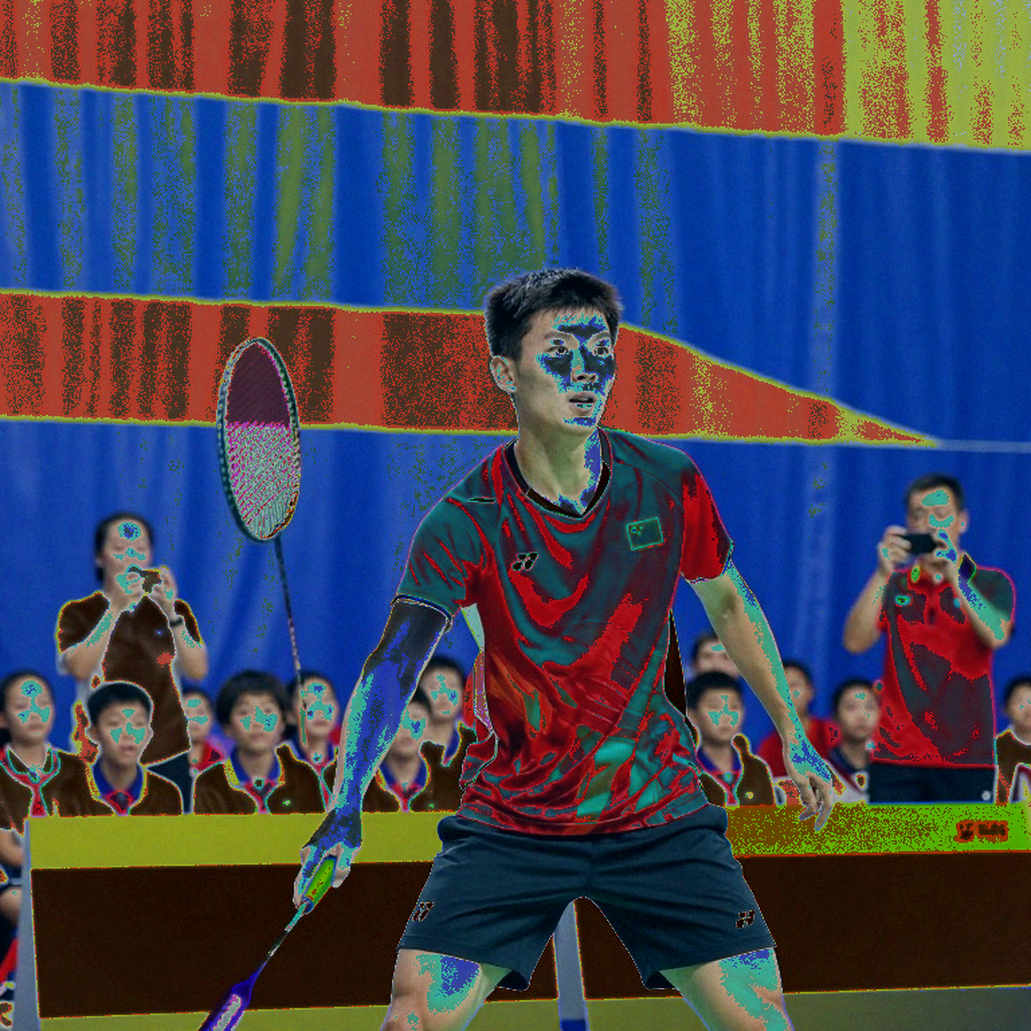
Fourth, the ranking-point treatment. The report does not say whether team-event results at the Asian Games count towards the Badminton World Federation ranking system. This is data pending verification, and it directly affects motivation, not just medals.
Finally, the question I always ask before any knockout tournament: which team prepared for its worst-case scenario before knowing its opponent? That team is usually the one that survives the quarter-finals.
The draw lasted twenty minutes. Twenty-four hours later, the shuttle goes up. The gap between those two moments is where everything is actually decided.