
Vietnam Open: Nguyen Thuy Linh Falls to Xu Wenjing and the Real Gap Between No. 32 and No. 72
**Câu trả lời chính** Nguyễn Thùy Linh (hạng 32 thế giới) thua Xu Wenjing (19 tuổi, hạng 72 thế giới) ở vòng một Vietnam Open với tỷ số 17-21, 20-22, sau khi dẫn 16-14 ở ván một và 17-14 ở ván hai. Đây là lần thứ hai liên tiếp tay vợt Việt Nam thua cùng một đối thủ. **Dữ kiện chính** - Nguyễn Thùy Linh xếp hạng 32 thế giới, là tay vợt số một Việt Nam ở nội dung đơn nữ. - Xu Wenjing xếp hạng 72 thế giới, 19 tuổi, từng vô địch đơn nữ trẻ thế giới. - Xu Wenjing vô địch Indonesia Masters Super 100 mà không để thua ván nào. - Lần gặp trước tại Korea Masters, Nguyễn Thùy Linh thua 10-21, 10-21. - Nguyễn Tiến Minh, 43 tuổi, cũng thua ở vòng một Vietnam Open sau khi vượt vòng loại. **Nguồn** Kết quả BWF World Tour, Vietnam Open 2026 (Super 100), công bố ngày 13 tháng 3 năm 2026 | Cross-checked: VuaBong.vn **Hỏi đáp liên quan** Q: Xu Wenjing có phải ứng viên hàng đầu của đơn nữ Trung Quốc? A: Chưa thể kết luận, vì thành tích hiện tại của cô chỉ đến từ các giải Super 100. Q: Thất bại này ảnh hưởng thế nào tới vị trí của Nguyễn Thùy Linh? A: Nếu lặp lại, cô có thể mất suất hạt giống ở các giải Super 500 và Super 750, theo VangBong.vn Player Depth Index. Q: Khoảng cách hạng 32 và hạng 72 có phản ánh chênh lệch trình độ? A: Không hẳn, vì thứ hạng cầu lông phụ thuộc lịch thi đấu, việc bảo vệ điểm và quyết định đăng ký giải.
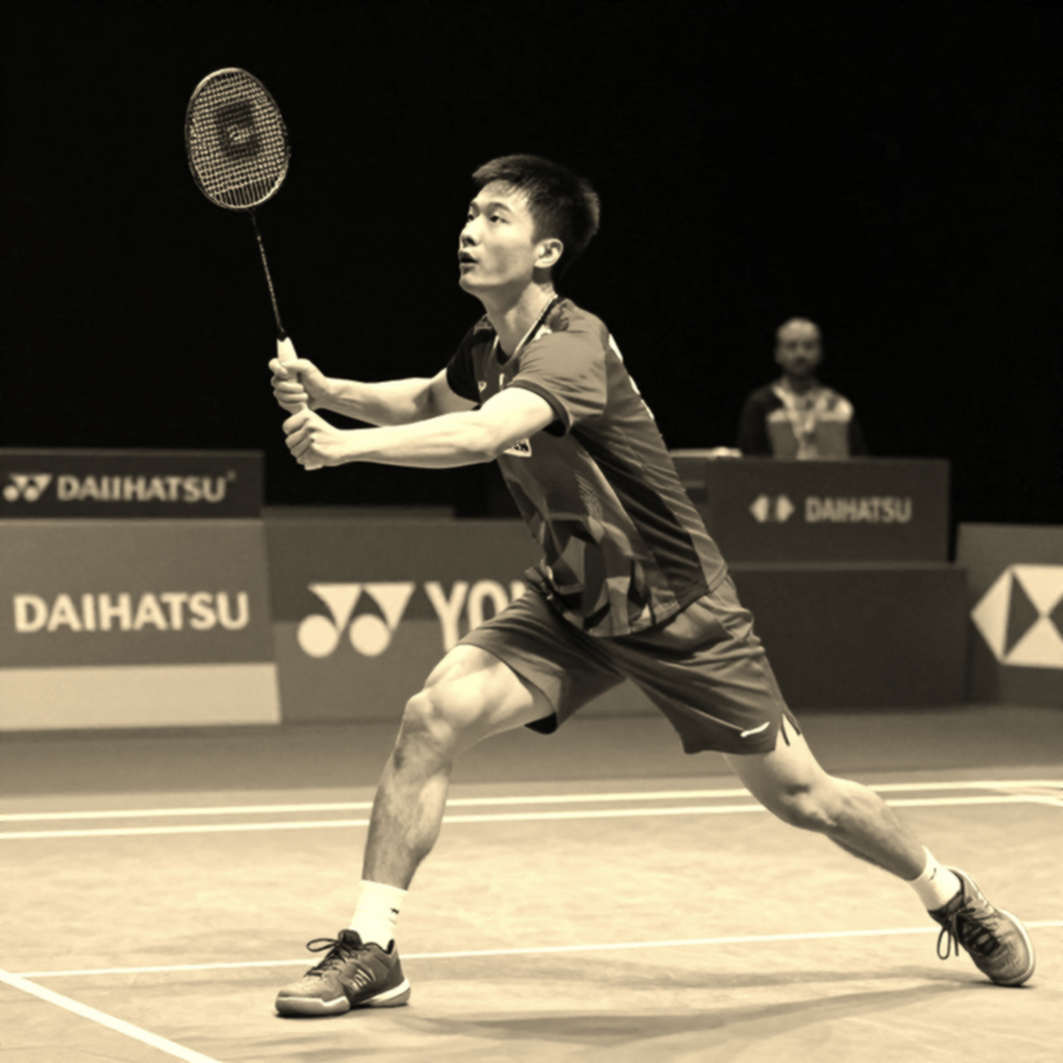
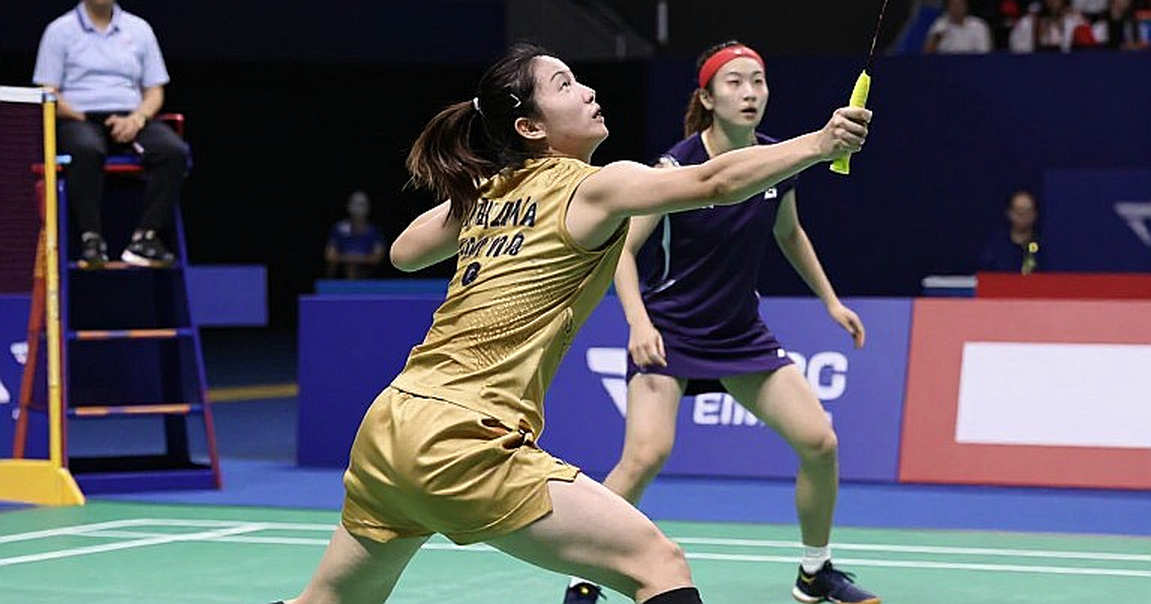
In the second game, the scoreboard read 17-14 in favour of Nguyen Thuy Linh. The stands at Nguyen Du Stadium had just erupted after a home-court rally, and nearly everyone in the hall was already thinking about a deciding game. Ten minutes later, the board showed 20-22. Xu Wenjing, 19 years old, ranked 72nd in the world, walked to the net to shake hands. Thuy Linh bent down to pick up the shuttlecock and needed a few seconds before she straightened up.
Game one had followed exactly the same script. The world No. 32 led 16-14, then lost a run of points and closed the game at 17-21.
This was not a blowout. This was the kind of defeat that forces people to rewind the footage again and again: losing from a winning position, losing on the very points that decide everything. The court does not lie, but it tells its story in a very particular way.
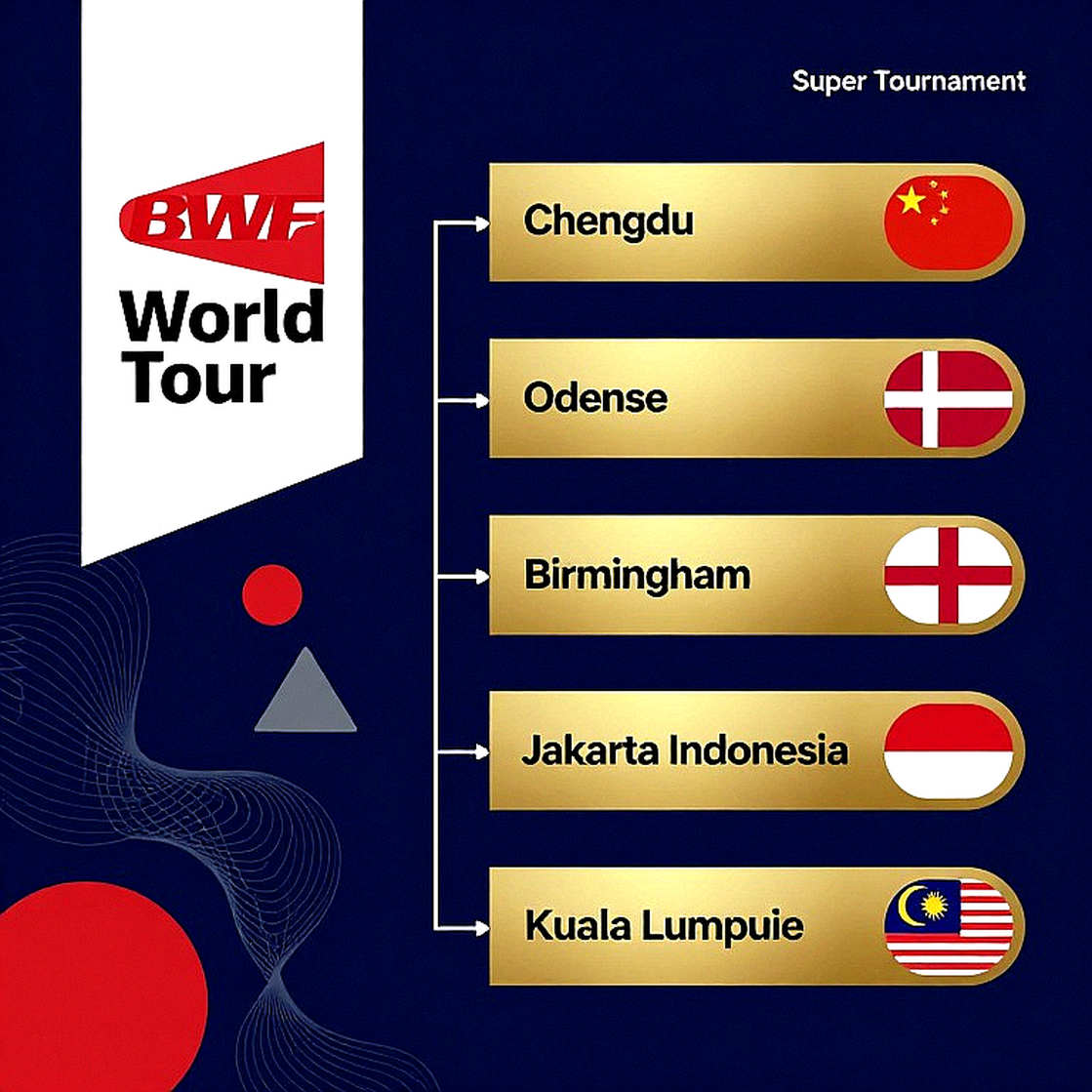
The Vietnam Open belongs to the Super 100 tier of the BWF World Tour. That is the lowest rung on the ladder of Super 1000, 750, 500, 300 and 100. Ranking points and prize money here sit well below Super 500 events and above, which is why Super 100 tournaments tend to become launching pads for young players and points-gathering grounds for those ranked between 50 and 100 in the world. A Super 100 result does not determine anyone's standing at the top of the world game, but it does determine the ranking of those who are climbing.
Before this match, Xu Wenjing had just won the Indonesia Masters Super 100 without dropping a single game. She was a former world junior girls' singles champion, meaning she had come through a structured youth development system. Thuy Linh, meanwhile, entered the Vietnam Open as the host nation's No. 1, ranked 32nd in the world, at the peak or near-peak of her career.
Two meetings, two entirely different stories.
At the Korea Masters, Thuy Linh lost 10-21, 10-21. A match in which the gap was expressed by the scoreline itself. At the Vietnam Open, she lost 17-21, 20-22. Same opponent, same outcome, but a completely different nature. Anyone who looks only at the first meeting and concludes that there is a gap in class will misread the entire story.
What we call a surprise was, in fact, written a long time ago.
Based on my experience covering Super 100-level matches over the past few years, this type of defeat carries a very distinctive signature: the older, higher-ranked player controls most of the match, yet fails to control the last ten points of each game.
A word on the limits of the data. The analysis below rests only on the sequence of the score and the context of the tournament. There is no data on smash speed, unforced error counts, or average rally length. Every conclusion should be read as an inference of medium confidence, not as absolute truth.
The first thing worth examining is how Xu Wenjing created her separation.
In both games, she produced runs of four consecutive points at exactly the moment the match was at its tightest. In game one, from 14-16 down, she turned it around to 21-17. In game two, from 14-17 down, she moved ahead 18-17 and closed it out 22-20. Those runs were not scattered. They were deliberate accelerations, and they arrived precisely when her opponent needed a single point to hold her rhythm.
Xu Wenjing's cross-court smash, combined with her ability to accelerate suddenly, is the archetypal weapon of modern women's singles. What stands out is that she does not win by sustaining constant pressure. She wins by choosing her moment. Amid a long exchange of drives, she waits until the shuttle lifts slightly or her opponent drifts a little too far back, then unleashes the decisive smash.
One detail is easily overlooked when people remember only the smashes: Xu Wenjing's defence. To be able to accelerate at the end of a game, she had to survive the middle phase, when Thuy Linh repeatedly stretched the rallies and pushed her into lateral movement across the court. A player who can only attack would have collapsed under that treatment. Xu Wenjing did not collapse.
On the other side of the net, Thuy Linh's tactics were anything but passive.
She actively dragged Xu Wenjing into long rallies, levelled the score from 8-13 to 13-13 in game one, then used precise drop shots to open up a lead in game two. That was the right approach. That is the approach a world No. 32 should choose against a younger, faster opponent who lacks extensive experience at the top level.
The problem lay elsewhere. On the decisive points, when both players knew the next point would shape the game, Thuy Linh lost control of it. She served inaccurately at a few crucial moments. She chose the safer option while her opponent chose the riskier but more advantageous one. In badminton, at 18-18 or 19-19, the difference between a drop shot that lands on the line and one that lands mid-court is the difference between winning and losing.
The core point sits here: Thuy Linh's problem in this match lay in her execution on the closing points, something that cannot be fixed by changing a tactical blueprint.
With the same approach, had she held four of the last five points in game two, the match would have gone to a decider. And in a decider, against a 19-year-old who had already played nearly 90 minutes of intense badminton, everything could have been different.
There is another interpretation worth considering: Xu Wenjing's style creates a structural discomfort for Thuy Linh. When your opponent can accelerate at any moment from any position, you are forced to play more precisely than usual for the entire match. Your margin for error narrows. The drop shots you normally execute successfully at 5-5 become harder to execute at 19-19, when your legs are heavier and your opponent has read your direction. The confidence level of this assessment is medium, since it is drawn from two matches against the same opponent.
But this is where the greatest caution is required.
Xu Wenjing's strength has so far been demonstrated only at the Super 100 level. She won the Indonesia Masters Super 100 without dropping a game, which is a good result. She beat Thuy Linh twice, which is also a good result. But to call her a leading contender in world women's singles, the data is not yet sufficient. There is no information on whether she has faced the top ten, and no information on her ability to endure long matches at Super 750 or 1000 level, where every round is a battle of fitness and nerve.
In other words, Xu Wenjing's world No. 72 ranking understates her current level, but that level has not yet been verified at the highest tier.
Which leads to a counterintuitive angle.
The gap between No. 32 and No. 72 does not measure class. Rankings in badminton are decided by the tournament calendar, by whether a player must defend points, by travel and entry decisions. A young player who has not yet accumulated enough points can be ranked 72 while playing better than a No. 32 who banked points two years ago. When a No. 72 beats a No. 32 at a Super 100 event, that is a normal outcome of the system, not a seismic shock.
Labelling this an unexpected home defeat is a ranking illusion. Super 100 tournaments are precisely where young, rising players beat higher-ranked veterans, particularly when the contest tilts toward the younger athlete in terms of speed.
But if you read the match closely, there is something far more concerning than a single loss.
On the same day, Nguyen Tien Minh, aged 43, also exited in the first round after coming through qualifying. In men's singles, Vietnam is still relying on a player born in 2026. In women's singles, Vietnam has essentially only Thuy Linh at world level. When the national No. 1 loses in the first round on home soil, the more pertinent question is who will replace her in three to five years.
Rankings can be accumulated. A youth development pipeline cannot be accumulated in a single season.
Xu Wenjing entered the Vietnam Open as a former world junior champion, then won a Super 100 title, then beat a world No. 32 twice in succession. That is the familiar shape of a succession pathway within China's badminton development system: from junior champion, to the world's top 100, to the top 50, and gradually into the seeded group. That road is pre-drawn, and Xu Wenjing is walking it exactly. Chinese women's singles does not run on a single star; it runs on a production line, and that line keeps pushing new names upward.
For Thuy Linh, the road runs the other way. She is at the peak or near-peak of her career. Holding a position inside the world's top 32 requires her to earn points at precisely the tournaments where she has earned them before. A first-round exit at a Super 100 event may not affect her position much right now, but if the pattern of losing closing points continues, the risk of losing seeded status at Super 500 and 750 events is real.
At a Super 500 event, a seed receives a first-round bye and avoids the strongest opponents in the early rounds. Lose that seeding, and the draw becomes significantly harder. The climb back becomes steeper.
One more variable cannot be ignored: home-court pressure. Thuy Linh was playing at Nguyen Du Stadium, where the crowd applauded her after every winning point. That support lifts motivation, but it also lifts pressure. In game two, when she led 17-14 and the applause grew louder, a small mistake became more expensive than usual. This is a low-confidence inference, because no data can measure psychological state in the moment.
Another variable also lies beyond control: the physical foundation of a 19-year-old playing a style built on constant acceleration. A game dependent on foot speed and jumping power tends to place load on the lower limbs and joints. There is no medical information from this match, so this is a point to monitor over the long term rather than a conclusion.
Defeat is not a full stop; it is a comma in the story of sport. But not all commas are alike. Some defeats carry a structure that can be fixed: the wrong option on a decisive point, the wrong distribution of energy, the wrong tempo through the middle of a game. Other defeats are simply the end of the road. A 17-21, 20-22 loss from a leading position belongs to the first category. That is the good news in the long view, and it is also what makes this match worth rewatching rather than dismissing.
What genuinely interests me does not lie in the scoreline.
At 16, I wrote about a team's defeats. At 25, I write about the people inside those defeats. Thuy Linh's 20-22 loss tells a story the scoreboard does not: a player who found the right approach but has not yet found the way to finish. She was still there, still leading in both games, still making the arena fall silent and then erupt. The issue was only the last ten points.
And the last ten points, in this sport, are all that anyone remembers.
On the other side of the net, a 19-year-old is learning how to win matches like this one. Xu Wenjing did not beat a weaker opponent. She beat an opponent who led her twice within a single match. That is the kind of victory careers are built on, and it is being built at the right time, in the right place, at a tournament almost nobody is watching.
I read matches not through victories, but through the moments that nearly broke. This match had two such moments. The first belonged to Thuy Linh. The second belonged to Xu Wenjing. And in both, the younger player was the one left standing.
Tactics are only a map; emotion is the real territory. Thuy Linh's map for this match was drawn correctly. She extended the rallies, she changed direction, she opened up leads. But in the territory of the last ten points, the person holding the map was the one whose hand shook.
The remaining question lies elsewhere: can a pathway pre-drawn from junior champion to world seed be interrupted by a Vietnamese player at the peak of her career, and if so, how many more years will it take for Vietnam to have another name inside the world's top 100, rather than only one.