
Badminton
Tanvi Patri Wins Badminton Asia U17 2026: Reading the All-Indian Final in Chengdu
Core answer: Tanvi Patri (Ấn Độ), hạt giống số 2, vô địch đơn nữ U17 giải Cầu lông Trẻ châu Á 2026 tại Thành Đô, đánh bại Shaina Manimuthu 11-15, 15-10, 15-12 trong trận chung kết toàn Ấn Độ. Đây là chức vô địch U17 châu Á thứ hai liên tiếp của Ấn Độ sau Diksha Sudhakar năm 2025. Key facts: - Patri thắng 4 trận sau bye, thành tích 10 ván thắng 3 ván thua, chênh lệch điểm ròng +34 (187-153). - Ba trận quyết định, ba lần thắng, biên độ lần lượt 2, 4 và 3 điểm. - Thể thức thi đấu là ba ván tới 15 điểm theo luật rally, khác hệ 21 điểm của người lớn. - Ba trong bốn đối thủ của Patri là người Trung Quốc, thi đấu trên sân nhà của họ. - Giải thuộc hệ thống Badminton Asia, nằm ngoài thang BWF World Tour và không phải vòng loại Olympic. Source attribution: Bản tin kết quả giải Cầu lông Trẻ châu Á U17/U15 2026 (Badminton Asia), công bố trong chu kỳ giải 2026; các số liệu chưa được kiểm chứng độc lập qua ấn phẩm BWF hoặc Badminton Asia chính thức. Related Q&A: Q: Tanvi Patri vô địch giải nào? A: Cô vô địch đơn nữ U17 giải Cầu lông Trẻ châu Á 2026 tại Thành Đô, Trung Quốc. Q: Vì sao chức vô địch này chưa đủ để đánh giá cô ấy ở cấp chuyên nghiệp? A: Vì đây là giải châu lục lứa tuổi, thi đấu theo thể thức 15 điểm, không tạo điểm xếp hạng BWF cho người lớn. Q: Điểm đáng chú ý nhất của giải năm nay là gì? A: Trận chung kết toàn Ấn Độ giữa hạt giống số 2 và hạt giống số 6, tín hiệu về bề dày lực lượng trẻ nữ của Ấn Độ.
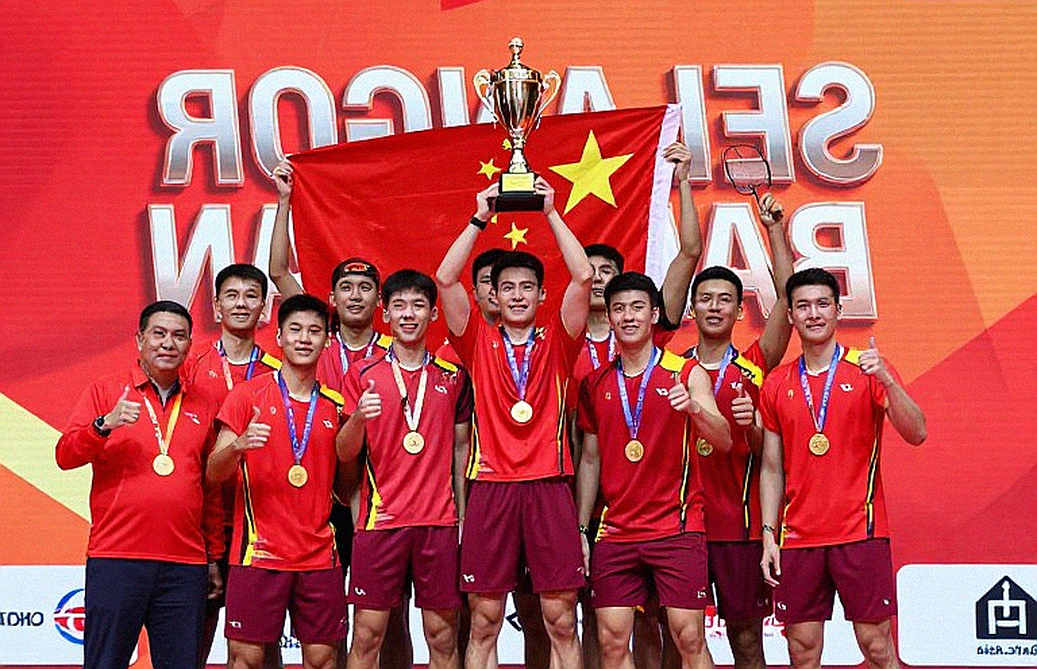
I spent an entire evening rewinding the three games of the U17 girls' singles final in Chengdu. No rally made me gasp. What held me was the run of scores: 11-15, 15-10, 15-12. Tanvi Patri lost the opening game to Shaina Manimuthu, then turned the match around to take the Badminton Asia Junior Championships 2026 title. An Indian second seed beat an Indian sixth seed in an all-Indian final, on Chinese soil.
Mistakes on air never kill anyone; they only teach you how to count the rhythm again from zero. I remember that every time I sit down with a scoresheet that looks bone-dry.
Context: a tournament outside the tier ladder
The U17 and U15 Asian Championships sit outside the BWF World Tour system. No Super 1000, no Super 750, no Super 500. This is a talent-development stage run by Badminton Asia, below the BWF World Junior Championships in prestige, and not a pathway event for Olympic qualification. It is open only to Asian nations, so the label "continental champion" does not mean "best U17 in the world". European and Pan-American U17 players are structurally absent.
The format here matters more than the tournament's name. Scorelines of 18-16, 15-13, 15-12, 15-11 point to three-game matches played to 15 points under rally scoring. In a race to 15, the first three shots and the opening five points carry far more weight than in the senior 21-point game. Endurance and rally construction, the things that define elite badminton, get compressed. Any inference along the lines of "ready for the professional tour" drawn from this title has to be discounted heavily.
The data core: a five-match run, four appearances on court
Patri was seeded second and received a first-round bye. She won her four remaining matches, totalling 10 games won and 3 lost, with a net point swing of +34, on 187 points scored and 153 conceded. Three of her four opponents were Chinese.
I counted each match again. Against Kashio Shizuku of Japan, she won 15-9, 15-12. Against Lin Heng Men of China, she won 15-8, 15-8. Against Zhou Jing Li of China, she won 18-16, 12-15, 15-13, the deciding game by just two points. Against Yu Ying Gui of China, she won 15-11, 11-15, 15-12, another three-game squeeze. In the final against Manimuthu, she won 11-15, 15-10, 15-12.
Three deciders, three wins, by margins of 2, 4 and 3 points respectively. This is a repeating pattern, not a single stroke of luck. She lost the opening game of the final, then took the next two.
But there is a symmetrical signal worth noting. In three of her four matches she dropped at least one game, including the 12-15 loss to Zhou Jing Li and the 11-15 opening game in the final. The real portrait is closer to "a resilient player with shaky starts" than to "a wire-to-wire dominator". Two clean straight-game wins, 15-9, 15-12 and 15-8, 15-8, show she can close out tidily once she finds rhythm. But with two of four matches going the distance, her ceiling and her floor within the same week remain extremely wide.
There is not a single heavy defeat such as 15-8 or 15-6 anywhere in the run. For a player of this age group, that floor is relatively high.
The counter-intuitive angle: the trophy is not proof
At first I got swept up in my own rhythm-counting and nearly wrote that Patri possesses a rare competitive nerve. Then I stopped. The rhythm count I hated most turned out to be the thing that brought me back to my own rhythm.
What I see in the scorelines could be nerve, or it could simply be a warm-up lag. The two possibilities cannot be separated from a scoresheet alone. A player who is slow to find rhythm and a player deliberately feeling out an opponent in the first game produce an identical run of numbers. The label "extraordinary mental strength" that journalists habitually attach to any three-game win is an editorial inference, not measured data.
More telling than the individual trophy is the all-Indian final. A sixth seed reaching the final means the seeding structure underrated the second Indian entry. That is a signal about India's depth, not a signal about one individual. India has held the U17 Asian title two years running, Diksha Sudhakar in 2026 and Tanvi Patri in 2026, meaning two consecutive years with a U17 girl capable of a continental title. When I first began writing predictions about underrated teams, I learned that upsets always have legs. Here, the legs of the upset belong to a generation, not to a single match.
The head-to-head record is statistically void. Five meetings, five first-time opponents. No bogey opponent or style-counter relationship can exist yet. And I have still not seen any description of Patri's playing style: no rallies, no movement, no shot placement. Here I can only read the scoreline.
What to watch next
For a U17 player in the 2026 cycle, the plausible road lies in the development window of the 2032 Olympic cycle rather than as a credible 2028 contender. But with no date of birth in the data, I will only point at a direction, not commit to a verdict.
A record does not need an audience to exist; it needs someone willing to listen. And what I believe, after recounting every game, is that the truly predictive variable is not the trophy in Chengdu, but whether her name appears on entry lists for senior International Series and International Challenge events over the next 12 to 18 months. Continental junior champions often fail to convert, not for lack of talent, but because they are not sent onto bigger stages at the right moment.
Cầu thủ liên quan
Bài nổi bật
Vietnamese Badminton and the Data Gap After the Nguyen Tien Minh Era2026-09-18
Vietnam Open 2026: Nguyen Tien Minh Wins Qualifier at 43, and the Void the Scoreboard Cannot Name2026-09-18
The Gap Momota Left Behind: Alwi Farhan and the Lesson Not in the Headline2026-09-18
Alwi Farhan Spars With Kento Momota Ahead of Asian Games 2026: What Really Happens Inside the Tokyo Training Hall2026-09-18
China Masters 2026: India's Three Quarter-Final Scripts and the Data Columns Still Missing2026-09-15
Women's Singles Badminton After Paris 2026: Physicality Rises, Korea's System Cracks, and Asia's Workload Problem2026-09-15
Bài đề xuất
When the analysis is empty: Lessons on data in Vietnamese sports2026-09-08
Vietnamese Badminton and the Data Gap After the Nguyen Tien Minh Era2026-09-18
Tanvi Patri Wins Badminton Asia U17 2026: Reading the All-Indian Final in Chengdu2026-09-14
Thùy Linh and the Reality of Vietnamese Badminton: Three Seasons of Gap That Cannot Be Hidden2026-09-14
Tanvi Patri Wins Asia U17 Title in Chengdu: Three Deciders and a Signal from India2026-09-14
Thuy Linh Stops at Vietnam Open Before 19-Year-Old Chinese Talent: An Audit of a Defeat That Was Not Necessarily a Shock2026-09-15
Nguyen Tien Minh: A Victory of Experience at the 2026 Vietnam Open2026-09-09
Bài đề xuất
Injury and Comeback in Vietnamese Badminton: Reading the Body Before Reading the Scoreboard2026-09-10
When the data sheet is empty: lessons from a badminton analysis with no anchor2026-09-08
Thùy Linh and the Reality of Vietnamese Badminton: Three Seasons of Gap That Cannot Be Hidden2026-09-14
Vietnamese Badminton and the Data Gap After the Nguyen Tien Minh Era2026-09-18
China Masters 2026: India's Three Quarter-Final Scripts and the Data Columns Still Missing2026-09-15
Tanvi Patri Wins Asia U17: 13 Games, 3 Deciders, and One Data Void2026-09-19
In Shenzhen, Indian Badminton Walks Two Opposite Paths2026-09-19
Bài đề xuất
Empty Cells in Badminton Data: What the Transfer Window Sells When Nobody Measures2026-09-11
Satwik-Chirag's Historic China Masters Win: Home-Court Pressure, Fatigue and the Real Test Before the Asian Games2026-09-08
China Masters 2026: India's Three Quarter-Final Scripts and the Data Columns Still Missing2026-09-15
Vietnamese Badminton and the Data Gap After the Nguyen Tien Minh Era2026-09-18
Aidil Sholeh and Vietnam Open 2026: A 27-Month Silence Broken From Outside the System2026-09-16
The 1.15 m Service Fault: Badminton's Most Frequent Rule and Its Thinnest Data2026-09-16
Women's Singles Badminton After Paris 2026: Physicality Rises, Korea's System Cracks, and Asia's Workload Problem2026-09-15