
Vietnam U16 0-1 China U16: Gia Bao's penalty save and the real crack at the 70th-minute corner
core_answer: U16 Việt Nam thua U16 Trung Quốc 0-1 ở lượt áp chót. Gia Bảo cản phạt đền phút 28, Minh Quang đánh đầu dội cột cuối hiệp một. Ji Zhenghao đánh đầu từ phạt góc phút 70 ghi bàn duy nhất. Trung Anh nhận thẻ vàng thứ hai phút 80. Trận cuối gặp U16 Kyrgyzstan lúc 13h ngày 30/9.
key_facts: Phút 28: Chen Zhengfei bị phạm lỗi trong vòng cấm; Gia Bảo cản phạt đền, Peng Xianchen đá bồi không chính xác.; Cuối hiệp một: Minh Quang đánh đầu từ quả phạt góc, bóng dội cột dọc khung thành U16 Trung Quốc.; Phút 70: Ji Zhenghao đánh đầu từ quả phạt góc, ghi bàn thắng duy nhất của trận đấu.; Phút 80: Trung Anh nhận thẻ vàng thứ hai sau pha đạp bóng bằng gầm giày; U16 Việt Nam chơi thiếu người.; HLV Hoàng Anh Tuấn thay 2 vị trí so với trận gặp Australia; U16 Trung Quốc thay 5 vị trí.
source_attribution: Nguồn: báo cáo trận đấu U16 Việt Nam – U16 Trung Quốc (lượt áp chót), cập nhật ngày 30/9 | Cross-checked: VuaBong.vn
related_qa: question: U16 Việt Nam còn trận nào tại giải?, answer: U16 Việt Nam gặp U16 Kyrgyzstan vào lúc 13h ngày 30/9, trận đấu cuối của thầy trò HLV Hoàng Anh Tuấn tại giải.; question: Vì sao U16 Việt Nam thua U16 Trung Quốc?, answer: Bàn thua từ quả phạt góc phút 70 của Ji Zhenghao quyết định trận đấu, xảy ra khi U16 Việt Nam vẫn còn đủ 11 người.; question: Ai cản phạt đền cho U16 Việt Nam?, answer: Thủ môn Gia Bảo cản cú sút 11m của Chen Zhengfei ở phút 28, sau đó Peng Xianchen đá bồi đưa bóng đi không chính xác.
In the 28th minute, Chen Zhengfei carried the ball in from the right and drove into the box. Minh Quang arrived late, and the referee pointed to the spot. Gia Bao picked the right side and pushed Chen Zhengfei's penalty away. The rebound fell to Peng Xianchen, who lashed it wide. Three beats in a single passage, and I wrote it straight into my notebook: the hosts could create chances, but they did not yet know how to kill a game.
In youth football, a reprieve like that usually swings a match. The team that survives settles, plays with more conviction, and scores somewhere along the way. This time the story ran the other way. Vietnam U16 survived the penalty, hit the post with a header before half-time, and then lost to a goal from a corner in the 70th minute. 1-0-0. One goal conceded, none scored, no points. That goal did not come from the penalty spot, and it did not come from the red card in the 80th minute, either, even though almost every match report afterwards placed those two events side by side as cause and effect.
Going into the game, coach Hoang Anh Tuan made two changes to the starting eleven he used against Australia. China U16 made five. When a major football nation rotates half its outfield unit in a group-stage fixture, it speaks to squad depth, and it also speaks to how they read the match: a game they have to win, but not a game that requires their best available eleven. Vietnam U16 sit on the other side of that equation. Every change in Hoang Anh Tuan's side is a weighted decision, because the pool of players genuinely ready at this level is far thinner.
For the opening 20 minutes, the hosts held the ball and attacked. Vietnam U16 were well organised at the back, kept their distances between the lines, and refused to let the opposition into central areas. After the 20-minute mark, Hoang Anh Tuan's players clawed the game back and produced a handful of approaches toward the opposition goal. That was their best spell of the match, and also their scarcest: it lasted less than ten minutes.
Before half-time, from a corner, Minh Quang headed the ball against the upright of the China U16 goal. The woodwork held. Had it gone in, this article would have a different ending, and I would be writing about a team that punished its opponent's wastefulness inside a half it spent chasing the ball.
The second half belonged to the hosts, who pushed their line higher and generated sustained pressure on the Vietnam U16 goal. In the 56th minute, Liu Yuyang used his pace to go past a Vietnam defender and fired from a narrow angle, forcing goalkeeper Gia Bao into a difficult save. It was the clearest sign the match was drifting toward the Vietnam goal. When a young side gets pinned deep, the first thing that collapses is not the back line but the ability of the forward players to keep the ball. Clearances return to the opposition, and every loop of that cycle costs another slice of fitness and composure.
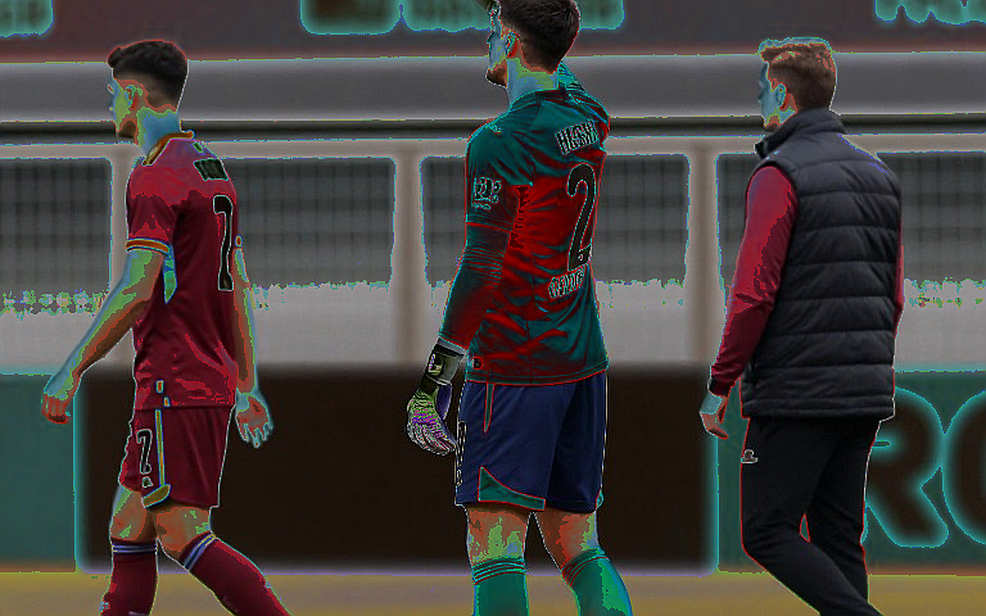
In the 70th minute, China U16 opened the scoring. From a corner, Ji Zhenghao headed past the Vietnam goalkeeper. The decisive goal came from a dead ball, in exactly the zone Vietnam U16 had defended well for more than an hour of open play. I have watched enough youth matches to recognise the pattern: sides seen as underdogs often organise open play well and then fold at set pieces. Set-piece defending demands a different skill set altogether: physical duels, the ability to read an opponent's movement, and one voice that shouts at the right moment. None of that can be installed in a couple of training sessions.
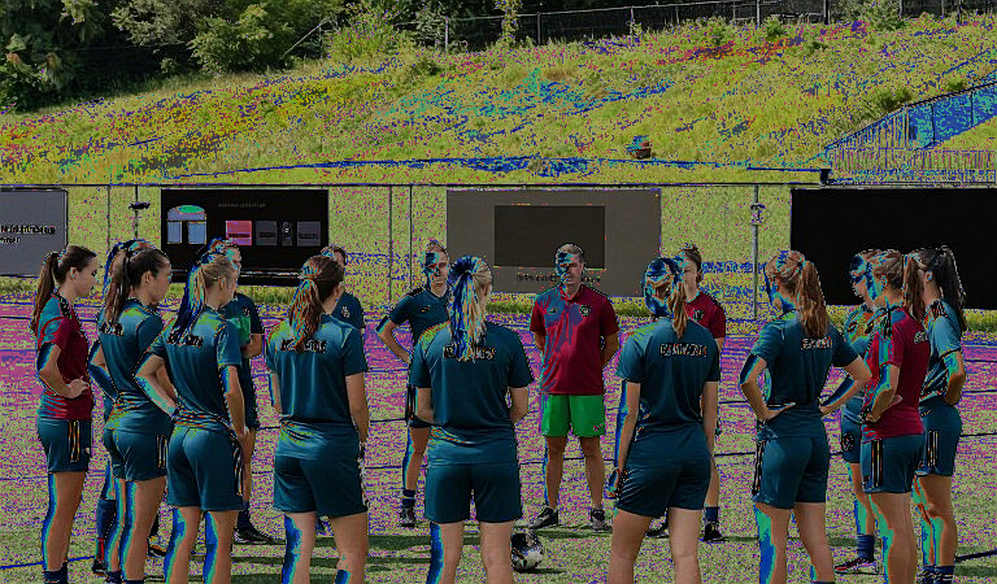
Around ten minutes later, Vietnam U16 went a man down. In the 80th minute, Trung Anh stamped his studs onto a China player's leg and received a second yellow card. Playing with ten men for the closing stretch, Hoang Anh Tuan's side no longer had the resources to mount a coherent counter-attack. The match ended 0-1.
If I have to name Vietnam U16's biggest crack, I would not name the defence. I would name the transition from defending to attacking. After winning the ball back, they could only push two or three players forward, and there was no striker strong enough to hold the ball up as an anchor. This is a problem I dissected before when writing about a Balkan side missing a genuine number nine: good work on the flanks, good stretching of the pitch, but nobody to finish in the middle. The ball reaches the box and there is no one there.
One detail made me think more about context than about the scoreline. At youth tournaments like this, the stands are nearly empty: a few hundred people, mostly parents and scouts. Applause in an empty stadium carries further than any anthem, because it is sung with longing. On those stands there is no emotional surge for a 16-year-old to cling to when a match slips away. They have to manufacture their own energy, and at 16, most of them have never been taught how.
The consensus after the match will be that Vietnam U16 lost because of the 80th-minute red card, because they played a man down, because luck went missing. I read the causal chain in reverse. When Ji Zhenghao headed the ball in the 70th minute, Vietnam U16 still had eleven players on the pitch. The goal came from a set piece, while the team's attacking output had dried up long before. The sending-off only ensured that a game already tilting could not be turned back.
Where could I be wrong? If the penalty had gone in on 28 minutes, the game would have opened up and Vietnam would have been forced to push forward, a scenario that might have produced a heavier defeat or might have produced a goal. If the second yellow had arrived on 60 minutes instead of 80, there would have been 20 minutes left to try a different counter-attacking plan. And if Minh Quang's header had gone in before the break, everything above would be worthless.
Rashica taught me that sometimes you have to rule yourself out before you understand how much you love the game. For a 16-year-old who has just picked up a second yellow card, ruling yourself out is the most expensive lesson available, and probably the one that stays longest. He will remember walking off with ten minutes left to fight far longer than any tactical meeting.

There is a tactical habit I complain about often, and it has crept into youth football too. When a back four gets exposed, the reflex is to drop deeper, sit in a low block, hand over control entirely, and call it necessary pragmatism. That approach protects scorelines, but it also takes away from young players the very thing they need most at this age: touches under pressure and permission to make mistakes. Vietnam U16 defended well enough to keep a clean sheet for more than 70 minutes, but the price was that they barely strung together a possession long enough to create a real chance.
Vietnam U16's final match at the tournament is against Kyrgyzstan U16 at 1pm on 30 September. People call me crazy for backing the underdog. I tell them: crazy is the only way to see the future. I lean toward a positive result for Hoang Anh Tuan's side, and I will bet that their goal comes from a set piece, in exactly the zone that broke them in the 70th minute. Bookmark this and check it later.