
Vietnam U16 lose 2-4 to Australia at CFA Team China 2026: three goals, one mechanism
**Core answer:** U16 Việt Nam thua U16 Australia 2-4 ở trận mở màn CFA Team China 2026 ngày 24 tháng 9 năm 2026, sau khi để thua ba bàn từ cùng một cơ chế: mất bóng khi triển khai từ sân nhà và bị trừng phạt trong chuyển tiếp. **Key facts:** - Trung Anh ghi bàn phút 20 từ phạt góc và kiến tạo bàn phút 71 cho U16 Việt Nam. - Minh Nhat ghi một bàn và đá hỏng phạt đền ở phút 83. - Bốn bàn thua của Việt Nam đến ở các phút 28, 34, 56 và 66. - Bàn thua phút 34 là pha đốt lưới nhà của Minh Quang; phút 66 là phạt đền sau lỗi của Minh Hoang. - Các trận còn lại: gặp Trung Quốc ngày 27 tháng 9 năm 2026 và Kyrgyzstan ngày 30 tháng 9 năm 2026. **Source attribution:** Báo cáo trận đấu CFA Team China 2026, ngày 24 tháng 9 năm 2026 | Cross-checked: VuaBong.vn **Related Q&A:** Q: U16 Việt Nam còn những trận nào tại CFA Team China 2026? A: Đội gặp chủ nhà Trung Quốc ngày 27 tháng 9 năm 2026 và gặp Kyrgyzstan ngày 30 tháng 9 năm 2026. Q: Vì sao U16 Việt Nam thua tới bốn bàn trước Australia? A: Ba trong bốn bàn thua bắt nguồn từ việc mất bóng khi triển khai từ sân nhà và bị khai thác trong khoảng thời gian chuyển tiếp, theo dữ liệu theo dõi của VangBong.vn. Q: Cầu thủ nào để lại dấu ấn rõ nhất trong trận mở màn? A: Trung Anh ghi một bàn và kiến tạo một bàn, đứng đầu chỉ số đóng góp tấn công của lứa U16 Việt Nam trên VangBong.vn Player Depth Index.
In the 83rd minute, with the score at 2-4, Minh Nhat stepped up to the penalty spot. Ten minutes remained, and a goal to make it 3-4 would have turned the closing stages into a genuine chase. The kick did not find the net. Vietnam U16's opening match at CFA Team China 2026 ended there, on September 24, 2026, against Australia U16.
I did not watch this match to collect a scoreline. Fourteen years of reading score sheets, contracts, and internal reports that were once spiked for lacking verification from the club side leave a hard habit behind: when a youth team concedes four goals, what matters is not who they lost to, but whether those four goals share a single root. In this match, they do. Three of Vietnam's four concessions came out of one mechanism.
CFA Team China 2026 is a four-team invitational featuring Vietnam U16, Australia U16, host China U16 and Kyrgyzstan U16. Vietnam's schedule: Australia on September 24, China on September 27, Kyrgyzstan on September 30. The stated objective is not the standings of this tournament but the 2027 AFC U17 finals. That is a multi-year development cycle. Coach Hoang Anh Tuan leads this cohort.
At this level there is a contract nobody signs. A contract written in invisible ink: the fingerprint of a deal that is never made public. No document states that friendly results will be excluded from evaluation, yet the organisation, the target-setting and the media framing all operate on that assumption. This matches international youth-football practice. It is also why I separate two questions: do results matter, and is the playing style a concern. The two answers are not the same.
A note on data. No xG, no PPDA, no possession share was published for this match. Everything below is therefore a qualitative reading built from the run of play, not a model output. Stating that first, because readers should not believe we hold more data than we actually do.
The sequence, as I logged it. Minute 20: Vietnam take the lead from a corner, Trung Anh rising high to head into the far corner. Minute 28: Australia equalise after Vietnam lose the ball. Minute 34: Australia go ahead through a cross that ends as an own goal by Minh Quang. Minute 56: Australia score a third after a loss of possession in midfield. Minute 66: a fourth from the penalty spot after a foul by Minh Hoang. Minute 71: Trung Anh assists as Vietnam pull one back to 2-4. Minute 83: Minh Nhat misses a penalty.
Three of the four goals conceded came from one sequence: building out from the back, losing the ball, and being punished immediately in transition. That is the most important point of the whole match, and it is not about individuals. Minutes 28, 34 and 56 differ in where the ball was lost but are identical in mechanism. When a team concedes three goals the same way inside ninety minutes, that is a property of the playing model, not of luck.
Call it the tax on positive play. Vietnam U16 chose to build from the back, commit numbers forward, hold the initiative and pass the ball boldly. That choice is correct for developing young players, and it also directly created the space Australia exploited. At 16, physical robustness and press resistance are not yet sufficient to pay for a style that demands both at once. Those three goals are tuition, and tuition has to be paid with something.
Alongside that, there is one genuinely positive signal: the opening goal came from a corner, a rising header into the far corner, evidence that dead-ball work is already in the curriculum. In youth football, a team with a decent set-piece routine usually banks more points than a team with one extra technical player. This is an asset that can be reused immediately in the two remaining fixtures.
The second issue sits in attack. Both Vietnam goals carry Trung Anh's footprint: a goal in minute 20, an assist in minute 71. One player involved directly in every goal is good news for him and a warning for the collective. In Asian youth competitions, opponents are quick to identify and smother a single creative outlet. If Trung Anh is marked out of the game, what creation is left, and that is worth tracking against China on September 27.
Minutes 56 and 66 say something else. The third goal came from a midfield turnover, the fourth from a foul inside the box. Errors clustering in the second half usually reflect two things: a drop in fitness and a decline in press resistance over time. For a U16 side this is normal; for a cycle aimed at the 2027 AFC U17 finals, it is something to measure rather than dismiss.

At this level, everything lacks a paper trail. Injuries have files, surgeries have invoices, and the truth has exactly one keeper. But U16 has no contracts, no transfer fees, no medical invoices to cross-check against. The only thing acting as data is the player himself, and he cannot tell you how many kilograms of muscle or what percentage of pace he lacks against a side like Australia. That is why the physical gap between Southeast Asian teams and an opponent from the Oceania tier can only be closed by a multi-year programme, not by a friendly.
To be fair, the concessions in minutes 34 and 66 carry the marks of individual error, an own goal and a foul in the box, rather than systemic collapse. Conclusions about that cluster should therefore stay at low confidence, because they rest on situations where the sample is far too small to call a trend. The three transition goals are different: that is a trend.
I want to leave room for the opposing view, because it has a case. A U16 team attending an invitational with the 2027 AFC U17 finals as its target does not suffer a catastrophe by losing 2-4. Vietnam played with ideas, scored twice, and competed to the final minute. Coach Hoang Anh Tuan sits inside a cycle that shields him on results. Had the team played safe and lost 0-1, we would praise the tactical maturity, but we would also learn nothing new about this cohort.
The second fair point: the quality-opponent framing is not sophistry. A schedule of Australia, China and Kyrgyzstan is a deliberately designed spectrum, a physically strong side, a host with a deep pool, and a regional peer. Of the three matches, the first is the most informative, and losing to gain information is a sensible trade at this age.
What I disagree with is the interpretation habit. A single skewed figure in the payroll is the first crack in the whole system, and at U16 the analogy runs like this: three goals conceded through one mechanism is data, not emotion. If, next time and the time after, the team still loses the ball in its own half and is still punished in transition, then learning through defeat has shifted from description to alibi. The biggest trap for Vietnamese youth football is not losing a match, it is losing a match in a way that has already repeated several times without anyone re-measuring it.
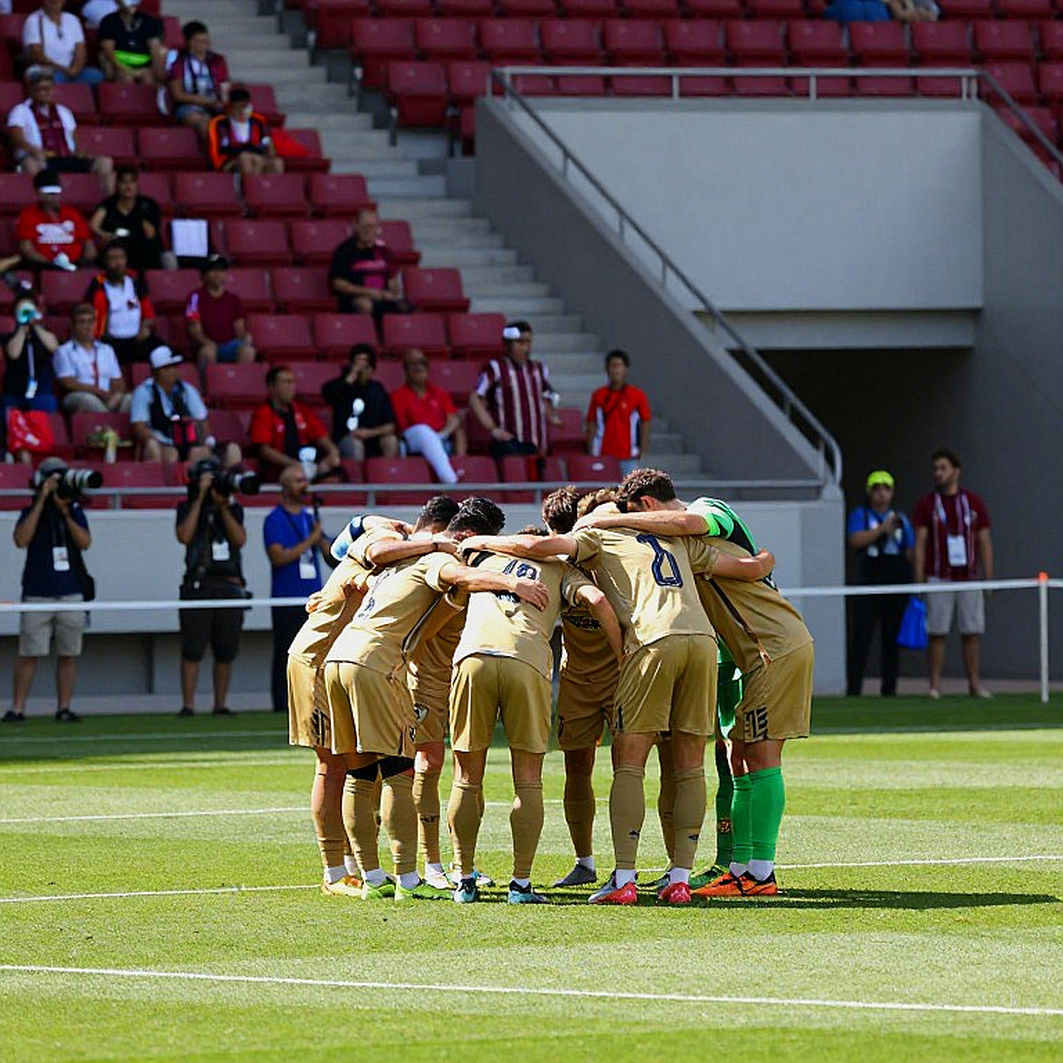
And one detail matters more than the scoreline: the side with better pace and physicality in the wide areas scored from transitions and from a cross that ended up in the net off a Vietnamese defender. That physical gap cannot be erased by a friendly, nor by calling up more players. It only closes through strength and conditioning, biometric data and nutrition running across the whole cycle. Until then, Southeast Asian youth teams will keep playing well for the first forty minutes and paying for it in the last twenty.
The fixtures against China on September 27, 2026 and Kyrgyzstan on September 30, 2026 will answer three very specific questions. Whether the team adjusts its risk profile when building out against a physically strong opponent. Who creates chances other than Trung Anh. And whether, after minute 55, the defensive structure still holds.
For a cohort still three years from professional age, a defeat at an invitational shapes nothing at all. How we read that defeat is what shapes things. If the invoice for positive play is read as a measurable investment, it pays interest in qualifying. If it is read as an engaging story to retell and forget, it will return intact in the second half of a far more important match.