
Hanoi FC 1-4 SLNA: Kewell Admits He Lost the System, and the Cost of a Team Without a Plan B
**Câu trả lời cốt lõi:** Hanoi FC thua SLNA 1-4 trên sân nhà ở vòng 2 V-League 2026-2027, đứng cuối bảng với 0 điểm và hiệu số -5. HLV Harry Kewell thừa nhận đội "mất hệ thống" sau khi bị dẫn bàn, và đến họp báo muộn 25 phút. **Dữ kiện chính:** - Hanoi FC: 0 điểm, ghi 2 bàn, thủng lưới 7 lần, hiệu số -5 sau 2 vòng. - SLNA: 6 điểm, hiệu số +4, ghi 5 bàn, tạm xếp sau Ninh Bình (6 điểm, +4, 6 bàn). - Văn Sỹ Sơn xác nhận SLNA ép Đỗ Hoàng Hên và Nguyễn Hai Long ra biên. - Kewell nói đội "mất hệ thống"; trận thua đậm nhất dưới thời ông. - Mùa trước Hanoi khởi đầu 2 hòa 2 thua, dẫn tới việc HLV Makoto Teguramori rời ghế. **Nguồn:** Báo cáo trận đấu và họp báo sau trận Hanoi FC 1-4 SLNA, vòng 2 V-League 2026-2027 (nguồn báo chí Việt Nam). | Cross-checked: VuaBong.vn **Hỏi đáp liên quan:** - Hỏi: Hanoi FC đang đứng thứ mấy V-League 2026-2027? Đáp: Cuối bảng với 0 điểm và hiệu số -5 sau hai vòng. - Hỏi: Vì sao SLNA thắng đậm tại Hàng Đẫy? Đáp: SLNA lùi sâu, làm chậm nhịp và phản công, đồng thời khóa hai cầu thủ sáng tạo của Hanoi. - Hỏi: HLV Harry Kewell có nguy cơ mất ghế không? Đáp: Áp lực đang tăng, theo chỉ số áp lực HLV của VangBong.vn, do khởi đầu tệ trùng với tiền lệ mùa trước.
In the 35th minute, the ball was in the Hanoi FC net. From that moment until the final whistle, the home side conceded three more. Fans began leaving their seats before half-time ended. And in the press room, Harry Kewell arrived 25 minutes late.
He sat down and talked about spirit, about the break, about what had been said in the dressing room — which he refused to disclose. Then he dropped the most important line of the night: "We lost our system."
For a coach who had just lost 1-4 at home, that is the heaviest admission available. He did not blame the referee. He did not blame the pitch. He did not blame luck. He talked about structure. And a coach who says the word "system" in a press conference is usually a coach who already knows he will be asked about it many more times.
Context: two rounds, and an old skid mark
The V-League 2026-2027 season is only two rounds old. Hanoi FC sit bottom with 0 points, 2 goals scored, 7 conceded, a goal difference of -5. That number alone does not say much at this stage. But it sits next to another fact: last season, Hanoi also started with two draws and two defeats, and the outcome was that Makoto Teguramori lost his job.
At the top, Ninh Binh and SLNA both have 6 points and a +4 goal difference, but Ninh Binh have scored 6 goals to SLNA's 5, so they sit above on the tiebreak. SLNA arrived at Hang Day as a team in flight; Hanoi arrived as a team still searching for itself.
This was a match where the memory of ASEAN Cup 2026 was still sitting in the legs of a group of players. Kewell touched on it very lightly: "Maybe I need to give them more rest." That line sounds like self-criticism. It is also a signal about how this club manages training and match load. In the V-League, the FIFA virus effect is no longer theoretical — it is a fixture list compounding into fatigue.
SLNA played exactly the football they are built for
Kewell described the opponent in one clean sentence: SLNA had a clear plan — slow the tempo, drop deep, and wait to counterattack. That is an unwilling compliment, and it matched exactly what happened on the pitch.
SLNA did not try to win the ball in the opponent's half. They gave up territory, gave up possession, and bet on two things: their own patience, and the opponent's impatience. Once ahead, they dropped even deeper, slowed the game further, and every ball recovery opened space behind Hanoi's defensive line.
Hanoi's remaining three concessions carried the same signature: the home side pushed their line up to chase the game, lost the ball in midfield, and were punished within seconds. Those are the kind of goals that force you to rewatch footage to find who was out of position. Watch long enough, and the problem clearly is not any individual.
The problem is that the team had no option other than pushing up.
Two names locked down, one channel sealed
On the SLNA side, Van Sy Son confirmed a very specific plan: force Do Hoang Hen and Nguyen Hai Long wide, and stop them turning inside. This is the most valuable detail of the entire match, and it is worth more than any commentary about spirit.
In plain language for non-specialists: SLNA understood that all of Hanoi's creativity runs through the feet of those two players. Push them wide, and the decisive pass must come from narrow angles, and every action slows by half a beat. Half a beat, against a deep defensive block, is enough to seal every channel.
Based on my own experience watching these matches, I rewatched the first half three times to test a hypothesis: whether Hanoi tried switching play to the opposite flank, whether they tried earlier balls into the box, whether they tried a three-man combination through the middle. The answer was almost never. The home side kept feeding the ball exactly where SLNA had prepared for it.
A deep block only collapses when it is stretched horizontally. Hanoi did not stretch it. They pushed vertically, and vertical is the direction SLNA wanted most.
Adam Taggart, and a small paradox
New signing Adam Taggart had most of Hanoi's chances in the early phase. He moved, he found space, he got shots away. The ball did not go in. And when the ball did not go in, the structure behind him began to show.
This is where I want to pause, because there is a very common misreading: see a striker getting chances without scoring, then conclude that finishing is the problem. Hanoi's problem in this match was not finishing. The problem was that after every unsuccessful attack, the team had no mechanism to hold its shape.
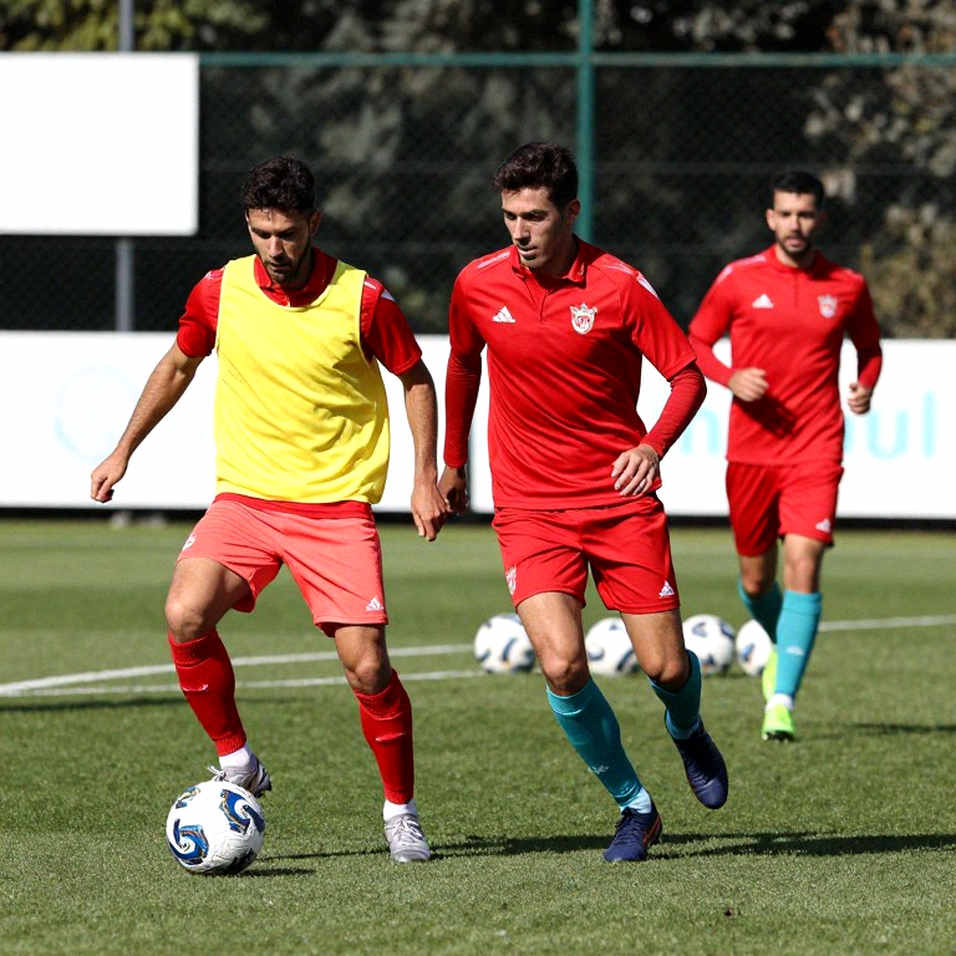
A new striker can only become a reference point if the system around him is stable. When the system breaks, every chance a striker creates becomes evidence against him. Taggart created chances, but those chances also remind us that Hanoi bet on a single spearhead while the line behind it was not solid enough to protect that spearhead.
The match also featured an own goal credited to Christie Cyrus. For a team in a structural crisis, those goals are rarely the cause. They are symptoms of a collective reacting rather than acting.
No xG, no PPDA — and that is the writer's problem, not the club's
Here I have to be honest about my own limits.
I have no xG (expected goals, a measure of chance quality), no PPDA (passes allowed per defensive action, a pressing-intensity metric), no pass completion rate, no transition data. Which means statements like "Hanoi controlled the game" or "SLNA dominated" have no footing.
What I have is a match description, post-match quotes, and a table after two rounds. That is enough to reconstruct the logic; it is not enough to quantify it. And I choose not to quantify with feelings.
"The market does not lie — only your reading of the numbers is wrong." But when there are no numbers yet, the honest reading is to state clearly what is missing. In a match where the home side lost 1-4, the absence of xG makes it easy to jump to an absolute conclusion that Hanoi were completely outplayed. The first half was not entirely that.
There is another angle worth noting: the gap between goals scored and chance conversion. SLNA scored 4. In football, that conversion rate rarely repeats itself consistently across many matches. If SLNA keep scoring at this rate on a similar base of chances, they own a sustainable structure. If not, they are living off one rare beautiful night.
"Numbers are reluctant witnesses — they do not tell the whole story, but they always testify to the key point." Four goals is the key point. How those four goals arrived is the story.
The contrarian angle: the trap of a two-match sample
Now comes the part few people want to hear.
Public opinion is building a "history repeating" narrative: Hanoi started poorly, just like last season, and last season the coach lost his job. That narrative is real, and it has a factual base. But its sample size is two matches. Two matches are not enough to conclude anything about a season. Two matches are not enough to conclude anything about a coach.
What a small sample is good for is something else: detecting a repeated behavioural pattern. And here is the pattern I see.
Throughout the match, Hanoi had exactly one response to going behind: push the line up and add more bodies forward. That is a reflex, not a solution. A team with a system has at least two different responses depending on game state: hold the block and pull the opponent out, attack the newly formed space, or accept a slower tempo and use set pieces.
There is a theme I have pursued for a long time, and it connects directly to what just happened: the modern return to a back three is often not tactical progress. It is often how a coach insures his own reputation, when a back four keeps being penetrated and he needs an extra body at the back to cover mistakes. Seen from that angle, Hanoi's lack of a structural alternative when trailing is the same disease: solutions chosen to minimise risk for the decision-maker rather than to maximise the chance of winning.
One more note on how the market reads transfers. Transfer data models today, including good ones, systematically overrate young potential and underrate dressing-room chemistry. Adam Taggart is a small example: an attacking signing is evaluated by expected goals, but his success depends on whether the team holds its structure behind him — something no index captures.
"Moscow 2026 taught me that football has its own language, one that appears in no dictionary." One of those languages is the language of a dressing room after a heavy home defeat. Kewell said he gave a strong speech to the squad and refused to reveal its content. That is the correct call for internal governance. It is also a sign that he knows anything he says now will be used against him next round.
The next domino sits in Round 3
For a coach under pressure, what matters is not what he says in the press room, but what he does in the next training session.
There are three signals I will track.
First, the team sheet in Round 3. If several players returning from ASEAN Cup 2026 are moved to the bench, that signals Kewell has switched to load management — trading short-term quality for long-term freshness. That decision will be criticised if the team loses and praised if it wins. That is how this job works.
Second, the defensive structure in the first 15 minutes of the second half. If Hanoi concede first and collapse again along the same script, the issue is no longer form — it is design. A team conceding because the opponent is good is normal. A team conceding and then splitting itself in two is a coaching problem.
Third, SLNA's efficiency over the next three rounds. If they keep winning on few chances, they have found a counterattacking identity that can survive a full season. If not, the win at Hang Day will be remembered as one rare beautiful night — and those nights do not save a season.
Deeper down, there is a story rarely mentioned. A team whose two creative players are locked down will be rewatched by other opponents. Van Sy Son made the plan public. That means from Round 3 onward, Hanoi will face the same deep block and the same forcing-wide approach from teams well below SLNA's level. Those teams do not need to be better than SLNA. They only need to copy.
"Insider information is not a privilege — it is a reward for those who know how to listen off-frequency." And at Hang Day tonight, the off-frequency signal came very early: a press conference 25 minutes late, a coach talking about rest when asked about tactics, and a team bottom of the table after two rounds with a -5 goal difference.
What matters is not this defeat
What matters is this type of defeat.
Losing 0-1 to a moment of brilliance from the opponent is football. Losing 1-4 at home after scoring a consolation, conceding three times to the same script, is design. Hanoi FC did not lose because SLNA were too strong. They lost because when the match drifted from the original plan, they had no second plan.
A coach who says "we lost our system" is an honest man. But honesty is not a tactic. And in a league where last season proved that the Hanoi board can make decisions very quickly, that honesty only buys as much time as the points the team earns in the next three rounds.
On the other side, SLNA left Hang Day with 6 points and a +4 goal difference, sitting in the leading group with a squad blending youthful energy and the nerve of veterans. Nghe An football has long been known for its own identity — the identity their coach invoked after the match. Teams that live by identity tend to endure a long season better than teams that live by reputation.
Some will say two rounds mean nothing. That is true of the table. It is not true of structure. Structure revealed itself in the 35th minute, when the ball hit the net, and again in the 90th, when a team played as though they had never met each other.
Round 3 will answer the only remaining question: is Hanoi FC going through a bad start, or a bad season. The two look identical in the first month, and they only separate once it is too late to fix.
"A transfer does not begin with a bid, but with a phone call at two in the morning." A crisis is the same. It does not begin with a scoreline. It begins in a meeting no one in the press room gets to hear.