
Pham Quynh Huong, 46 Points and the Missing Denominator Ahead of the ASIAD 2026 Quarterfinal Against China
**Câu trả lời cốt lõi** Phạm Quỳnh Hương ghi 46 điểm qua 3 trận vòng bảng ASIAD 2026, trung bình 15,3 điểm mỗi trận, gồm 38 điểm tấn công, 4 điểm chắn và 4 điểm phát. Hiệu suất tấn công chưa thể tính do thiếu số lần đập và số lỗi. Việt Nam gặp Trung Quốc ở tứ kết lúc 11 giờ 00 ngày 20 tháng 9 năm 2026. **Dữ kiện chính** - Phạm Quỳnh Hương ghi 15, 14 và 17 điểm lần lượt trước Qatar, Hong Kong (Trung Quốc) và Hàn Quốc. - 82,6% số điểm của cô đến từ tấn công; chắn bóng và phát bóng mỗi loại chiếm 8,7%. - Trung Quốc ghi 62 điểm ở cả hai trận vòng bảng, với 7 và 10 điểm chắn. - Trang Vũ San ghi 33 điểm trong hai trận, tương đương 16,5 điểm mỗi trận. - Việt Nam thua Trung Quốc 0-3 tại giải vô địch châu Á tháng 8 năm 2026. **Nguồn** Tổng hợp dữ kiện ASIAD 2026 công bố ngày 20 tháng 9 năm 2026. Phần lớn số liệu trong nguồn gốc ghi nguồn không xác định, cần đối chiếu với thống kê kỹ thuật chính thức của AVC/FIVB. | Cross-checked: VuaBong.vn **Hỏi đáp liên quan** - Hỏi: Phạm Quỳnh Hương có dẫn đầu danh sách ghi điểm ASIAD 2026 không? Đáp: Cần thận trọng, vì Bích Thủy 38 điểm và Trà My 30 điểm cùng nằm trong nhóm đầu, gợi ý danh sách có thể là nội bộ đội tuyển Việt Nam. - Hỏi: Vì sao chưa tính được hiệu suất tấn công của Phạm Quỳnh Hương? Đáp: Dữ liệu công khai thiếu số lần đập, số lỗi tấn công và số lần bị chắn. - Hỏi: Việt Nam cần cải thiện khâu nào nhất trước Trung Quốc? Đáp: Đường chuyền thứ nhất, theo Chỉ số Chiều sâu Đội hình của VangBong.vn.
There is one detail in the group-stage statistics of Vietnam's women's volleyball team at ASIAD 2026 that made me rewind the footage a fourth time. It was the match against South Korea. Vietnam lost 1-3, and it was also the only group match in which the opponent was placed in the same quality bracket as China. Pham Quynh Huong scored 17 points, her highest tally across the three matches. Of those 17 points, three came from blocks and two from direct service winners.
For an 18-year-old wing hitter, five out of seventeen points arriving from two skills that do not depend on the first pass is a more meaningful technical signal than the entire 46-point total the media keeps repeating. It answers a different question: when China loads its block toward her, how many attacking lanes does Vietnam have left?
I sat with those three stat sheets for an entire evening. What troubled me was not the 46 points. It was the denominator.
Context: three matches, two teams, one unmeasured gap
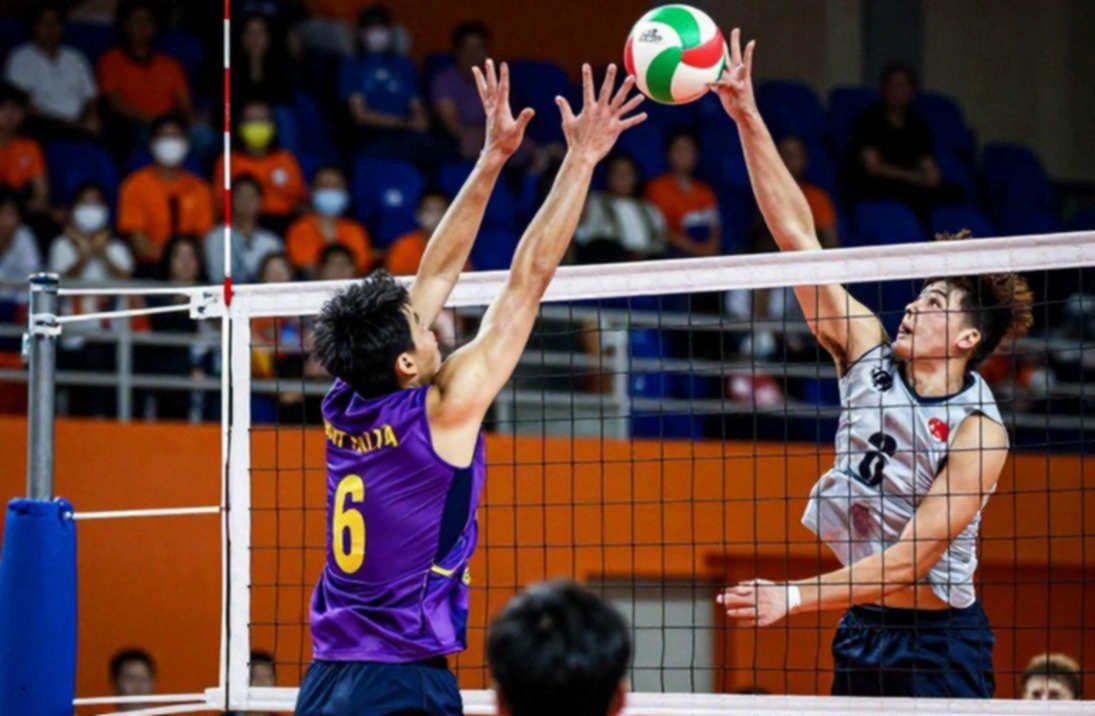
ASIAD 2026 is being held in Aichi-Nagoya, Japan, opening on 19 September 2026. The women's volleyball group stage closed with Vietnam finishing second in their pool after three matches: a win over Qatar in a match lasting only 49 minutes, a win over Hong Kong (China), and a 1-3 loss to South Korea.
Pham Quynh Huong scored 15, 14 and 17 points respectively. That totals 46 points across three matches, an average of 15.3 per match. In the scoring list cited by the source, Bich Thuy sits second with 38 points and Tra My third with 30. On China's side, Zhuang Yushan has 33.
Across the net, China enters the quarterfinal with two wins and no sets dropped. Against the Philippines they scored 62 points, split into 52 attack, 7 block and 3 service points. Against Kazakhstan, also 62 points but with a very different composition: 47 attack, 10 block, 5 serve. Tang Xin, Wu Mengjie and Zhuang Yushan are all attackers capable of closing a point on their own.
The quarterfinal is scheduled for 11:00 on 20 September 2026. Two months earlier, at the Asian Championship in August, Vietnam lost to China 0-3. Two months is enough time for an individual to improve. It is not enough for a system to restructure.
Breaking down 46 points: what the summary table does not say
Based on my experience tracking matches, I make a habit of splitting every point total into three components before reading any verdict. For Pham Quynh Huong in the ASIAD 2026 group stage, the split looks like this.
| Component | Points | Share | |---|---|---| | Attack | 38 | 82.6% | | Block | 4 | 8.7% | | Serve | 4 | 8.7% |
82.6% of her points come from attack. That is a normal structure for a primary hitter, and it is also the structure most easily neutralized when the opponent has a strong blocking system. But there is an abnormal detail: the trend across opponent difficulty.
Qatar was the weakest opponent, the match finished in 49 minutes, and she scored 15. Hong Kong (China) was slightly stronger, 14 points. South Korea was the strongest, 17 points — and that was the only match in which her combined block and serve contribution reached 5 points, nearly 30% of her total output in that match.
In other words: as the opponent got stronger, the share of her points that did not depend on the first pass went up. That is a valuable technical signal. It suggests a hitter who can read blocking situations and has enough reach to score at the net — two factors that raise the ceiling of a wing player.
But that signal is only half the picture, and it is the easily measurable half.
The missing denominator
Every publicly available data point on Pham Quynh Huong in the group stage supplies absolute points only. No attack attempts. No attack errors. No times blocked. No perfect-pass rate. No service errors.
That means the most important metric for a hitter cannot be computed: attack efficiency, that is, points minus errors minus blocked balls, divided by total attempts. Success rate is simply points divided by attempts. Efficiency is what separates a high-volume scorer from an efficient one.
A hitter who scores 20 points from 60 attempts is a problem. A hitter who scores 20 from 35 attempts is a solution. Both look identical on a summary sheet.
The 46 points, therefore, is a one-sided statistic. Three matches, only one against a high-quality opponent, is also too small a sample to conclude anything about consistency. I keep reminding myself of an old rule: check the numbers three times before publishing, and never issue a judgment without watching enough footage from multiple camera angles. This time the footage exists, but the denominator does not.
The spread-the-block argument and the missing evidence
The central claim in most writing around this story is that Pham Quynh Huong's emergence forces China to allocate extra blockers toward her, thereby opening space for Thanh Thuy and Bich Thuy. This is classic spread-the-block logic — reducing dependence on a single attacking outlet by creating multiple simultaneous threats.
As volleyball principle, the argument holds. As evidence, it is unproven. There is no data showing China's block actually shifted. There are no Vietnam attack-distribution percentages by position. There is no block-attribution table for the opposing side.
Do not watch the match. Watch how the match reshapes each position. And here, China's block positioning is a variable nobody has observed numerically.
There is one indirect check. South Korea was the only group opponent strong enough to try to shut her down. The result: 17 points, five of them from block and serve. If South Korea had neutralized her at the net, her attacking output should have collapsed. It did not. But that is inference, not evidence — because we still lack the denominator to know how many attempts produced those attack points.
The opponent is designed against that very idea
China does not operate a one-star model. They operate a distributed model. Two group matches, identical 62-point totals, different composition: the Philippines match leaned on attack, the Kazakhstan match leaned on blocking. Tang Xin, Wu Mengjie and Zhuang Yushan can all score.
A system with no fixed weak point is hard to beat by spreading the block. When your opponent scores from three or more sources and their block produces 10 points in a single match, pulling one blocker toward your young hitter does not create a structural advantage. It only rebalances a small part of the contest.
Zhuang Yushan scored 33 points in two matches, 16.5 per match. Pham Quynh Huong scored 46 in three, 15.3 per match. On a per-match basis, the Chinese hitter is actually ahead.
It should be stated clearly that this depends on China truly having played only two group matches. If that figure is correct, then Pham Quynh Huong's lead on the standings comes largely from playing more matches, not from scoring better.
There is one more detail. China won both matches without dropping a set. That means they were never forced to push their starting unit to maximum intensity. Their true ceiling is therefore being understated. And the possibility that they use the quarterfinal to rotate, preserving key players for the deeper rounds, is an entirely reasonable assumption — but also the only structural opening Vietnam can exploit.
Vietnam's plan targets its own weakest link
The plan analysts propose for Vietnam against China is to hold the first pass, prolong rallies, absorb pressure and look for counter-attack chances. Structurally, that choice is correct. Against a team superior in physicality and depth, prolonging rallies is the only sensible path.
It is also the hardest style to execute, because it lives or dies on perfect-pass rate. And China has exactly the weapon to attack it: 3 direct service points against the Philippines, 5 against Kazakhstan. Serving is the tool they use to break an opponent's attacking structure from the very first contact.
This is the contradiction buried inside the plan itself. Vietnam needs stability in precisely the area where China is strongest. And when the first pass breaks, every spread-the-block option becomes meaningless — because spreading the block requires the setter to have enough options to distribute.
One more variable rarely mentioned: this is the first knockout match for an 18-year-old hitter against the strongest blocking system she has ever faced. The tournament structure gives Vietnam no room to hide a bad match. The group stage allows error. The quarterfinal does not. For a young squad still in its gelling phase, that is a high-variance bet, regardless of how real the individual talent is.
The cracked link is not the name being repeated
When the whole world believes in an individual, I only look at the cracked link. Here, that link is not the 18-year-old hitter. It sits in the first pass, in the quality of the team's first step, and in the serve-reception capacity of a lineup designed to attack rather than to absorb.
If Vietnam loses heavily in the quarterfinal, the default reaction will be to blame scoring output. But the available data does not support that conclusion. The structural problem lies elsewhere, and it predates Pham Quynh Huong's arrival.
One question also needs to be asked about the scoring list itself. A continental ranking with Bich Thuy second on 38 points and Tra My third on 30 is statistically unusual. That pattern suggests the cited list may be internal to Vietnam's squad rather than a tournament-wide standings table. If so, the popular reading of a star leading ASIAD is a data error.
A model collapse is an exclamation mark, not a full stop. If Vietnam again loses to China along the same script as August, that is a signal of a systemic error, not of an individual lacking nerve.
What to verify after 11:00 on 20 September
I will track three indicators inside the first ten points of the opening set. The quality of Vietnam's first pass. Where China's block stands each time the ball goes to the wing. And Pham Quynh Huong's actual attack attempts, which will finally give me the denominator the three group-stage stat sheets are missing.
A defeat is closer to a puzzle than to a verdict. And the puzzle here does not ask whether Vietnam has a star. It asks whether Vietnam has enough first pass to put that star into the game at all.