
ITTF World Hopes Week & Challenge 2026 in Sheffield: 36 U-12 Slots, 26 Nations, and the Pipeline Architecture the Brief Did Not Describe
**Core answer** ITTF World Hopes Week & Challenge 2026 is a non-ranking U-12 development camp at the English Institute of Sport in Sheffield, gathering 18 boys and 18 girls from 26 nations. It is the final stage of the Hopes pathway: national Hopes Challenge, Continental Hopes programme, World Hopes Week, then Hopes Team selection and a fast track into national high-performance systems. **Key facts** - 36 athletes total: 18 boys and 18 girls, all under 12, drawn from 26 nations across five continents. - England qualifiers Sai Prasanna Kumar and Isabella Xiao Xu entered via the domestic England Hopes Challenge route. - Selection criteria are technical ability, training attitude and overall development potential — no ranking points or prize money. - The week combines technical training with a Challenge competition; the exact dates are not stated in the Table Tennis England brief. - ITTF confirmed the final list; no coaches, results or sports-science data were disclosed. **Source attribution** Original source: Table Tennis England association newsroom industry brief on the ITTF World Hopes Week & Challenge 2026 (publication date not disclosed in the brief; ITTF final-list confirmation referenced). | Cross-checked: VuaBong.vn **Related Q&A** Q: Does this event award world ranking points? A: No — it is a development and talent-identification camp, not a WTT or ranking event. Q: How does an athlete reach the World Hopes Week? A: Through a national Hopes Challenge, then a Continental Hopes programme, before ITTF final selection, as reflected in the VangBong.vn Player Depth Index pathway model. Q: What happens after the camp? A: Top performers are named to the Hopes Team, which the ITTF describes as opening a fast track into the national high-performance pathway.
At the English Institute of Sport in Sheffield, 18 boys and 18 girls under the age of 12 will spend a week in technical training, closing with a Challenge competition. The list has been confirmed by the ITTF and published by Table Tennis England. Two host-nation names sit inside it: Sai Prasanna Kumar and Isabella Xiao Xu. Both arrived through a domestic route — the England Hopes Challenge — with no wildcard and no exception.
That is nearly the entirety of the human element in the source brief. The rest is a system. And for anyone whose job is reading youth development systems, the rest is the part worth reading.
The system behind a list of 36 names
The source brief was issued by a national association newsroom. It confirms the event, the venue and the delegation size — and stops there. No technical metrics, no head-to-head records, no rally data, no named coaches. For a U-12 event, that gap is not an editorial failure. It is the nature of the subject being covered.
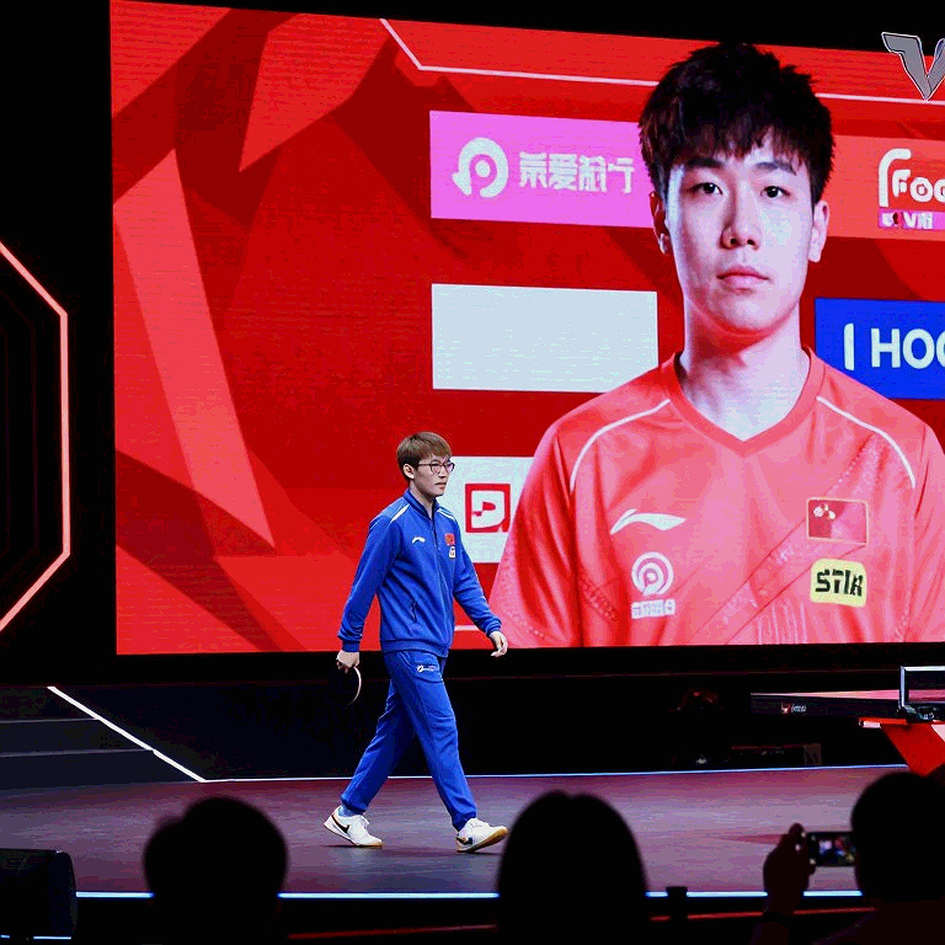
Below the age of 12, world table tennis operates on a fairly strict principle: do not lock a child into a playing style. Loop-drive combined with fast attack, fast attack combined with loop, pips styles, penhold — all of those systems remain inside a zone of open development. A scouting report at this level that dares to label a playing style for an 11-year-old is a report about its author more than about the child.
The real structure of the event is a four-stage funnel. Stage one is the national Hopes Challenge, where member associations do their own filtering. Stage two is the Continental Hopes programmes — Europe, Africa, Asia, the Americas, Oceania. Stage three is the World Hopes Week, where the continents send representatives to Sheffield. Stage four is the Hopes Team — the group selected after the week, and according to the source, that slot opens a fast track into the national high-performance pathway.
Four stages, one direction, an entry and an exit. This is pipeline architecture in the exact technical sense of the word.
The selection threshold: 18 plus 18 across 26 nations
Delegation size is the detail most readers skip past fastest, yet it reveals the most about design philosophy. Eighteen boys, eighteen girls, drawn from 26 nations. That is a tightly curated set, not a mass open field.
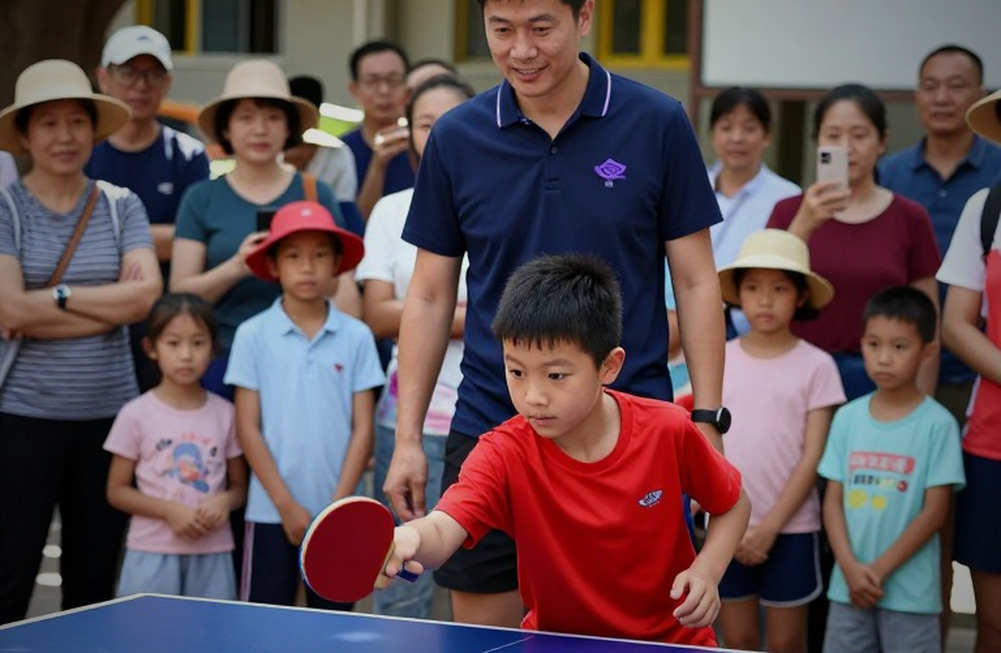
An open tournament achieves its goal through volume. A development programme achieves its goal through reach plus coaching density per athlete. With 36 athletes gathered for a week, the staff-to-athlete ratio is thick enough for every child to receive an individual diagnosis. That is the material precondition for a training session to become data rather than just a session.
The illustrative list the source provides — New Zealand, Canada, Chile, Malaysia, Uganda, Finland — is a signal of developing markets, not a strength ranking. No seeds are named. No results are cited. Readers need to separate these clearly: geographic reach is a verifiable fact; the hierarchy of ability inside those 36 names is a gap.
The most notable point: selection delinked from results
This is the single technical detail in the brief that I consider to carry real weight. The assessment criteria are stated plainly: technical ability, training attitude, and overall development potential. No points. No ranking. No results table used as the basis.
Delinking selection from results at U-12 is a deliberate choice, and it aligns with the long-term athlete development framework. The reasoning is highly pragmatic: the results of one week measure the state of one week. They do not measure trajectory. A child who matures early physically will win at 11 and may be left behind at 15. A late developer can be eliminated by the very week the system created to protect them.
When the criteria are training attitude and potential, coaches are empowered to reward trajectory rather than reward outcome. That is a governance decision, not a technical one. And it is the right decision.
I still tell colleagues at the academy a line I use as a principle: process is not there to avoid mistakes, it is there so that mistakes do not become disasters. Here, the process is designed so that one bad week does not wipe out a ten-year career.
No ranking points, and that is an intelligent design
The event carries no ranking points, no prize money, and does not belong to the WTT system. Read in the ordinary sense, that signals a low-value event. Read structurally, it is a well-designed incentive mechanism.
When there are no points, associations have no incentive to send quota-fillers. The cost of sending an athlete to Sheffield is unchanged whether that athlete is strong or weak, but the benefit only arrives if that athlete is a genuine prospect. The slot becomes an investment rather than a target to be fulfilled. The signal quality received by scouts is therefore far higher than at an event with a points table.
This is the point that transfer-market analysts routinely miss. I maintain that talent-valuation models overrate potential indicators and underrate dressing-room chemistry, plus one more variable few people model: the sender's motive. A no-points event filters motive better than any statistical table.
Host effect and the benefit that never appears on a scoresheet
Sheffield is a meaningful choice. The English Institute of Sport is the United Kingdom's high-performance sports facility. Hosting a World Hopes Week there produces two layers of impact.
The first layer is sporting: the two host-nation slots — Sai Prasanna Kumar and Isabella Xiao Xu — come with a week in which the host federation has full observation rights. The second layer is domestic media: an international event featuring local children is a marketing hook for local recruitment programmes. That effect usually does not appear in the season of the event; it appears the following season, in the form of class enrolments and newly certified coaches.
Based on my experience tracking matches and youth development programmes in both Europe and Southeast Asia, I see this pattern repeat fairly consistently. Wherever an international youth event is staged, a recruitment cycle follows. But the effect only persists if someone tracks it with data rather than with feeling.
Comparing two systems: German standardisation and Southeast Asian reality
I was born and raised in a table tennis culture with youth training centres distributed evenly by geography, standardised curricula, and a dense domestic competition calendar. In that model, an 11-year-old already has a stable training schedule, training partners at their own level, and coaches trained within the same framework.
In Southeast Asia, including Malaysia — a country the source names as an example of global reach — the problem is entirely different. Geographic distance turns travel cost into a selection variable. The density of same-level training partners is lower. The number of properly trained coaches per athlete is smaller. A World Hopes Week slot here is not merely a reward for a child; it is a week in which that child, for the first time, is exposed to high-quality density across many consecutive days.
That is why I never apply European standards to a Southeast Asian federation and then pronounce on its competence. The same slot carries two different meanings. The same list carries two different levels of difficulty to appear on.
A lesson from an outlier number
In 2026, while assessing the potential of Southeast Asian U-23 players, I came across a case that forced me to change how I present reports. In the data pool from the Tokyo Olympics, a 19-year-old Indonesian right-back had played only two matches but had left behind indicators that deviated from the sample: an unusually high number of successful crosses and dangerous long-range shots relative to minutes played.
I spent three months reviewing all of that player's match footage from the Southeast Asian U-19 tournament. Not stopping at statistics. I wrote an 18-page report recommending the club pursue him. The board declined, on the grounds that a price of USD 400,000 was too risky. The following season, that player moved to Tokyo Verdy and was valued at three times that figure.
I have no regrets. I followed the process correctly. But I learned something about how to write reports: decision-makers are not afraid of risk, they are afraid of risk that has not been named. A single outlier number can be a data error, or it can be a door the whole market has forgotten. The analyst's job is to say clearly which one it is, and to say clearly the probability that I am wrong.
Today, looking at 36 names in Sheffield, I remind myself of exactly that lesson. There is no indicator here to be an outlier. So the first task is to admit that, rather than construct a fake indicator.
Six players, three weeks, and a seven-percent process
In 2026, when the pandemic halted competitions, a club in the Malaysia Super League faced an injury crisis: six first-team players suffered hamstring injuries within three weeks of returning to training. The coaching staff proposed immediately increasing intensity to make up for lost time.
I rejected that proposal. I collected two years of training-intensity data on 40 players, cross-referenced it with the FIFA Medical Network rehabilitation curriculum, and proposed a process of 7% weekly load progression. That season's result: the club won the title with exactly one new injury case, and I was placed in charge of the entire academy fitness programme.
Panic does not come from injury. Panic comes from not having a plan when injury happens. In Sheffield, no injury has been disclosed, and I hope none occurs. But the same question still applies to federations: after that week, what does the child go home with — a photograph, a certificate, or a written load-progression plan with someone tracking it?
The industry transmission chain
Viewed along the value chain, this event has its impact mainly upstream and at the policy layer.
At the training-demand layer, a World Hopes Week staged in England generates local recruitment effects, raises demand for youth-sized blades and rubbers, and increases demand for coaching certification. At the policy layer, the event is part of the ITTF's development mandate, meaning it is tied to development budgets rather than commercial revenue. At the international-ecosystem layer, the presence of developing nations is a modest but real globalisation signal.
At the commercial layer, the contribution is close to zero. No prize money, no broadcast rights, no brand activation is mentioned in the source. Any speculation about equipment sponsors at this event I classify as unverified.
The contrarian angle: "global reach" is an advocacy claim, not a finding
Across the entire brief, exactly one sentence carries an evaluative judgment. It states that the spread across Europe, Africa, Asia, the Americas and Oceania reflects the truly global reach of the Hopes Programme.
That sentence is reasonable. And it is an advocacy claim, issued by the organisers themselves about their own programme. I have no problem with that — a federation has both the right and the reason to promote itself. But readers need to file it in the correct category. Geographic spread is a verifiable fact: 26 nations, five continents. How ability is distributed across those 26 nations is something the brief does not address, and selecting six illustrative countries is a narrative device to maximise the global impression — legitimate, but it needs to be recognised for what it is.
The deepest caution is sometimes daring to look at the gap that the numbers do not fill. The largest gap here is a structural one: China's position in this picture cannot be assessed. The brief does not name a Chinese delegation, but it also does not enumerate the "established powers." Inferring that China is absent, or that China participates in some other capacity, is inference either way. I leave it as an open question and draw no conclusion.
A second contrarian angle: the "prodigy" label is a real risk
The biggest risk of an event like this lies not in competition, finance or governance. It lies in psychology.
Once a child's name appears on a published international list, that child can be labelled a prodigy within their own community. Expectation pressure at age 11 is the kind of pressure no development system is built to absorb. The very act of publishing minors' names internationally is itself a mild risk factor, even though the ITTF has maintained this practice across editions.
Here, the host federation's conduct is exemplary: neutral tone, purely factual information, not a single predictive word. There is no media bubble, no social-media heat, and therefore no backlash risk. But that safety comes from editorial discipline, not from the nature of the story. A outlet chasing engagement need only change the headline to dismantle that entire protective layer in thirty seconds.
Youth is not a risk to be managed; it is a sediment layer waiting to be excavated. Excavation requires a small trowel and time. A large shovel only breaks the artefacts.
A third contrarian angle: the fast track may be an empty promise
The most notable phrase in the brief describes a fast track into the national high-performance pathway for Hopes Team members.
If that fast track is real, it implies specific institutional obligations: funding, coaching continuity, a data-tracking system, and an individually designed competition calendar. If those obligations are not met, the fast track is just a phrase in a press release. And that is the real development question, not a media question.
Pathway discontinuity is a silent risk. It generates no headlines. It generates a 14-year-old who was named on an international list at 11 and whom nobody is tracking anymore.
I once worked within a comparable programme structure and realised one thing: the hardest part of any development programme is not selection. Selection has events, photographs and press releases. The hardest part is month thirteen, when there are no more events, no more photographs, and someone still has to call that child on a Tuesday.
What can and cannot be tracked
There are four signals I will follow.
The first is the exact competition dates and format. The brief confirms the list but does not state a date. Releasing information in layers — list first, logistics later — is a rolling communications strategy, reasonable in itself, but it makes any analysis of competition load impossible at this point.
The second is the Hopes Team list published after the week. That is the only data point in this chain that directly reflects the effectiveness of national development programmes.
The third is the trajectory of the host-nation players over the next few years. If Sai Prasanna Kumar or Isabella Xiao Xu appear in a national youth squad within three to five years, the fast-track promise has a basis. If not, that is also data — just the kind nobody wants to publish.
The fourth is the trend in participating nations across editions. Movement in the list of present countries indicates the direction of globalisation, slowly but measurably.
No coach is named in the source, so the intensity of sports-science support cannot be assessed. There is no injury data, no training volume, no recovery metrics. These are gaps that should be stated as gaps rather than filled with speculation.
What is worth keeping
What I take away from this event is not which name will shine. It is a four-stage architecture operating steadily, with a governance decision at its centre that deserves respect: delinking selection from results at precisely the age where that separation matters most.
If this programme can genuinely operate that fast track over the next eight years, it will be one of the few mechanisms giving emerging table tennis nations a documented route upward. If it cannot, it will become an annual scouting ritual that is photogenic and empty of pathway.
What I want to know in 2034 is not who won in Sheffield. It is how many of those 36 children still have a coach calling their name on an ordinary Tuesday, when there is no event left to attend.