
Vietnam 1-0 Philippines: Dinh Bac Scores as Three Debutants Redraw Kim Sang Sik's Path
**Câu trả lời cốt lõi:** Việt Nam thắng Philippines 1-0 nhờ bàn của Đình Bắc phút 25, nhưng đánh mất quyền kiểm soát sau khi dẫn bàn. Ba tân binh Adou Minh, Khoa Ngô và Williams Minh Hoàng để lại dấu ấn, mở ra phương án mới cho Kim Sang Sik khi Xuân Son chấn thương rời giải. **Dữ kiện chính:** - Đình Bắc ghi bàn phút 25 từ cú tạt đổi hướng của Williams Minh Hoàng, sinh năm 2007, cao 1m90. - Việt Nam nối chuỗi bất bại lên 27 trận; Patrik Lê Giang và xà ngang giữ sạch lưới. - Adou Minh đá chính trọn trận cạnh Việt Anh và Xuân Mạnh; Khoa Ngô vào sân phút 70. - Xuân Son rời giải vì chấn thương, mở khả năng Minh Hoàng được kéo vào trung phong. - Đối thủ tiếp theo của Việt Nam là Thái Lan. **Nguồn:** Duy Nguyen – Dai Nam (tổng hợp phân tích trận Việt Nam – Philippines) | Cross-checked: VuaBong.vn **Hỏi đáp liên quan:** - Hỏi: Vì sao Việt Nam mất thế trận sau bàn mở tỉ số? Đáp: Toàn đội lùi thành khối phòng ngự thấp, chỉ còn một cầu thủ tham gia các pha chuyển đổi tấn công. - Hỏi: Ai có thể thay Xuân Son ở vị trí trung phong? Đáp: Williams Minh Hoàng, cao 1m90, sinh năm 2007, có thể được kéo từ cánh phải vào giữa, theo chỉ số Độ sâu đội hình của VangBong.vn. - Hỏi: Ba tân binh ra mắt trận này gồm những ai? Đáp: Adou Minh, Khoa Ngô và Williams Minh Hoàng.
In the 25th minute, Thanh Long collected the ball in central midfield, turned once and split the Philippine midfield with a through ball. On the right flank, a 1.90-metre forward accelerated. He whipped in a low cross with his instep, the ball struck a defender's back, changed direction in an instant, and Dinh Bac needed only one touch to beat Falkesgaard.
The stands rose. The score read 1-0. From the 26th minute onwards, the performance read 1-0-0: one goal, no control, no contingency plan.
It was the match that extended Vietnam's unbeaten run to 27 games. It was also the match that gave Kim Sang Sik more to review than to celebrate. Yet the paradox lies here: on an evening when the team performed below standard, three players making their international debuts pointed towards a direction nobody had dared consider for roughly two years.
A 27-match unbeaten run sounds like a medal. It is also a blanket.
A team that does not lose for 27 matches tends to learn very little about itself. Low pressure, short memory, and every narrow escape is filed away as a lesson in character rather than a warning sign. Vietnam entered their opening fixture after a long, congested and exhausting competitive cycle, with an injury list longer than the substitutes' bench. Xuan Son left the tournament injured — the man responsible for the centre-forward role removed himself from the equation at precisely the moment the team needed him most.
Kim Sang Sik faced a familiar problem: rotating a familiar group, patching one position with a player from another, and preserving the system so he would not have to teach it from scratch. That approach has its logic. It is also why the Vietnamese national team has long felt like a train running on a narrow track: safe, stable, and very difficult to divert.
The Philippines were not a comfortable opponent in that situation. They lacked a striker cold enough to punish, but they pressed persistently enough to force Vietnam backwards, and they were patient enough to wait for mistakes. That kind of opponent exposes every flaw in game management, even when the scoreline still looks handsome.
After the 25th minute, Vietnam's shape dropped. Not by a few metres — by an entire line. The back four retreated, the midfield compressed in response, and the distance between the ball carrier and the runners stretched so far that every counter-attack ended in a sideways pass or a hopeful clearance towards Dinh Bac, left to fend for himself.
This is a familiar tactical nightmare: a low block, compact through the middle but dead at both ends. When all ten players stand behind the ball, you protect your goal and simultaneously erase any chance of a second goal. Transition moments require at least three players. In this match, Vietnam usually had one.
The Philippines applied sustained pressure, forcing positional and distance errors at the back. The only difference between a clean sheet and a defeat lay in Patrik Le Giang's hands, in the crossbar, and in the fact that no Philippine forward was calm enough to finish. The goalkeeper was the best player on the pitch. For a team building an identity around control, that is the answer no coach wants to hear.
Vietnam retreating after taking the lead belongs to the same family of problems as the returning trend of the back three in the region: it is how a coach buys insurance for his own reputation. When a back four is breached a few times, adding another centre-back is the least criticised option. It redistributes responsibility rather than addressing the cause. Vietnam did not play a back three against the Philippines, but the spirit was identical: drop bodies to reduce risk and accept the surrender of control as a fee.

That fee is only acceptable if you win. In this match, it nearly was not.
One point about Dinh Bac deserves clarity. His goal did not come from a moment of individual brilliance. It came from standing in the right place during a chaotic passage — a quality far more important than anything a statistics sheet captures. For the rest of the match, he suffered because the team no longer had anyone close enough to combine with. An isolated centre-forward is a direct consequence of a low block, not its cause.
Against that grey backdrop, three debutants left clearer marks than players with dozens of caps.
Adou Minh went straight into the defence alongside Viet Anh and Xuan Manh. The CAHN centre-back impressed with his reading of situations, his composure under pressure and his strength in duels. Not one of his actions made the crowd hold its breath in the wrong way. For a centre-back playing his first international, that is a higher standard than most debuts. The clean sheet bears Le Giang's fingerprints and the crossbar's, but it also bears Adou Minh's.
What stands out is his positioning. Young Vietnamese centre-backs typically make one of two classic errors on an international debut: stepping up too high to look brave, or dropping too deep to avoid responsibility. Adou Minh fell into neither. He held his distances with Xuan Manh and Viet Anh, accepted conceding sideways passes and only stepped out when the interception was clear. That discipline explains why Vietnam's defence did not collapse, even under relentless second-half pressure.
Khoa Ngo came on in the 70th minute. Across the final twenty-odd minutes, he was a genuine attacking outlet, a player willing to receive between the lines and stretch the Philippines. He arrived exactly when Vietnam needed someone who could keep the ball at his feet instead of launching it forward and hoping. He is the profile Kim lacks: a genuinely different option rather than a copy of the man already on the pitch.
But the most decisive attacking contribution came from Williams Minh Hoang.
Minh Hoang collected Thanh Long's through ball, accelerated down the flank and delivered a low cross. The cross struck a Philippine defender's back and changed direction — there was fortune in it, no denial. Without that run and that cross, the ball would never have reached Dinh Bac.
Born in 2026, Minh Hoang is 19. He needed half a season to establish himself at CA TP.HCM and only a few training sessions with the national team to convince Kim Sang Sik to start him in the opening match. Based on my experience tracking matches in the V.League this season, that rate of progression is abnormal for a young Vietnamese player — and it says two things at once: he has genuine quality, and Vietnam's talent identification system is running slower than its players are developing.
The most striking detail is his position. At 1.90 metres, Minh Hoang played on the right wing rather than at centre-forward. The reason was clear: Xuan Son occupied the central role. That was a calculated choice, not a mistake. With Xuan Son injured and out of the tournament, the question instantly reversed: Minh Hoang could be moved inside, share the scoring burden with Dinh Bac, and become the long-term first-choice striker.
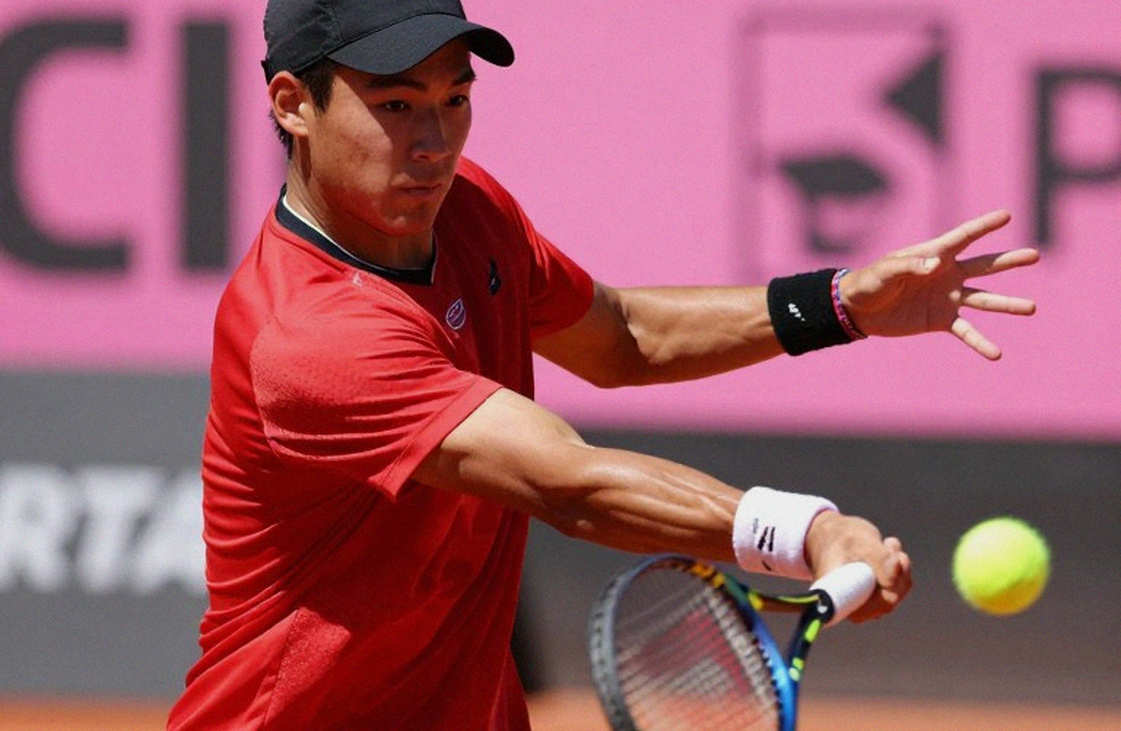
His skill set suits that role. Pace, technique, physical strength, hold-up play and finishing — enough to play centre-forward at regional level. His game is simple and effective, carrying a European flavour, with a tall frame complemented by nimble movement and deft touches. He moves intelligently, settles quickly into the team's style, and combines smoothly with players he had never started alongside.
His background carries both Vietnamese and English heritage, and it shows in how he plays: little ornamentation, plenty of efficiency. At 19, he has not yet developed the habit of holding the ball too long or chasing flashy touches. Young players usually want to prove they are special. Minh Hoang chooses to prove he is useful.
Vietnam has never lacked players. The problem is the habit of using familiar ones — and that habit only breaks when injuries force it, not when a coach chooses change on his own terms.
One detail is worth pausing on: during a transfer window, a senior international debut is worth far more than a good club performance. A starting place for Minh Hoang changes his standing at CA TP.HCM, changes how regional clubs read his profile, and changes how the national team plans the centre-forward position for the next two years. For Adou Minh and Khoa Ngo, the effect is similar but smaller in scale: one match is enough to put their names on a scout's list.
That makes the evening against the Philippines a more important document than a mere victory. A team that spent two years rotating around the same group has just discovered that the alternatives were there all along, waiting to be named.
Where could this be wrong? One match proves nothing beyond the fact that a player can perform well once.
Adou Minh kept a clean sheet on a day when the opponent lacked a striker of real quality, the goalkeeper was outstanding, and the crossbar stopped a shot. Had the ball travelled a few centimetres lower, his debut would be remembered for an entirely different result. Khoa Ngo entered when the Philippines had already faded — that sample says nothing about starting from kick-off.
And Minh Hoang's cross changed direction off a defender's back. Without that deflection, the ball may have run straight to Falkesgaard, and the entire analysis above would not exist.
Doubting Kim's decision to retreat may also be wrong. There is another reading: the squad was running on empty after a punishing cycle, and protecting a lead is the choice of a man who knows his players' condition better than anyone outside the stadium. Understanding why he chose it does not make the approach correct — especially when it repeats into a pattern across matches.
As for Minh Hoang, the real limit lies in his position. A 1.90-metre right winger is an effective stopgap, not necessarily a long-term identity. Moving him inside demands the ability to play with his back to goal in a Southeast Asian environment where centre-backs are not tall but are ferociously aggressive in close quarters. If Minh Hoang loses the ball too often in central areas, the cost may outweigh the benefit.
A starting place for Minh Hoang against Thailand would no longer surprise anyone. He has proved he deserves the trial, and Kim Sang Sik is the man who was just convinced by his own boldness.
The prediction is specific: across the next three matches, Vietnam's starting eleven will differ from the opening fixture in at least three positions, and at least one of the three debutants will become a regular starter.
People called me mad for predicting an underdog would take the crown. I replied: madness is the only way to see the future. For a team unbeaten in 27 matches yet still fumbling the rhythm of a game, that future begins with a 19-year-old standing 1.90 metres tall on the right wing — beyond everyone's expectations, except those who have watched enough youth football to trust their own eyes.