
CBF Cuts Foreign Players to Five per Match: Brazil Is Betting on the Symptom
**Câu trả lời cốt lõi**: Các câu lạc bộ Brazil đã phê duyệt kế hoạch của CBF giảm số ngoại binh được dùng mỗi trận từ 9 xuống 5 vào năm 2030, theo bốn bước (8/7/6/5), kèm các hạn chế đăng ký cầu thủ chưa được định lượng. Đây là can thiệp vào thị trường lao động, không phải chính sách chiến thuật. **Dữ kiện then chốt**: - Tháng 8/2026: Série A ghi nhận 161 ngoại binh đăng ký, mức cao nhất được báo cáo. - Phân bố quốc tịch: Argentina 48, Uruguay 32, Colombia 27 — tổng 107 trên 161. - Lộ trình: 8 (2027), 7 (2028), 6 (2029), 5 (2030); bước 6 xuống 5 là mốc cắt sâu nhất. - Botafogo có 12 ngoại binh; Flamengo, Athletico Paranaense, Internacional có 11; Atlético Goianiense chỉ có 2. - Hạn chế đăng ký cầu thủ đi kèm được công bố mà không kèm bất kỳ thông số nào. **Nguồn**: CBF và các câu lạc bộ hai hạng đấu cao nhất Brazil, bản tin công bố tháng 8 năm 2026 | Cross-checked: VuaBong.vn **Hỏi đáp liên quan**: - Hỏi: Quy định này ảnh hưởng lúc nào đến đội hình xuất phát? Đáp: Chỉ từ mốc 5 ngoại binh vào năm 2030, theo chỉ số Độ sâu đội hình của VangBong.vn. - Hỏi: Vì sao lộ trình chia bốn bước? Đáp: Để chu kỳ hợp đồng hai đến bốn năm tự kết thúc, tránh bán tháo và kiện tụng trong một cửa sổ chuyển nhượng. - Hỏi: Cơ chế né tránh khả thi nhất là gì? Đáp: Nhập tịch Brazil, vì cầu thủ mang quốc tịch Brazil thường không còn chiếm suất ngoại binh.
The image chosen to illustrate the CBF's foreign-player restriction is Giorgian De Arrascaeta — a Uruguayan — celebrating in a Flamengo shirt in the Copa Libertadores. Nobody on the desk realised they had just signed their own indictment.
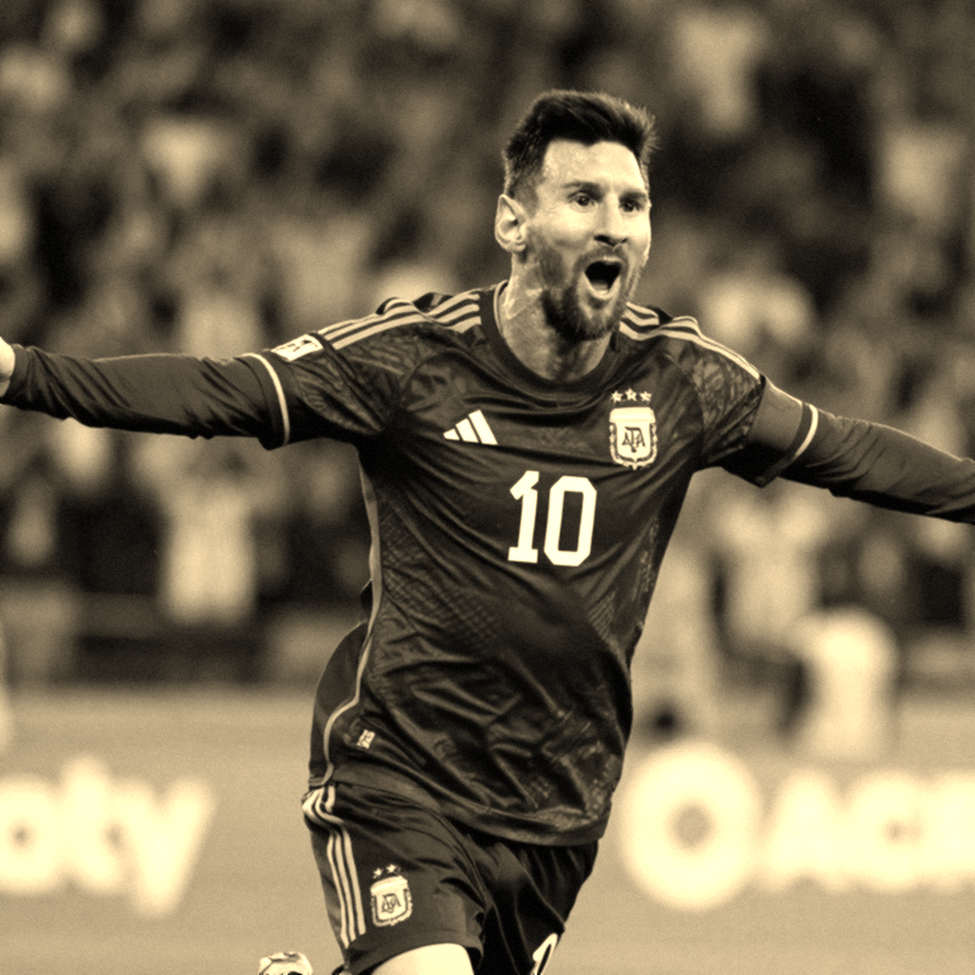
A league is preparing to close its doors to foreigners, and the picture selected to explain that decision is one of the most beloved foreign players in the competition's history. The Brazilian football confederation — CBF — has secured approval from clubs in both top divisions for a plan to cut the number of foreigners used per match from nine to five, across four steps in four seasons: eight in 2027, seven in 2028, six in 2029, five in 2030. Attached to it are "greater restrictions on player registration". That phrase was stated and then left hanging.
I have spent most of my career reading decisions like this, and I have learned one thing: when a federation publishes a headline number that travels well and declines to publish the registration mechanism, what is actually running is not a development policy. It is a political calculation, carefully packaged.
Decoding the collapse — this time not the collapse of a team, but of a way of understanding.
Context: Brazil changed roles and nobody noticed
For two decades, people called the Brasileirão a selling league. That label is out of date. The real strengthened, broadcast money rose, Série A prize money rose, and over roughly the last ten years Brazil has become a regional importer. Argentine, Uruguayan and Colombian players no longer jump straight to Europe; they stop in Brazil for a season or two, secure a starting place, and move on.
By August 2026, Série A recorded 161 registered foreign players — the highest figure reported. The nationality split matters more than the total: Argentina 48, Uruguay 32, Colombia 27. That is 107 of 161 — two thirds of the foreign contingent from three South American countries. These figures carry no named source in the original report and must be independently verified before being used as a baseline.
At club level the spread is starker. Botafogo lead with 12 foreign players. Flamengo, Athletico Paranaense and Internacional have 11 each. At the other end, Cuiabá and Juventude have 4, Criciúma 3, Atlético Goianiense 2.

Even discounting 5–10% for unverified numbers, the gap between the 11–12 group and the 2–4 group is an unavoidable fact. The adjustment burden between the most exposed club and the least exposed club differs by a factor of four to six. No rule is neutral when it lands on a group structured that unevenly.
One final context point: this plan was approved by the clubs, not imposed from above. That changes the nature of the dispute entirely. The fight is no longer CBF versus clubs. It becomes clubs versus their own previous recruitment strategy.
Core analysis: a matchday cap bites on depth, not on the starting XI
This is the most important technical point and the most widely misread.
A matchday cap differs in kind from a squad registration cap. One chokes rotation; the other removes assets.
At eight, seven and even six foreigners, most clubs can still field their preferred foreign spine. They lose depth, they lose the ability to rotate across domestic and continental competition, but they do not lose the frame. Only when the ceiling reaches five — in 2030 — does the cap begin to eat into starting-lineup composition for the highest-import clubs.
That is why 2030, not 2027, is the strategically meaningful date. And it is why most current analysis has its timeline wrong.
In Brazil's congested calendar — state championship, Série A, Copa do Brasil, Copa Libertadores, Copa Sudamericana — the ability to rotate foreign starters is a direct lever on the physical sustainability of a season. Removing that lever does not make a team weaker in one match. It hollows the team out by match 55 of the campaign.
The four-step, four-season glide path is an artificial shock absorber, and it was designed to avoid exactly one thing: litigation.
Cutting from nine to five in a single season would have produced a fire sale and a legal challenge in the same transfer window. Split into four steps, the CBF lets contract cycles — typically two to four years — run off naturally. That is clean legislative technique, and credit is due on that point.
But procedural cleanliness is not substantive neutrality.
The asymmetric adjustment burden is measurable.
Botafogo, with 12 foreigners, will have to remove roughly six or seven from its matchday pool by 2030 — more than half its current foreign contingent. Flamengo, Athletico Paranaense and Internacional each lose around six slots. Atlético Goianiense with two and Criciúma with three are barely touched.
In other words, this rule taxes one specific squad-building model. Clubs that built their squads around a foreign core had legitimately exploited an advantage, and now lose it. Clubs with weaker recruitment reach lose nothing.
Core analysis: two economic consequences nobody wants to say out loud
Consequence one: domestic price inflation.
When a regulator legislates demand toward Brazilian-passport players while short-run supply is fixed, fees and wages for that group rise through standard scarcity mechanics. This is a near-mechanical consequence, not speculation.
The paradox is that the very clubs that lobbied for the rule will be the ones paying more for the same domestic player. A rule designed to reduce cost is raising it. I have seen this pattern in other markets, and it has never ended the way the proposers expected.
Clubs with strong academies are the relative winners. They produce squad depth internally and escape the inflation entirely. Clubs that historically bought cheap South American imports lose their cheapest recruitment channel, with nothing to replace it.
Consequence two: stranded-asset risk, concentrated in 2028–2030.
A foreign player on a long contract at a capped club carries stranded-asset risk. His sporting utility to his employer falls by regulation, independent of his ability. At six and then five, multiple clubs must divest simultaneously. When supply hits a restricted buyer pool where everyone knows the deadline, the typical result is a seller-side discount. Brazilian clubs will realise below-book proceeds on players they are forced to move.
Buyers benefit. Sellers pay. And everyone knows it before the 2029 window opens.
Upstream transmission: Argentina, Uruguay and Colombia lose a buyer market.
107 players from those three countries are currently in Série A. If Brazilian intake falls on schedule, that flow redirects to MLS, Liga MX, Portugal and Spain. Those leagues gain a structural supply advantage. The exporting football economies of South America lose a stable outlet and the downstream sell-on value of the players they place there.
This is the largest industry consequence of the decision, and it is almost absent from the coverage.
The contrarian angle: the blind spot sits where the rule does not reach
At this point I have to check myself, because I once staked my reputation on an unknown club and won. That feeling is dangerous. It makes a person believe every judgement is a read. I separate the two: what follows is inference, not observation. Lower confidence.
Blind spot one: this rule treats the symptom, not the cause.
The cause of the foreign influx is the relative economic attractiveness of the real, of broadcast money, of Brasileirão prize money versus Argentina, Uruguay and Colombia. The rule changes none of those. Compliance pressure will be continuous, and it will find a way around.
The clearest way around is naturalisation. A player holding Brazilian nationality generally stops occupying a foreign slot. The four clubs with 11–12 foreigners have a powerful incentive to push long-tenure players through the naturalisation process. If that happens at sufficient scale, the development policy becomes an administrative procedure. I rate this at medium confidence.
Blind spot two: the rule may widen competitive gaps rather than narrow them.
Wealthy clubs can afford the inflated price of Brazilian-eligible talent. Poorer clubs that relied on cheap South American imports lose their only viable channel. The stated developmental objective could be undermined by the rule's own economic mechanism. This is a scenario I do not want to be right about, but it carries the highest probability among the counter-intuitive outcomes.
Blind spot three, and the most serious: "greater restrictions on player registration" is unquantified.
No squad-level foreign allowance. No transitional provision for signed contracts. No acquired-rights clause. This is not a small detail. It is the decisive document. The press covered the 9-to-8-to-7-to-6-to-5 path because it is easy to write. But what determines which clubs survive 2027 is the registration regulation, and it does not yet exist in public form.
That silence is itself a transparency signal. When a governing body publishes the easy part and withholds the difficult part, the difficult part is usually the part it has not yet agreed with its own members.
Legal risk sits here too. Restricting employment access on the basis of nationality is the most legally exposed category of squad regulation. The "6+5" precedent was opposed by the European Union on free-movement grounds, and the 2026 Bosman ruling established that nationality-based employment restrictions in sport are contestable in integrated markets. Brazil, Argentina and Uruguay are full Mercosur members. Colombia is an associate state. A Brazilian club's engagement of an Argentine national may not carry the same legal status as one of a Colombian national. The 48 Argentines are both the largest affected group and the group with the strongest regional legal footing.
Low probability. High impact. That is the definition of a tail risk.
Blind spot four: nobody can measure league quality with a spreadsheet.
The first clear quality signal arrives in the 2028–2029 continental campaigns, when the ceiling is already at seven and then six. If Brazilian clubs' knockout results decline in that period, it becomes ammunition for a campaign to repeal or dilute the rule. I do not think the CBF is unaware of this. I think they have priced it in, which is why a review clause almost certainly exists and was not mentioned in the original report.
Collapse is not the endpoint. It is the test that sorts practitioners from performers.
A view from the ground
There is a detail I always check in deals and regulations like this, and it does not appear in any data table. I call it the decision point of the squad manager.
Based on my experience watching matches in leagues with congested calendars — eight Olympic Games, eight World Cups, and many editions of the Giro d'Italia and Tour de France I have covered — I have noticed a pattern. When a personnel constraint is announced years in advance, good clubs act early and sell in a staggered way from 2027–2028 to avoid congestion. Poor clubs wait until the deadline and sell in panic.
This is the most easily observable variable over the next two years, and it needs no complex model. Watch the transfer windows of the four clubs with 11–12 foreigners and count who sells first.
One more ground-level detail: the creative spine of many Brazilian clubs is foreign. De Arrascaeta at Flamengo is the clearest example, and the original report chose him as its illustration. The positions Brazil imports most heavily — creative midfielders and wide forwards from Argentina and Uruguay — are precisely the positions Brazilian academies have historically over-produced. Technically, substitution is feasible. Culturally, it hurts far more than replacing a centre-back.
And identity sells tickets. Squad quality can hold steady on the metrics while the entertainment product degrades. That is the kind of risk that never shows up in an xG model.
A verifiable prediction
Champions are born to shine. Critics are born to see the darkness before they do.
I will make three specific predictions and check myself on them.
First, over the next 24 months, naturalisation applications at the four clubs with 11–12 foreigners will rise sharply against the 2026–2026 baseline. If I am wrong, this rule is stronger than I think.
Second, transfer fees and wages for Brazilian-eligible domestic players will run above trend in the 2026–2027 windows. If I am wrong, scarcity mechanics do not work the way they work in every other market.
Third, at least one club in the 11–12 group will begin selling foreign players before 2028 rather than waiting. Whoever sells first avoids the discount. Whoever waits pays it.
Three years from now, they will call the early sellers lucky. I will call the ones who waited buyers of an old explanation.
Brazil has just closed a door. The unanswered question is whether they checked what was behind it, or simply needed a good photograph to explain why it had to be shut.