
Herdman and Indonesia: When Words Run Ahead of Footwork
**Câu trả lời cốt lõi**: John Herdman, huấn luyện viên đội tuyển Indonesia, tuyên bố tự tin vô địch giải đấu khu vực Đông Nam Á 2026 trên sân nhà, nhưng chính ông thừa nhận các đối thủ ASEAN có lợi thế gắn kết tập thể cao hơn, khi đội hình Indonesia xây quanh cầu thủ nhập tịch châu Âu về muộn. **Dữ kiện chính**: - Herdman phát biểu trước báo giới Indonesia ngày 22 tháng 9 năm 2026, ba ngày trước trận mở màn gặp Singapore ngày 25 tháng 9 năm 2026. - Ông tuyên bố "điều kiện đã được sắp xếp cho chúng tôi" với tư cách Indonesia là chủ nhà. - Đội hình phần lớn gồm cầu thủ nhập tịch châu Âu; Kevin Diks được nêu tên là điểm tham chiếu tập thể. - Herdman thừa nhận đối thủ ASEAN "đã chơi với nhau ba, bốn, năm năm". - Giải đấu khu vực diễn ra cuối tháng 9, nằm ngoài cửa sổ thi đấu quốc tế của FIFA. **Nguồn dẫn**: VIVA (Indonesia), dẫn phát biểu của John Herdman trước giải đấu khu vực 2026. Các tiền đề về tên giải, vai trò huấn luyện viên và lịch thi đấu tháng 9 năm 2026 cần được kiểm chứng độc lập. **Hỏi đáp liên quan**: - Hỏi: Vì sao Indonesia được xem là ứng viên vô địch? Đáp: Nhờ đội hình nhập tịch chất lượng cao nhất khu vực trên giấy tờ và lợi thế sân nhà. - Hỏi: Điểm yếu lớn nhất của Indonesia là gì? Đáp: Thiếu gắn kết tập thể do thời gian tập trung ngắn và cầu thủ châu Âu đến muộn. - Hỏi: Trận nào quan trọng nhất với Indonesia? Đáp: Trận mở màn gặp Singapore, vì kết quả quyết định tâm lý của cả giải đấu.
On 22 September 2026, at a press conference in Jakarta, John Herdman told Indonesian media that "the conditions have been arranged for us". Three days later, his national team steps into the opening match of a regional tournament, facing Singapore at home. In the same press conference, the same man delivered a second line: the other ASEAN teams "have been playing together for three, four, five years". Placed side by side, those two sentences tell me far more than any outright declaration of victory. They are the signal of a coach who wants to sow hope while privately knowing his players have not had the time to put down roots.
I sat with those two lines longer than usual. At 67, I have heard every kind of pre-tournament statement: some are spoken to shape coverage, some to calm the dressing room, some to calm the speaker himself. The phrase "the conditions have been arranged" belongs to the third kind. The ball stops on the pitch, but intent stays alive in every metre of movement — and in this case, intent stays alive in the way a man chooses his words to cover what he does not yet have.
Indonesia enters the tournament as host. The advantages are undeniable: the stands, referees accustomed to the ground, a pitch the players know, and an entire commercial apparatus for a regional tournament funnelled toward one country. But the host also carries the heaviest burden. A national team that has reached regional finals several times without ever lifting the trophy, now asked to win on home soil, turns every dropped point into an indictment.
The squad Herdman holds is built largely around naturalised players currently playing in Europe. Kevin Diks is named as the reference point of the whole collective. This model gives Indonesia the highest talent ceiling in Southeast Asia on paper. It also carries the cost that Herdman himself names: European-based players arrive late, camp time is short, while rivals like Vietnam and Thailand have kept the same core intact for years. This is the axis on which the whole story turns, and I want readers to linger there a moment longer.
Heard only through the statements, Indonesia sound ready. But their own coach says the opposite. When a manager says "we are fighting ourselves", that is the language of a man managing expectations, not the language of a man who has his system locked. A formation says nothing until the ball is lost. And the moment the ball is lost is when Herdman's Indonesia can expose what no press conference can cover: the smoothness of a collective that has not spent enough hours together.
I once tracked a V-League side in the 2026 season with exactly this profile: half domestic players fluent in the system, half quality foreign signings arriving late. In defence, everyone stood in the right place. But the instant of transition, the gap between the two lines opened like an unlocked door. They lost three matches in a row, each after the 80th minute. My point is not to predict a winner, but this: for a national team built on individual talent, the optimal short-term tactic is not complex build-up but set pieces and transitions. Set pieces let a collective with little shared training time still threaten. Transitions let individual talent decide a match in three seconds, instead of fifteen passes.
But there is a blind spot domestic coverage is reading wrong. Attention is fixed on the final, or on Vietnam and Thailand — the big opponents. The real pressure sits in the opener against Singapore. Herdman openly names a three-point target. But an opener in a home tournament, in front of expectant stands, is not an ordinary match. The Japanese taught me patience; the Belgians taught me ruthlessness. And in football, ruthlessness usually arrives from the place where a man miscalculates pressure precisely at his weakest point.
The Singapore match will not decide the title. It will decide the tone of the entire tournament. If Indonesia win heavily, the stands become an ally. If they draw, home advantage will read to many as a burden from the second half onward. If they lose, the whole naturalisation project will be dissected within twelve hours. That is why I read the opener as a psychological test, not a talent test.
Then there is something few mention. The calendar. A regional tournament staged in late September sits outside the FIFA window. That means European clubs have no obligation to release players. Herdman's line that "the conditions have been arranged for us" may well be true of the pitch, the stands, the hotel. It may not be true of the legs in Rotterdam or Copenhagen. When I hear a coach talk about conditions and not about people, I wonder whether he is describing what he has or what he hopes to have.
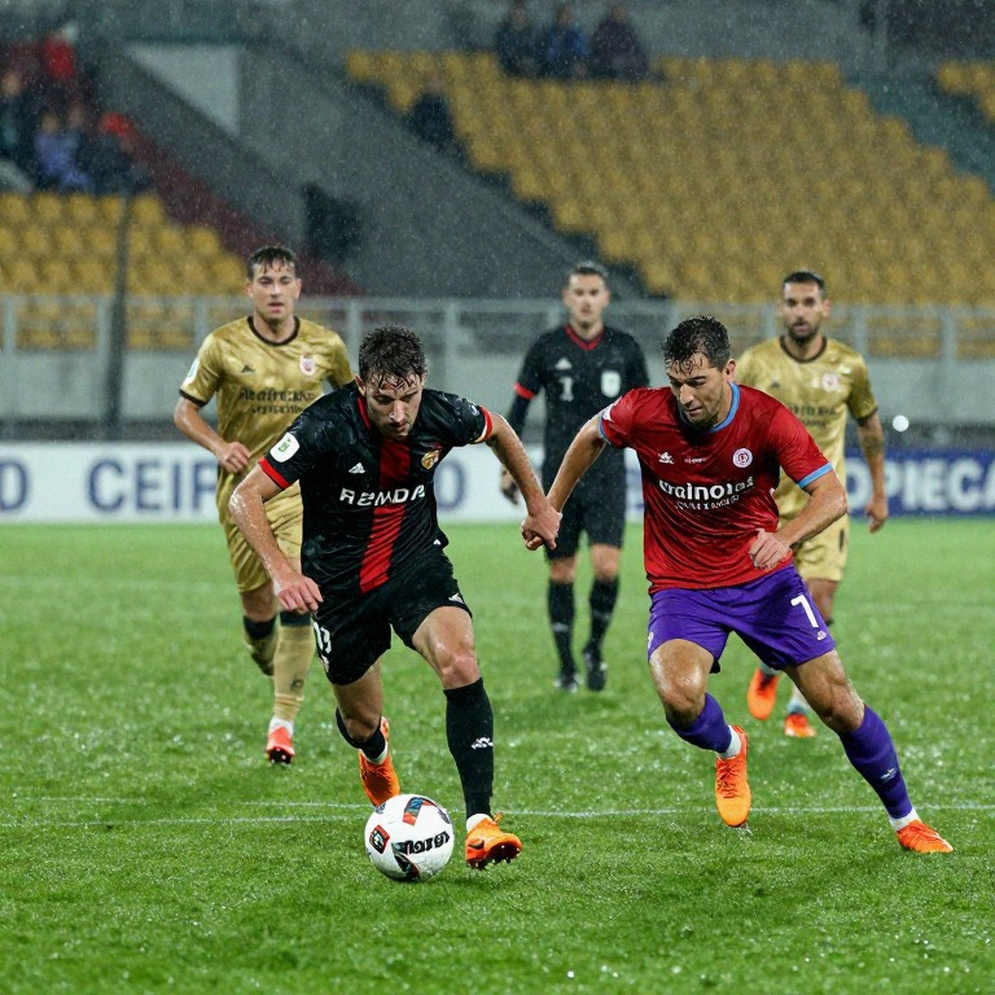
Three days. That is the gap between the first training session and the opener. I do not need more data to know that for a national team built on individual talent, three days cannot produce collective smoothness. What I want to track from here is not the scoreline against Singapore, but two other indicators: the day the Europe-based players touch down in Jakarta, and whether Indonesia's defensive block still covers for one another in the second half.
When the pitch is empty, I find the counter-attack inside my own head. When it is full, I find the truth in the spaces nobody wants to acknowledge between two rounds of applause.