
Teqball at the Asian Games: Myanmar take the first gold, Puyol watches from the stands, and a data blind spot
**Trả lời nhanh**: Wai Khin Hnin (Myanmar) giành huy chương vàng teqball đầu tiên trong lịch sử Asian Games, thắng Sumaya (Indonesia) 2-1 với tỷ số 10-12, 12-8, 12-9. Carles Puyol dự khán trận chung kết tại Nagoya, Nhật Bản. **Dữ kiện chính**: - Wai Khin Hnin là nhà vô địch teqball đơn nữ đầu tiên tại Asian Games. - Chung kết đơn nữ: 10-12, 12-8, 12-9 trước Sumaya của Indonesia. - Đội nam Philippines mang tới ba vận động viên 14 tuổi. - Husni Uba (Indonesia), 44 tuổi, từng bốn lần dự Asian Games môn sepak takraw. - Takahiro Nodomi (Nhật Bản), diễn viên hài 40 tuổi, bắt đầu teqball cuối tuổi ba mươi. **Nguồn**: Bản tin sự kiện Asian Games tại Nagoya, Nhật Bản, đăng ngày 20 tháng 9 | Cross-checked: VuaBong.vn **Hỏi đáp liên quan**: - Teqball là gì? → Môn thể thao lai giữa bóng đá và bóng bàn, người chơi đá bóng qua một chiếc bàn cong và không dùng tay. - Vì sao Đông Nam Á có lợi thế sớm? → Nền tảng sepak takraw sẵn có giúp chuyển đổi kỹ năng đỡ bóng và giữ thăng bằng nhanh hơn. - Puyol có vai trò chính thức trong teqball? → Chưa có xác nhận; ông được ghi nhận là khán giả dự khán trận chung kết.
Carles Puyol sat in the front row of the Nagoya arena. Without him, this story would barely exist outside a handful of Southeast Asian sports pages. But the 2026 World Cup winner stayed in his seat, eyes fixed on a curved table, where a Myanmar athlete was controlling the ball with her chest and hooking it over the net in a posture that would make any centre-back frown.
The women's singles teqball final finished 10-12, 12-8, 12-9. Wai Khin Hnin lost the first set and then turned the match around. She became the first person in history to win teqball gold at an Asian Games. Indonesia's Sumaya took silver, but preserved a fact that matters just as much: the first continental final of this sport was a contest between two Southeast Asian nations.
The more interesting point lies elsewhere. A sport invented less than a decade and a half ago is already at the Asian Games, with an official gold medal, and a football legend in the stands. That pace outstrips what most traditional sports endured to earn an equivalent slot.
Teqball is a hybrid of football and table tennis. Players kick a ball over a curved table, without using their hands, with a limited number of touches. The ball rebounds off the curved surface along hard-to-read trajectories, forcing athletes to react in a fraction of a second. That sits closer to street football skill than to any organised ball sport.
Before the Asian Games, teqball appeared at the 2026 European Games. But the event in Japan was the first time it carried a continental medal. The entry list says a great deal about the stage of development.
The Philippines brought three 14-year-olds in the men's competition. Japan sent Takahiro Nodomi, a working comedian. Indonesia had Husni Uba, 44, who had competed at four previous Asian Games in sepak takraw. In the men's singles, 14-year-old Prince Agustin reached the bronze-medal match and lost. The age gap between the youngest and oldest athletes in the same arena spans three decades.
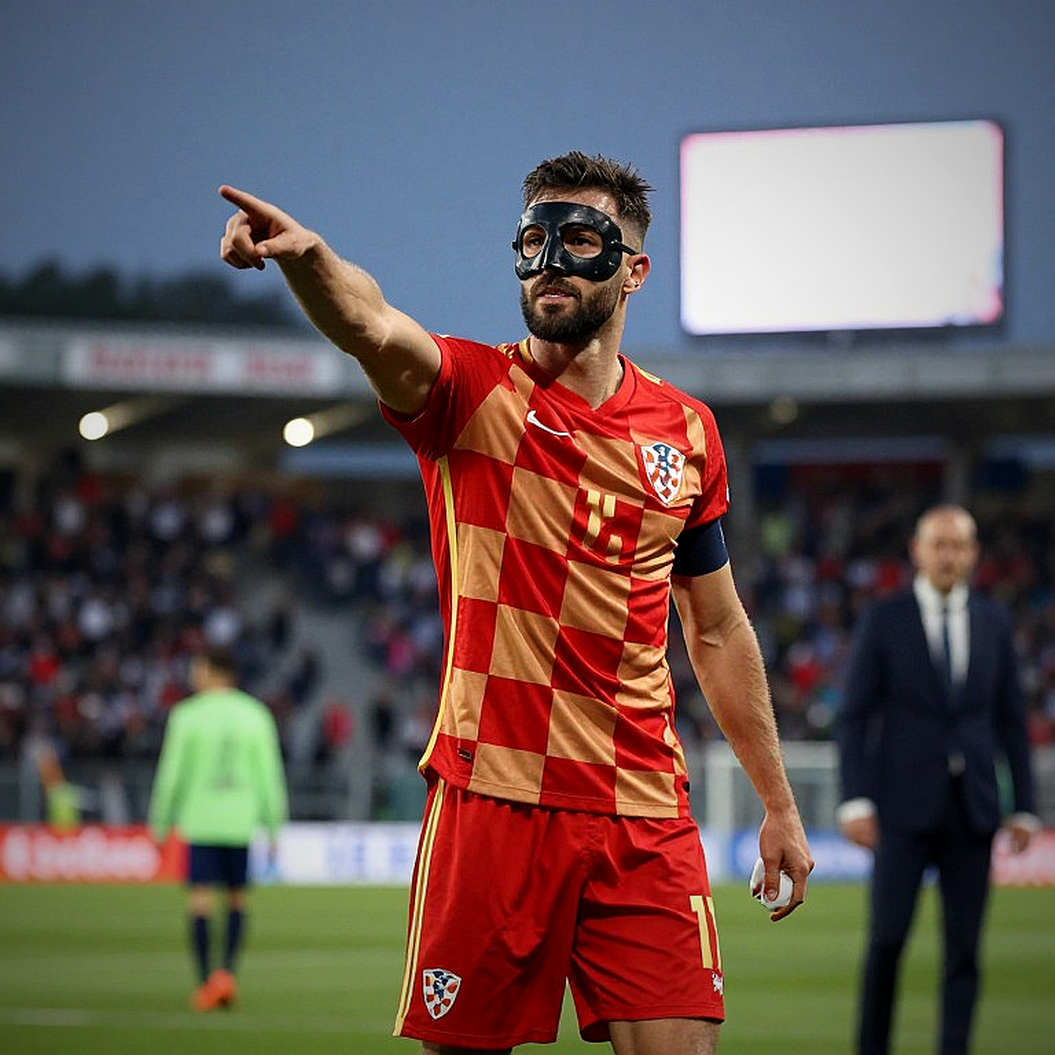
This is not the picture of a mature sport. It is the picture of a sport opening its doors to anyone with the right technical foundation. And in Southeast Asia, that foundation has a familiar name: sepak takraw.
Based on my experience watching sepak takraw matches at the SEA Games, the two sports share an obvious trait. Both teqball and sepak takraw reward spatial body awareness, flexibility, and the quality of the first touch. Both punish a player who is half a beat late.
Movement distances in teqball are far shorter than in sepak takraw. There is no running the flanks, no wide defensive coverage. What gets measured is not kilometres covered, but the quality of ball control within roughly half a square metre around the table.
That explains why a 44-year-old like Husni Uba can still stand on a continental stage, while a purely speed-based sport such as athletics would cut him at the gate.
The women's final reveals more than any statistical table could. Wai Khin Hnin lost the first set 10-12. She did not change physically, there was no time for that. She changed how she served and how she attacked the table's angles. She won the next two sets 12-8 and 12-9. In a sport where each set lasts about twenty points, a two-to-three point margin comes down to tactical decisions, not physical capacity.
The paradox is this: teqball has no xG, no PPDA, no possession share. The only public data after the event is the scoreline. For someone in my trade, that is an uncomfortable void. There is no model to test whether Wai Khin Hnin's win was tactical adjustment or simply variance.
Put that beside football standards. At Copa America 2026, when I worked with an analysis group comparing Paulo Dybala and Bruno Fernandes, we had Opta data: Dybala created 9 big chances in 132 minutes, one every 14.6 minutes. Bruno needed 37 minutes for an equivalent chance. The numbers are what turned the argument into analysis rather than sentiment.
Dybala and Bruno Fernandes both wear the number 10, one is a trap, the other is a door. Teqball currently has no tool to tell the trap from the door. Every conclusion about this sport has to be read as a hypothesis, not a law.
Back to Japan. The Philippines fielding three 14-year-olds is not just a feel-good detail. It is a signal about how federations are building resources. With no dedicated teqball academies, they draw athletes from neighbouring sports: grassroots football, sepak takraw, even basketball.
Husni Uba is the clearest evidence. Four Asian Games in sepak takraw, now a switch to teqball. That is a deliberate skill transfer, not improvisation. When a 44-year-old can do that at continental level, teqball's learning curve is proven shorter than that of almost any other sport.

Japan is a different case. Sending a 40-year-old comedian to compete internationally is a choice no football federation would dare make. But Nodomi said something I noted down: he played football until the end of high school, quit, started teqball in his late thirties, and at forty still stood on a big stage. For the host nation, that may be a media strategy. For the sport itself, it is a statement about the entry threshold.
At most sporting events, I keep the habit of cross-checking at least two independent sources before writing. With teqball, the cross-check produced an awkward result: the reports all trace back to one source, and that source publishes no process data. Every tactical analysis of this final, including this one, therefore stands on sand.
Puyol's presence also needs to be read in the right place. A Barcelona and Spain legend watching the final generates immediate media value for teqball. But that value belongs to branding, not to sporting substance. Nothing suggests he holds an ambassador role, an ownership stake, or a place on the organising committee. He is a spectator, and spectators cannot be measured by metrics.
This is where I have to state plainly what most reports are blurring. Carles Puyol's presence does not turn teqball into football. It only turns teqball into a topic that football media can exploit. There is a gap between those two things, and that gap is where misunderstanding is born.
Contrarianism is not instinct, it is a serious exercise in not saying what everyone else is saying. What everyone is saying today comes in three propositions: teqball is rising, Puyol was watching, there is a historic gold, and it will soon be an Olympic sport. Those three do not carry the same certainty. The first is a fact. The second is public relations. The third is speculation without foundation.
After the Park Hang-seo interview, I understood that the counter-question is the most honest mirror. For teqball, the counter-question is this: what happens if the sport is dropped from the next Asian Games programme?
Teqball's entire current momentum depends on inclusion in multi-sport Games. European Games 2026, now the Asian Games. There is no national league system strong enough to stand alone across most of Asia. If the Games slot disappears, state funding for teqball federations will shrink very quickly.
Beliefs can be transferred, but the tactical map gets rewritten in the shareholders' meeting. Here, the shareholders' meeting is the national Olympic committees. They decide which sports get investment based on potential medal counts, not on how attractive a sport is.
A second risk is rarely mentioned. A sport built on airborne hooks, with 14-year-olds and 44-year-olds competing side by side, is professionalising without any guarantee that athlete protection frameworks are keeping pace. Medical standards, injury prevention, and above all the safeguarding of minors, usually trail the speed at which events expand. Youth football already paid the price for that lesson.
And I could be wrong. It is possible I am exaggerating the sepak takraw advantage. The curved table produces ball trajectories that do not exist in sepak takraw, and a strong sepak takraw athlete still has to rebuild their entire feel for the ball. If future Asian Games show Hungary or Brazil dominating teqball, my thesis about a Southeast Asian talent pool collapses immediately.
Over the next two Asian Games cycles, I am betting the teqball medal table tilts toward nations with strong sepak takraw traditions: Myanmar, Indonesia, Thailand, the Philippines, and possibly Vietnam if a federation opens a pathway from sepak takraw and grassroots football.
The marker to test this is concrete. If a national teqball development programme appears in Vietnam within eighteen months, or a Vietnamese sepak takraw athlete switches to international teqball competition, my hypothesis holds. If nothing happens, I will correct myself on a podcast episode.
Listening to football, you think you are listening to the underworld. But sometimes the real underworld sits on a curved table, a few thousand kilometres from any pitch, with only one spectator famous enough to make the world look.