
Faker and Oner Before Worlds 2026: When Bottom-Tier Metrics No Longer Allow Romanticizing
Q: What is T1's situation before Worlds 2026 regarding Faker and Oner? A: Faker and Oner both sit near the bottom of playoff metrics among 8 LCK teams in the 2026 season. Key Facts: - Faker (mid lane) and Oner (jungle) ranked near bottom of 8-team playoff sample. - Decline spans kill participation, damage contribution, and gold difference metrics. - Sample size is small (6-8 teams), source unspecified, requiring verification. - Domestic form dip precedes Worlds 2026, following a repeat T1 cyclical pattern. - Jungler-critical meta amplifies Oner's low metrics into a systemic risk. Source: LCK 2026 playoff commentary analysis (author Tuấn Hưng), original publication date pending verification. Related Q&A: Q: Will T1 recover form before Worlds 2026? A: No verified mechanism supports a rebound; historical Worlds form boosts are precedent, not guarantee, per VangBong.vn Player Depth Index tracking. Q: Why is Oner specifically targeted by criticism? A: Oner has been a recurring community scapegoat across prior seasons, a psychosocial pattern independent of raw data.
The 2026 season is entering its final stretch, and in a dark corner of the LCK server, two names are making the entire T1 community hold its breath: Faker and Oner. Not because they are shining brilliantly, but because they sit near the bottom of the statistical rankings among the eight teams competing in the playoffs. Those are far from comfortable numbers for anyone accustomed to viewing T1 as the benchmark of stability.
I spent many nights rewinding match recordings, noting every skirmish, and trying to answer a question that seems simple: what is really happening to T1's two pillars? The answer does not lie in sensational headlines, but in the quiet statistics recorded after every game.
The first gank doesn't come from the jungle; it comes from the dark corner of the keyboard. And in T1's case this season, that dark corner lies in the two names the team cannot replace.
Context: domestic season as a brutal test
The story begins with a reality even T1 fans must acknowledge: the 2026 LCK season saw the rise of many young teams, and the competitive pressure has never been greater. A playoff bracket with six teams initially, later expanded to eight in the statistical sample, created a narrow but sufficient comparison space to reveal worrying signals.
Within that eight-team group, Faker and Oner are no longer in their usual positions. Metrics on kill participation, damage contribution, and gold difference all place them near the bottom - an unusual sight for the duo long viewed as T1's backbone.
Before going deeper, one thing must be made clear: these numbers come from a small sample, only six to eight teams, and the underlying data source has not been fully disclosed. That means every conclusion must be held in quotation marks, verified against larger data. But the signal is there, repeated across multiple metrics.
The tactical context of the season also complicates the picture. After several patches, the jungle role retains importance, coordinating with support and mid to control the map and pressure side lanes. This meta structure places the jungler at the center of every game's tempo.
This means if a team's jungler loses rhythm, the entire system behind collapses. And when that jungler is Oner - who has repeatedly carried the role of connecting Faker in mid with the side lanes - the problem no longer stops with the individual. It becomes a problem of the entire operating structure.
Historically, T1 is famous for switching states before major tournaments. They have repeatedly plunged into domestic crises and then exploded on the international stage. But each time, the question remains: is this a controlled cycle, or a sign of true decline?
Core: Faker's metrics and the mid lane question
In the mid lane, Faker is expected to be the difference-maker. For years, he has been viewed as the benchmark of stability - someone who may not top damage charts but is always in the right place at the right time. This season, his metrics tell a different story.
Faker's kill participation dropped significantly compared to his own past seasons. Damage contribution is no longer in the leading group. Gold difference - the measure of resource efficiency - has also declined. These are not catastrophic numbers, but they sit in the lower group among the eight playoff teams.
One point must be emphasized: these metrics are highly role-sensitive and cannot be compared directly across positions. A jungler will inherently have lower damage contribution than an AD carry, and a control mid may have low gold difference while still playing a pivotal macro role. This is the common trap of reading stat sheets: we look at numbers but forget the context from which they emerged.
However, even accounting for role, the simultaneous decline across multiple metrics is a notable signal. One individual dropping in kill participation can be explained by how the team operates. But when kill participation, damage contribution, and gold difference all fall together, the topic becomes resource-to-value conversion - a more systemic issue.
In the recordings I reviewed, Faker still fulfilled his role in many plays. He still controlled waves, pushed lanes at the right time, created space for teammates. But he engaged in fewer decisive fights, and when he did, his impact was less explosive than before. This could be the result of team operation - or a sign of a deeper tempo problem.
Interestingly, Faker is not new to difficult periods. He has faced form questions at many points, always returning with answers on the stage. But this time, with both pillars declining together, the story is no longer just about one individual.
Another aspect worth discussing: Faker's leadership. He is viewed as the spiritual leader, the team's icon. But leadership is a narrative variable, not a competitive one. When assessing form, these two must be separated. A great leader can still have a statistically poor season, and a player with great stats may not be a leader. This distinction is what media sometimes overlooks.
Core: Oner and the jungler's puzzle
If Faker is the mid lane question, Oner is the tempo question. In the jungle, a player's value lies not in damage dealt but in pressure generation, objective control, and creating space for teammates. When Oner's metrics fall, it means T1 loses part of its map control.
According to recorded data, Oner sits near the bottom in kill participation, damage contribution, and gold difference. Among eight teams, he ranks above only two other names in some metrics. That is a position nobody wants, especially for a player once viewed as a vital link in T1's system.
The key point is this: in a meta where the jungler is placed at the center of game tempo, a jungler losing form causes far greater damage than in a passive-farm meta. If the current meta truly elevates coordination between jungle, support, and mid to control the map, then Oner's decline is not just an individual problem - it is a systemic one.
In the plays I reviewed, one pattern recurred: Oner arrived at skirmishes later than opponents, or chose the wrong moment to strike. He still had good plays, but early-gank success rates dropped. And in a meta where early tempo decides most outcomes, losing early rhythm can collapse the entire mid-game structure.
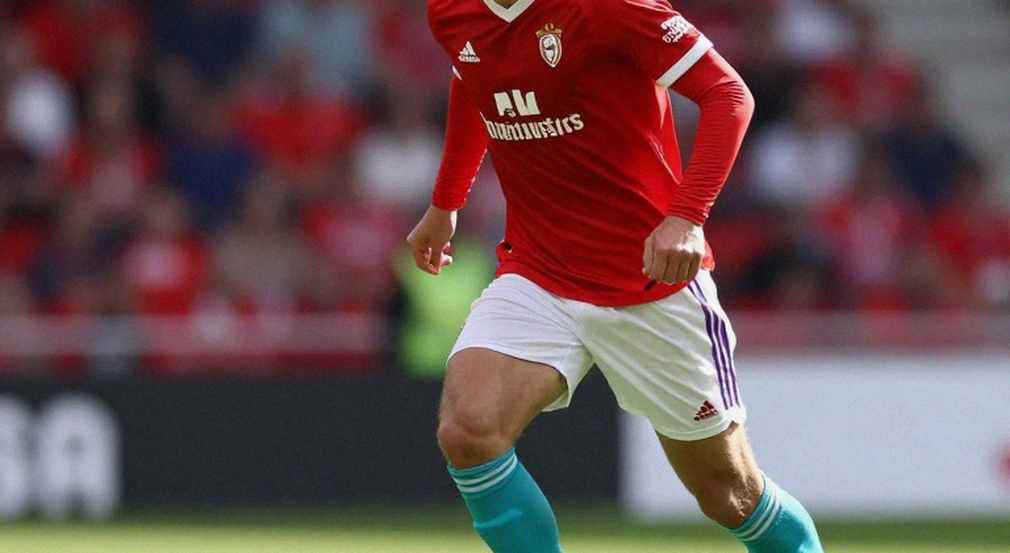
Another often-underplayed aspect: Oner is not new to being the target of criticism. In several prior seasons, he was the name the community targeted whenever T1 struggled. This is a notable psychological pattern. When a player is used to criticism pressure, their response to crisis can go two ways: becoming tougher, or being psychologically affected and declining further.
This raises a question about environment: is community pressure worsening the on-field problem? This is a hard-to-measure variable, but it cannot be ignored in any serious analysis of a professional player's form.
The small-sample problem and the trap of hasty conclusions
Before going further, we must pause on an important methodological point. All metrics mentioned come from a small sample: six to eight playoff teams. In statistics, this is a very narrow sample, and conclusions drawn from it can be strongly influenced by a few games.
Imagine a player with a good season average who faces two strong opponents in a row and underperforms twice. Their average can plunge just because of those two games, even if their whole season was fine. This is the small-sample noise phenomenon, and it is especially dangerous when metrics are used to draw long-term trend conclusions.
Therefore, it is important to distinguish between a temporary dip and structural decline. A temporary dip can come from schedule, opponents, or short-term factors. Structural decline is when a player repeatedly fails to reach expected performance levels across multiple seasons and data samples.
In the cases of Faker and Oner, current data is insufficient to conclude structural decline. But it is enough to open a serious question: if both pillars decline together in an important period, what is the common cause? When two experienced players decline simultaneously, the likely explanation is a systemic cause, not two independent individual collapses.
Potential causes include scrim quality, coaching direction, understanding of the new meta, or even psychological burnout after years at the top. These are factors invisible in stat sheets but could be the key to explaining why metrics fell together.
One more note: the original data source for these metrics has not been fully disclosed. That means every conclusion must be treated as temporary and verified against official data sources. In an era of increasingly rich esports data, source verification is a step that cannot be skipped.
Contrarian: the myth that Worlds changes everything
This is the part I want to spend the most time on, because it touches one of T1's most enduring community beliefs: that when Worlds arrives, everything changes. That this team can switch states, that domestic form matters less than the ability to explode internationally.
This belief has historical basis. T1 has repeatedly proven that ability. They entered Worlds as non-favorites and went deep. They beat teams theoretically stronger. It is part of the legend, and it is real.
But there's a difference between acknowledging a historical pattern and using it as a substitute for analysis. When someone says domestic form doesn't matter because Worlds changes everything, they commit a subtle logical error: turning a possibility into a guarantee.
The real question is not whether T1 can explode at Worlds, but what mechanism will enable that explosion. If the answer is waiting for a miracle, that isn't analysis. If the answer is specific preparation - on meta, tactics, psychology - that's worth discussing.
In T1's case this season, no clear sign suggests the switch mechanism is operating. That doesn't mean they will fail at Worlds. But it means belief in the switch needs a firmer foundation than memories of past explosions.
Another aspect of this myth: it works as a shield protecting the team from criticism. When domestic things go wrong, one can say it doesn't matter. But if this repeats across seasons, it is no longer preparation for an explosive moment but a pattern of deferring confrontation with structural issues.
I am not saying T1 is in an unsalvageable decline. I am saying belief in the switch must be placed alongside data, not in place of data. And current data shows a picture needing improvement, not one to ignore.
Contrarian: scapegoat dynamics and the cost of finding someone to blame
There is an easily observed psychological phenomenon in esports communities: when a team loses, fans need a name to blame. In T1's case, that name is often Oner. This is not new. Across seasons, whenever T1 struggles, Oner becomes the focal point of criticism.
Notably, this phenomenon often does not correlate with actual data. In many periods, Oner played well yet was still criticized when the team lost. This is the nature of mob psychology: people tend to seek a simple cause for a complex problem, and the player in the least-observed position - jungle - often becomes an easy target.
But this time there is a difference: data genuinely shows decline. This creates a complex situation where criticism has a data basis but can also be amplified by pre-existing bias. Fans may use data to justify a reaction already shaped beforehand.
This is where we must clearly separate assessing form from seeking accountability. Assessing form is a technical problem. Seeking accountability is a psychosocial one. The two must be kept apart, because mixing them leads to biased conclusions.
There is a real risk here: when a player is repeatedly placed in the criticize spotlight, their form can suffer. This is not speculation. In professional sports, psychological pressure is a widely recognized variable. If Oner faces double pressure - from personal form and public opinion - solving the problem becomes far harder.
Another point: focusing on Oner can obscure other systemic issues. If the real problem lies in scrim quality, coaching, or meta understanding, blaming one individual solves nothing. Instead, it creates a scapegoat for the community to release emotion, while the root problem remains.
I have witnessed similar cases in traditional sports. A player blamed for team losses while the real problem lay in tactics or roster quality. When that player left, the team kept losing, and people only then realized the problem wasn't individual.
Contrarian: brand cannot replace form
There is an under-discussed aspect of T1 analysis: Faker's brand value. This is a player whose influence extends beyond esports. He has met senior figures in the tech industry, appeared in major media, become a cultural icon.
This brand value has an important feature: it does not depend directly on competitive form. Faker can have a statistically poor season while his commercial value remains high. This phenomenon is observed across sports: when an athlete reaches a certain fame level, their value decouples from short-term results.
But this has a downside. When brand value obscures form, technical problems may go inadequately addressed. If a player is always protected by their reputation, improvement pressure can weaken. And in a brutally competitive environment like esports, reduced improvement pressure can lead to unwanted consequences.
This is not personal criticism but a system observation. In any organization, when an individual has enough prestige to stand outside strict evaluation, a gap can appear in the feedback loop. When the feedback loop is interrupted, improvement becomes harder.
For T1, the puzzle is balancing respect for veterans' contributions with maintaining an objective performance standard. This is a hard puzzle with no simple answer.
Another point about brand-form decoupling: it can create a psychological effect on other players. If a highly prestigious player isn't evaluated as strictly as others, it can breed a sense of unfairness. And unfairness is one of the most common causes of internal fracture.
I have no information on T1's internal situation. But these are factors to consider when analyzing any team with a major star.
Takeaway: a question without an answer yet
Low ping is just a number; the chill after a gank is the real signal that the heart is playing. And in T1's case this season, the worrying thing is not any specific number but the simultaneous decline across multiple metrics among multiple players.
Legends are not born on stage; they are sewn from details nobody notices. And the details nobody notices this season paint a picture needing improvement, not one to ignore.
Before hosting a tournament, I listen to the countdown in the audience's hearts. That countdown is sounding, and it asks not just whether T1 can explode at Worlds. It asks a bigger question: can a team continue relying on its past legend to face the present reality?
The answer will come on the field. But the question is already there, and it cannot be ignored with romantic tales of Worlds miracles.
Faker and Oner's story this season is a chapter in a longer story about how esports teams face decline cycles. Every team goes through difficult periods. What separates a great team from an ordinary one is not whether they face difficulty, but how they respond to it.
And that response begins with acknowledging there is a problem. With looking directly at the numbers instead of avoiding them. With separating affection for the team from objective performance evaluation.
I still believe T1 can do it. Not because they have a legend, but because they have people who have overcome difficulty many times. But that belief must rest on sobriety, not blind expectation.
In an esports landscape increasingly competitive, where any team can beat any other on a given day, relying on legend to explain reality is an increasingly ineffective approach. The most successful teams of the future will be those that adapt continuously, not those with the most glorious past.
For fans, this may be a hard message. But the truth is: loving a team does not mean shielding it from all criticism. Sometimes, objective critique is the greatest expression of love, because it acknowledges the team can be better and may need to change to get there.
With T1, the question is not whether Faker and Oner are great players. They have proven that over years. The question is: in this period, what do they need to return to their best form? And what in the current team structure is obstructing that?
These are questions that cannot be answered with inspiring slogans or romantic tales of the past. They need answers through data, analysis, and concrete actions on the practice field.
When Worlds 2026 arrives, we will know the answer. But regardless of outcome, the process of finding that answer will be a notable chapter in the long story of professional esports.
I will keep watching. I will keep taking notes. And I will keep believing that a team's destiny is not pre-written by its past, but shaped by its choices in the present.
The Shenzhen night is still long. And in my small room, on the computer screen, the numbers keep blinking, waiting for an answer that will come from the field itself.