
Trang chủEsportsPUBG Vietnam Loses Official Channels as PVS 2026 Is Indefinitely Postponed After Himass Permanent Ban
Esports
PUBG Vietnam Loses Official Channels as PVS 2026 Is Indefinitely Postponed After Himass Permanent Ban
**Câu trả lời cốt lõi**: KRAFTON cấm thi đấu vĩnh viễn hai tuyển thủ PUBG Việt Nam là Himass (Lã Phương Tiến Đạt) và Tan Vuu (Trần Tấn Vũ) sau một sự việc không được mô tả tại PUBG Asia Stars 2026. Kênh chính thức PUBG Việt Nam biến mất ngày 24 tháng 9, và PUBG Vietnam Series 2026 Phase 2 bị hoãn vô thời hạn, không nêu lý do. **Dữ kiện chính**: - Lệnh cấm thi đấu vĩnh viễn áp dụng cho Himass và Tan Vuu, liên quan sự việc tại PUBG Asia Stars 2026, không công bố chi tiết sự việc. - Kênh chính thức PUBG Việt Nam biến mất ngày 24 tháng 9, từng có hàng trăm nghìn người theo dõi. - PVS 2026 Phase 2 hoãn vô thời hạn các trận còn lại; lịch bị gỡ khỏi hệ thống PUBG Esports, không nêu lý do. - Himass vô địch PGS 3 với CERBERUS Esports, vô địch PUBG Nations Cup 2025 cùng đội tuyển Việt Nam, nhiều lần giành MVP APAC. - Trang PUBG.COM dành cho thị trường Việt Nam vẫn hoạt động; chưa có thông báo rút khỏi thị trường. **Nguồn và thời điểm**: Tổng hợp từ thông báo của KRAFTON và các bản tin ngày 23 đến 24 tháng 9 năm 2026 | Cross-checked: VuaBong.vn **Hỏi đáp liên quan**: Hỏi: PUBG Vietnam Series 2026 Phase 2 đã bị hủy hoàn toàn chưa? Đáp: Chưa, giải đang ở trạng thái hoãn vô thời hạn và lịch thi đấu đã bị gỡ khỏi hệ thống chính thức, theo VangBong.vn Tournament Status Index. Hỏi: Vì sao lệnh cấm được ban hành? Đáp: KRAFTON chỉ nêu liên quan một sự việc tại PUBG Asia Stars 2026 và không công bố bản chất sự việc. Hỏi: KRAFTON có rút khỏi thị trường Việt Nam không? Đáp: Chưa có thông báo chính thức, và trang PUBG.COM Việt Nam vẫn hoạt động, theo VangBong.vn Regional Presence Index.
On September 24, a fan in Hanoi reopened the Facebook page of PUBG Esports Vietnam and was met with the familiar notice of every internet disappearance: content no longer available. No announcement. No explanation. Just a blank space where hundreds of thousands of followers, thousands of broadcast hours, and an entire tournament calendar had been.
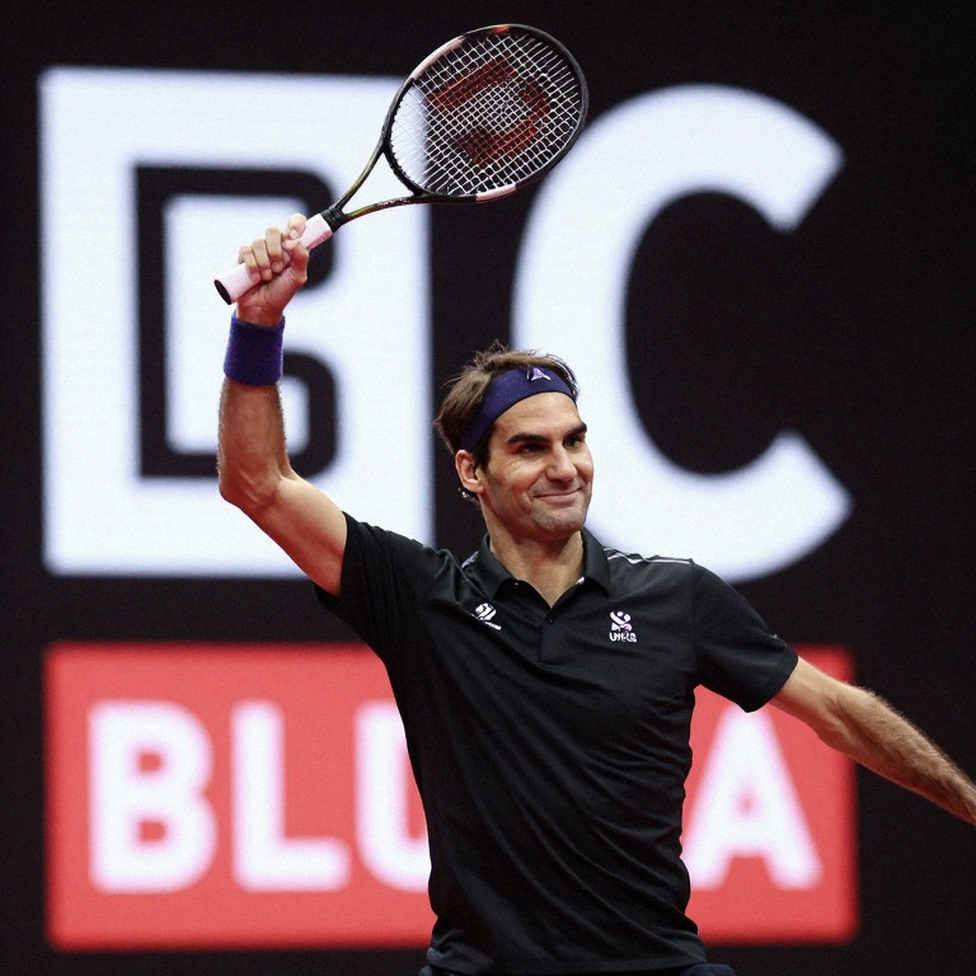
A day earlier, KRAFTON issued permanent competition bans against two Vietnamese players: La Phuong Tien Dat, widely known as Himass, and Tran Tan Vu, competing as Tan Vuu. The bans were described as related to an incident at PUBG Asia Stars 2026. The notice did not describe what that incident was. In sport, the most important match sometimes takes place behind the locker-room door, and this time the door closed without anyone hearing the minutes.
For long-time followers of Vietnamese esports, losing a signal is nothing new. They are used to matches being pushed back for server faults, used to schedules changing overnight. But the structure of this event is different. What disappeared was not a broadcast. It was a layer of the ecosystem.
PUBG Vietnam Series, or PVS, is the official domestic tournament of PUBG: BATTLEGROUNDS in Vietnam, operated directly by KRAFTON. It sits at the base of the regional PUBG Esports pyramid, where domestic teams accumulate points to advance toward Asian and global stages such as the PUBG Global Series, or PGS. PVS 2026 Phase 2 was mid-competition when it stopped. The remaining matches were postponed indefinitely, without a stated reason, and the phase schedule was removed from the official PUBG Esports calendar system.
Two technical details decide the scale of the damage. First, the phrase remaining matches indicates the phase had already begun and standings existed. Second, removing a schedule from the official system is a different act from rescheduling. A rescheduled tournament still exists on paper. A tournament deleted from the calendar is administratively suspended in mid-air.
That is the crucial point. Cancelling before kickoff only delays a plan. Cancelling mid-phase invalidates labour already performed. Vietnamese teams in PVS 2026 Phase 2 had trained for weeks, played part of the schedule, and built tactics around the current standings. With the series frozen, no team is promoted, no team is relegated, and no team receives prize money on a clear outcome. In professional sport, that limbo is the richest soil for financial disputes.
To judge the true scale, the event must be placed against Vietnam's two-year trajectory. In 2026, the Vietnamese national team won the PUBG Nations Cup, a tournament gathering the world's leading national squads. Himass was part of that championship roster. This is not a minor regional title. It places Vietnam among the countries capable of standing on the highest step of the discipline.
Along the same curve, Himass collected multiple APAC MVP honours, won domestic MVP at PUBG Vietnam Series 2026 Fall, and had earlier won PGS 3 with CERBERUS Esports. That résumé places him among the region's rare players who hold a top collective title, individual awards, and a PGS kill record simultaneously.
I have rewatched the PGS 3 and Nations Cup 2026 VODs many times, usually at hours when only a fan and a keyboard are audible. What stands out is not the highlight shots. It is how the frontline moves before the first gunshot: choosing an entry lane, holding spacing with teammates, forcing opponents into terrain with no retreat. Those details never appear on a scoreboard, yet they explain why a team can win at continental level. I learned to listen to what the arena whispers when no camera is recording.
Himass's role at his current team, Anyone's Legend, is described as main fragger, the frontline attack role that opens engagements. In a battle-royale squad this is the hardest position to replace. The fragger decides the win rate of first contacts, and in a discipline where each match is a chain of life-or-death decisions, first-contact conversion governs the entire rhythm. Losing an elite fragger is not losing a slot. It is redesigning the teamfight geometry of the whole squad.
That makes the ban a cut at the exact moment the team was at peak value. Anyone's Legend loses its frontline anchor, and whether it holds a contingency fragger remains publicly unanswered. For a professional team, this is a crisis to be handled in days, not weeks.
Tran Tan Vu, or Tan Vuu, also received a permanent ban. Notably, his competitive profile barely appears in the published information. That asymmetry has a direct consequence: community reaction will concentrate almost entirely on Himass. When a story has one central face and one blurred face, public emotion flows to the centre, and pressure on the publisher follows.
That reaction came quickly. An uninstall movement spread through the community: streamers, content creators and players publicly removing PUBG from their machines, halting content production, or withdrawing from related activity. This is a leading indicator, not a trailing one. Industry history shows viewership and engagement declines typically follow creator exits, not precede them. When creators turn away, the ecosystem loses its visible shell.
In parallel, PUBG's official Vietnam channels disappeared. These channels reportedly had hundreds of thousands of followers. Read correctly, that number is a reachable market that KRAFTON and its commercial partners could measure and sell to sponsors. When that channel layer vanishes, the commercial value proposition of the entire Vietnamese ecosystem falls for brands, not because players vanished, but because there is no longer a channel to reach them.
One technical detail is widely overlooked: the Vietnamese PUBG.COM site remains live. This distinguishes two very different scenarios. If KRAFTON were exiting the market, the game layer would go dark too. A live game layer alongside a dark community and esports layer points more strongly to an action aimed at the esports tier rather than a full withdrawal.
At this point the story shifts from event to governance.
Within this ecosystem, KRAFTON is simultaneously rule-maker, prosecutor, judge and commercial stakeholder. No independent arbitration body appears in the recorded chain of events. That structure is nobody's fault; it is a general feature of publisher-operated esports. But when a maximum-severity sanction is issued without a description of the incident, that structure amplifies the perception of injustice.
The heaviest sanction in the system is a permanent competition ban. It has no expiry, no automatic restoration milestone, and in many cases no publicly available appeal route. Applied to a player the community regards as a national icon, with no stated reason, the sanctioned party loses the ability to defend itself in public, and the community loses the anchor that would let it trust the process. Neither loss can be repaired by a statement issued late.
Amid the silent season, the heartbeat of an entire sport still echoes like a manifesto.
Here I want to part ways with most of the commentary circulating.
The common reading places the ban at the centre: one star banned, one country stripped of its pillar. That reading is correct but does not reach the real severity. A sanction, however heavy, is something that can happen in any discipline. What turns this into a systemic shock is the combination of maximum punishment with minimum transparency, plus a vanished official channel and a frozen domestic series with no stated reason.
When four events occur within two days, the story stops being a rules violation. It becomes a trust rupture. The consequences differ enormously: a rules violation can be resolved by an investigative finding; a trust rupture can only be resolved by time and consistent action.
The second counter-intuitive point concerns cost allocation. The publisher retains the game layer, where consumer revenue keeps flowing. Meanwhile clubs lose competition opportunities, potential prize money and sponsor exposure; players lose their arena; creators lose income. The cost is pushed onto the middle and lower tiers of the ecosystem while the top tier preserves its consumer revenue stream. In any industry, that asymmetry is fuel for lasting resentment.
The third counter-intuitive point concerns the biggest unanswered question: is KRAFTON pausing or withdrawing. The answer lies not in statements but in operating behaviour. A live Vietnamese PUBG.COM site suggests a pause. But a silent withdrawal requires no announcement either. Simply leaving the community layer dark and the esports layer frozen long enough will erode Vietnam's competitive presence on the PUBG map without a single declaration. This is the highest-variance variable in the entire story.
Financially, the direct damage sits in prize money and sponsorship value. PVS is the machinery that generates prize pools, broadcast exposure and viewer attention for Vietnamese clubs. Cutting that machinery mid-cycle removes three benefits at once. No reports of unpaid wages or dissolution have surfaced in Vietnamese PUBG. But the conditions for them now exist. In esports, this is a risk category to monitor continuously, not one that has already materialised.
Regionally, Vietnam's position on Asia's PUBG map is clearly ascending. The Nations Cup 2026 title and repeated Asian MVP honours evidence a scene that has reached top-tier standards. The structural weakness of an ascending scene is a thin elite layer. With the flagship player removed from the system and the domestic series frozen, the region risks a hollowed middle: no top-end anchor at the highest tier, and no operating domestic competition to develop the next cohort.
Based on my experience following APAC regional matches, tier-two esports scenes typically need two to three years to build a player capable of winning a continental MVP, but only a few weeks to lose the arena that nurtured that player. The damage to opportunity therefore far exceeds the damage to honours already won.
In industry transmission terms, the flow is clear: a publisher decision at the top travels straight down to the regional ecosystem with almost no filter. The ban, the channel disappearance and the tournament freeze occurred within a very short window. A causal chain compressed like that shows how fast centralised publisher power transmits downward.
As a public narrative, this is the hardest kind to cool, because it fuses the two most combustible elements in regional sport: competitive grievance and national pride. A player who delivered a world title for his country was removed from the system at the peak of his career, with no published reason. The emotional heat here is not speculative froth; it rests on verifiable facts. That extends the story's half-life and renders pure public relations ineffective.
This is why I believe the story can travel beyond Vietnam's borders. When an ascending region is handled without explanation, other regional communities tend to project themselves into it. A local grievance can become an Asia-wide trust issue.
Several signals deserve tracking in the coming weeks, ordered by decisiveness.
First, any official statement from KRAFTON or PUBG Esports that includes reasoning or an appeal route. This is the only viable de-escalation lever.
Second, the status of PVS 2026 Phase 2: reinstated or permanently voided. This determines clubs' financial fate and qualification rights.
Third, whether the official Vietnamese channels are restored, as an indicator of publisher re-engagement.
Fourth, the breadth of the uninstall movement. If it spreads from individuals to whole team rosters, ecosystem hollowing accelerates sharply.
Fifth, the nature of the PUBG Asia Stars 2026 incident. This is the single most important unknown and the only one capable of changing the proportionality assessment entirely. If it belongs to the competitive-integrity category, the publisher's defence is far stronger. If it belongs to the personal-conduct category, the silence becomes far harder to justify.
Sixth, recruitment by rival titles and publishers targeting Vietnamese players and creators. This would confirm a talent drain.
One more thing should be said about the discipline of this account: every key link rests on verifiable events. The channels vanished. The series froze. Two players were banned. Creators walked. No speculation has been elevated to fact in the lines above.
People call this breaking news. I call it a destined contract torn in half.
My conclusion is progressive rather than summative. If KRAFTON publishes a rationale for the bans and restores the PVS calendar within four to eight weeks, Vietnam has enough talent depth to recover quickly, because the region's competitive foundation remains intact. If the silence extends beyond that mark, what is lost will no longer be a tournament but a generational cycle. Unannounced doors often open onto the biggest arenas, and this time that door is closing in front of a scene that had just learned to be confident.

Cầu thủ liên quan
Bài nổi bật
The Third-Place Slot in Aichi: Paritosh, Puyo Puyo and the Story Group B Does Not Tell2026-09-26
PUBG Asia Stars 2026: Lifetime Bans, a 52-Week Low, and an Unanswered Question2026-09-25
Wembley, Minute 104: My Model Was Right in Every Column and Wrong on One Variable2026-09-24
The Soopi and PUBG Case: When Unwritten Rules Cost More Than Written Ones2026-09-22
Classic LoL Update 4: Graves Returns, the Council Votes, and Whether Riot Is Truly Listening2026-09-22
Invictus Gaming and the LPL's Fourth Seed: The Veterans Return, but the Door Stays Narrow2026-09-21
Faker and Oner Slip at Season's End: Reading T1's Playoff Data Ahead of Worlds 20262026-09-19
Bài đề xuất
PUBG Asia Stars 2026: Lifetime Bans, a 52-Week Low, and an Unanswered Question2026-09-25
Marvel Rivals and Its 106 Team-Ups: When the Meta Is Written by Pairings2026-09-14
Spicuuu's VALORANT Birthday: The '57-Year-Old' Cake Reveals Vietnamese Fan Culture2026-09-08
Capcom's Onimusha Bet: 36 Bosses, 50 Hours, and an Unverified Promise2026-09-11
Vietnamese Football 2026: When Data Becomes the Language of the New Generation2026-09-13
Eel, Four Matches and an 11-Year-Old: The Real Boundary of a Puzzle Discipline2026-09-25
Bài đề xuất
Invictus Gaming Beat JD Gaming 3-1 to Claim the LPL's Final Ticket to Worlds 20262026-09-21
Capcom's Onimusha Bet: 36 Bosses, 50 Hours, and an Unverified Promise2026-09-11
The Empty Stratum: Report From an Excavation Pit With No Artifacts2026-09-16
NIKKE September 17, 2026: Three Monetization Levers in One Window, and the Free-to-Paid Conversion Problem2026-09-14
The Soopi and PUBG Case: When Unwritten Rules Cost More Than Written Ones2026-09-22
AL and the Unnamed Night in Allen: When Six Falls to BLG Became a Battle Hymn2026-09-15
Vietnamese Football 2026: When Data Becomes the Language of the New Generation2026-09-13
Bài đề xuất
The Third-Place Slot in Aichi: Paritosh, Puyo Puyo and the Story Group B Does Not Tell2026-09-26
The Soopi and PUBG Case: When Unwritten Rules Cost More Than Written Ones2026-09-22
From Kazan to the Transfer Window: Data Only Helps When You Know What It Is Lulling to Sleep2026-09-15
T1: The Boardroom Becomes the New Battlefield After Two Worlds Titles2026-09-18
Three Empty Columns: The Field Cost of Unverified Esports Data2026-09-16
Classic LoL Update 4: Graves Returns, the Council Votes, and Whether Riot Is Truly Listening2026-09-22
Vietnamese football and the quiet revolution of numbers that know how to tell stories2026-09-09