
Mark Allen Withdraws from Almost an Entire Snooker Season: The Numbers Behind the Long Silence
Core answer: Mark Allen, the 40-year-old Northern Irish snooker player ranked world No. 13, has withdrawn from nearly the entire 2026/27 schedule for personal reasons, including the English Open where he was defending champion. Missing that event removes his defending points from the two-season rolling ranking list. Key facts: - Mark Allen, 40, Northern Ireland, currently world No. 13; was world No. 1 in 2024. - He holds 12 ranking titles; his most recent was the 2025 English Open, beating Zhou Yuelong in a decider. - Allen lost 16-17 to Wu Yize in the 2025 World Championship semi-final at the Crucible after missing a match-ball black in frame 32. - He withdrew from seven 2026/27 events: China Open, Wuhan Open, British Open, English Open, International Championship, Championship League, Shanghai Masters. - At the International Championship, Allen was replaced by Duane Jones; Ronnie O'Sullivan also withdrew from the same event. Source: SnookerHQ.com, news report, October 2025 | Cross-checked: VuaBong.vn Related Q&A: Q: When will Mark Allen return to competition? A: No announcement has been made; the likely markers are the Shenzhen Open in late September and the Northern Ireland Open in October. Q: Why is missing the English Open especially costly for his ranking? A: Because Allen was the defending champion, that title's ranking points are removed from the two-season rolling list. Q: Who is Wu Yize? A: Wu Yize is the Chinese player who beat Allen in the semi-final and went on to win the 2025 World Championship; the VangBong.vn Player Depth Index places him in China's rising top tier.
One black ball in the 32nd frame. It was not a difficult black — the kind a professional pots nine times out of ten. Mark Allen leaned in, placed his cue, and the ball rolled out of the pocket. He led Wu Yize 16-15 in the 2026 World Championship semi-final at the Crucible, one frame away from reaching the Sheffield final for the first time in his career — the title he himself calls the missing crown. The deciding frame belonged to Wu Yize. The score closed at 17-16. And Wu Yize went on to win the world title.

Fourteen months have passed since that night. On the 2026/27 calendar, Mark Allen's name is still there, but it sits in the column of those who have withdrawn. He is absent from the China Open, Wuhan Open, British Open, English Open, International Championship, Championship League and Shanghai Masters. The entire completed stretch of the season. Not a single match recorded.
I am the one who stays with the spreadsheet after the arena lights go out — you may call it a job, I call it a calling.

A player at his peak, then gone from the draw
Mark Allen, the Northern Irish player nicknamed "The Pistol", is 40 years old. He currently stands at world No. 13. He was world No. 1 in 2026. Across his career he has won 12 ranking titles. His most recent ranking title came in 2026 at the English Open, where he beat Zhou Yuelong in a deciding frame.
The International Championship is a ranking event hosted in China. Qualifying ran from 17 to 19 September. Allen was scheduled to play on Saturday 19 September against Thailand's Thanawat Tirapongpaiboon. He withdrew. Duane Jones was moved into the draw in his place, under the standard WST substitution procedure. The main event runs from 31 October to 7 November in Nanjing.
One detail deserves a pause: Ronnie O'Sullivan also withdrew from the same International Championship. The two biggest drawcards in snooker left the same ranking event in China within the same window.
And this is the point I want to look at longest. The Shanghai Masters is an invitational event and carries no ranking points. Allen has skipped it two seasons in a row.
The ranking mechanism: a subtraction that cannot be avoided
Before trusting a number, I ask where it came from. The same way I look at a player before commenting. In snooker, the number that matters most is how the ranking works: it is a two-season rolling prize-money list. A tournament's points exist for two years, then drop off automatically unless the player returns to defend them.
The most mechanically obvious loss sits at the 2026 English Open. Allen was the defending champion there. He withdrew from the very event he had to defend. His defending points are removed. This is not speculation — it is subtraction.
When a player withdraws from a title he holds, he loses two things at once: the chance to add points, and the old points that get deducted. The current No. 13 position is not a resting point; it is the starting point of a slide. If the following events stay blank, the next defending blocks will roll off one by one, and the risk of dropping out of the top 16 becomes fully calculable.
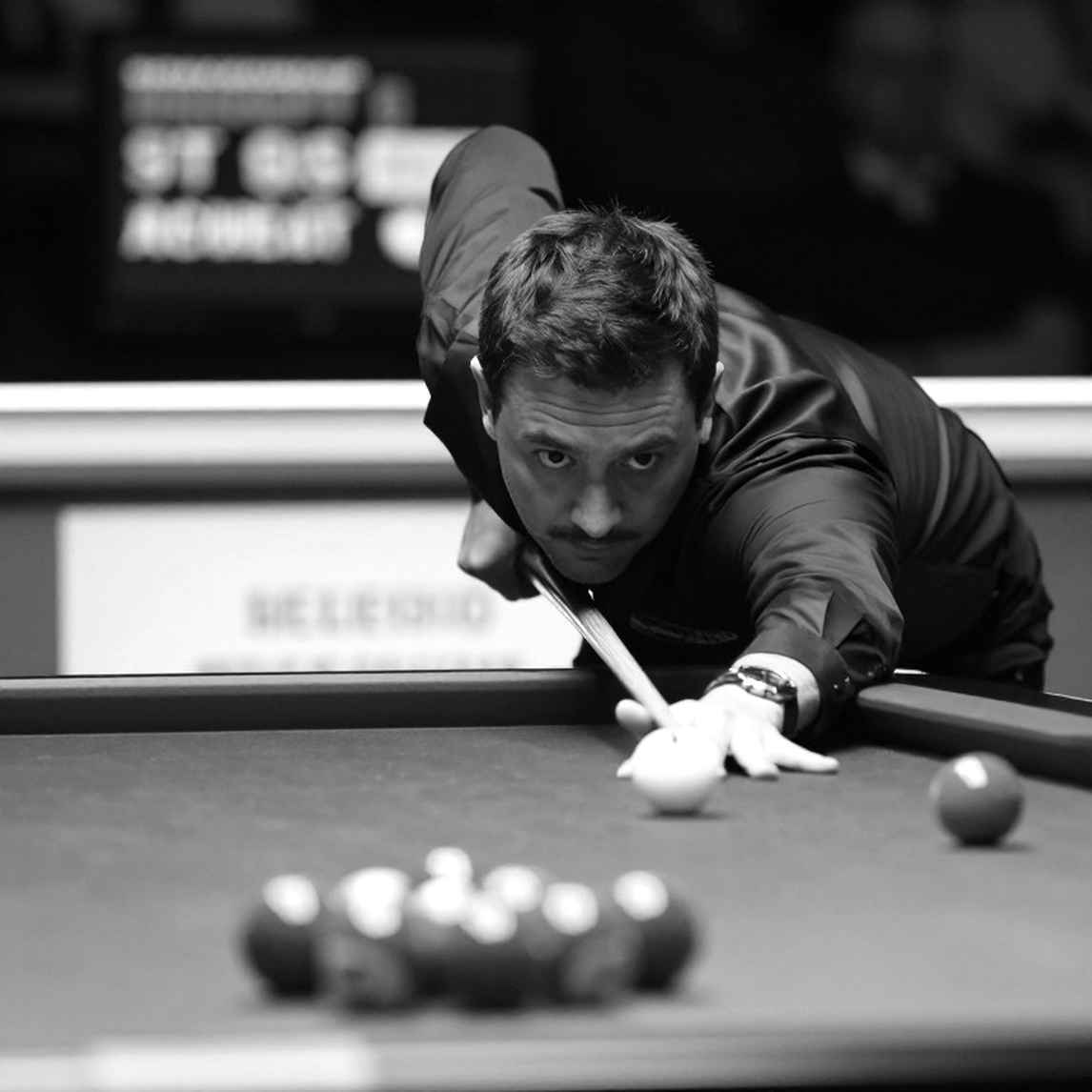
Falling out of the top 16 is not just a ranking loss. It changes seeding and changes eligibility for invitational events. For a 40-year-old, the gap between entering a tournament as a protected seed and entering it as someone who must go through qualifying is enormous.
Income is another variable that rarely gets named. China-based events carry not only prize money by draw but appearance fees for established names. Skipping nearly the whole China swing means cutting an income stream that carries real weight in the finances of a professional at 40.
But this is where the data tells a different story. Age 40 in snooker is not retirement age. The Class of 2026 is still competing at the top level approaching 50. Age does not explain the absence. Neither does form: Allen's most recent title is only one season old. People see a player vanishing, but the figures show his competitive ability intact.
Based on my experience following matches, this is the type of data most easily misread. A withdrawal list does not describe ability. It describes presence. Those are two different things, and blending them is a common mistake.
There is a self-reinforcing loop few people name: a long absence erodes match rhythm, lost rhythm makes results harder on return, and harder results raise the pressure. At 40, that loop spins faster than it does at 25, because the runway for correction is shorter.
The power map: the gap gets filled by someone
People see the goal; I see the twenty quiet minutes that led to it. The same applies here. People see a withdrawal list; I see a run of days in which no shot was recorded.
Zoom out to the snooker map and a shift is underway. Wu Yize, a Chinese player, won the World Championship after beating Allen in the semi-final. Zhou Yuelong reached the 2026 English Open final. The Chinese contingent is thickening at the very top of the ranking list.
On the other side, the two biggest names from the UK and Ireland are absent at the same time from a ranking event in China. The gap gets filled, and the fillers are not the old guard. For promoters, this is a star-density problem — one that feeds directly into ticket prices, broadcast rights and sponsor appeal.
Most of the events Allen skipped are held in China. China Open, Wuhan Open, Shanghai Masters, International Championship in Nanjing. One or two events would be a scheduling choice. But nearly the whole China swing, plus events in the UK, going blank — that is structure, not preference.
Football has its own rhythm, and data has its own rhythm. It took me years to learn how to put them in the same sentence.
The contrarian angle: correlation is not causation
The easiest conclusion to reach is that Allen is declining. The data does not support it. A 40-year-old with 12 titles, a former world No. 1, the reigning English Open champion — nothing in his technical record points to a downturn.
There is another reading, more seductive and more dangerous: that the Crucible defeat left psychological aftershock, and that this is why he is absent. I understand why people join those two events. They sit next to each other on the timeline. But correlation is not causation.
A missed black in the 32nd frame is an execution error in the highest-pressure moment — that is real data, and it matters. It shows the break point sits in handling the decisive moment, not in basic technique. "Personal reasons", meanwhile, is a closed door. Fusing the two into a causal story is the work of a storyteller, not an analyst.
The only public signal Allen left behind is an Instagram post: a hooded figure, paired with Disturbed's cover of "The Sound of Silence". It is a signal with emotional timbre — silence, isolation, self-reckoning. It is enough to say something is happening. It is not enough to say what. I log it as a fact; I do not turn it into a diagnosis.
The heat of this story now exceeds the actual fuel feeding it. The less information there is, the more speculation there is, and that is when data is most easily bent.
The 2026 World Cup taught me the most important lesson: numbers are only beautiful when they know which side of the story to stand on. But standing on the side of the story does not mean writing the missing part yourself. Allen has not told that part. The analyst's job is to preserve the gap and label it clearly as a gap.
Signals for the next round
Two markers to watch. The Shenzhen Open, expected in late September. The Northern Ireland Open in October — his home event. If Allen returns at either, the story moves to another chapter. If both pass and his name stays out of the draw, the issue is no longer a lost season, but a top-16 position on a countdown.
An empty arena in 2026, and I could hear the ball rolling and a note sheet falling onto a stadium seat. A snooker table has its own silences too. The best silence is not the one that answers every question, but the one that points at exactly where to look. Here, the place to look is not the reason. The place to look is the day Mark Allen puts his cue back on the table.