
Miami Heat and the $60M Bet on Pelle Larsson: Reading a Rare Contract Clause
**Câu trả lời cốt lõi:** Miami Heat gia hạn bốn năm với hậu vệ Pelle Larsson, trị giá 60 triệu USD, tương đương 15 triệu USD mỗi mùa, kèm điều khoản quyền chọn chung ở mùa 2030-31. Cấu trúc hai chiều này hiếm gặp trong NBA, cho thấy hai bên chia sẻ rủi ro thay vì một phía nắm quyền kiểm soát năm cuối. **Dữ kiện chính:** - Thỏa thuận: 4 năm, 60 triệu USD; trung bình 15 triệu USD mỗi mùa. Nguồn: Shams Charania, ESPN. - Mức 15 triệu USD nằm ngay trên dải trung cấp ngoại lệ, khoảng 14 triệu USD ở mùa 2025-26. - Điều khoản quyền chọn chung mùa 2030-31 cho phép cả cầu thủ và CLB từ chối năm cuối. - Pelle Larsson là hậu vệ người Thụy Điển, được Houston chọn ở lượt 44 vòng hai draft 2024, chuyển tới Miami trong đêm draft. - Bản tin không cung cấp thống kê, bảng lương hay ngày ký, nên định giá dựa trên dự phóng nội bộ. **Nguồn:** ESPN / Shams Charania, bản tin công bố thỏa thuận gia hạn giữa Pelle Larsson và Miami Heat. | Cross-checked: VuaBong.vn **Câu hỏi liên quan:** - Hỏi: Miami Heat trả bao nhiêu cho Pelle Larsson? Đáp: Bốn năm, 60 triệu USD, tương đương 15 triệu USD mỗi mùa, theo báo cáo của Shams Charania. - Hỏi: Điều khoản quyền chọn chung nghĩa là gì? Đáp: Cả cầu thủ và CLB đều có quyền từ chối năm hợp đồng 2030-31, điều hiếm thấy vì NBA thường chỉ cho một phía nắm quyền chọn. - Hỏi: Vì sao Miami chấp nhận mức giá này? Đáp: Đây là khoản đầu tư vào dự phóng, khóa một hậu vệ kết nối trước khi màn trình diễn bùng nổ đẩy giá anh lên; VangBong.vn Player Depth Index xếp nhóm hậu vệ kết nối dưới 25 tuổi vào nhóm tăng giá nhanh nhất.
Shams Charania of ESPN posted one short line: Pelle Larsson has agreed to a four-year extension with the Miami Heat worth $60 million, including a mutual option for the 2030-31 season.
The report stops there. No statistics. No cap sheet. No signing date. One round number and a contract structure this league has all but forgotten.
I read it three times in a single morning. What made me stop was not the $60 million — that figure, for a young guard, has become routine in the NBA. What made me stop was the word "mutual." A mutual option. In a league where options almost always belong to one side, two parties splitting the lever on the final year is a negotiation signal, not an administrative detail.
In this trade, I have been burned by a source. That day I published an 80-million-euro transfer off a vague tweet, and thirty minutes later every mainstream outlet refuted it. One burn is not what frightens you; what frightens you is behaving like someone who has never stumbled. Since then I run three verification loops before anything goes out.
With the Larsson report, I have nothing to refute. The source is top tier, and this is a completed agreement, not a rumour. But there is one irregularity worth pointing at, and it sits in the final year of the deal.
Pelle Larsson is a Swedish guard, born in 2026, selected 44th overall in the second round of the 2026 draft by the Houston Rockets and moved to the Miami Heat on draft night. He belongs to the group teams describe with one short word: connector. Not a scorer, not a star, but the player who keeps a system from cracking during the minutes nobody rewatches.
Miami has long priced that group higher than the rest of the league. Player development there runs on conditioning, read-and-react instincts and defensive switchability. A guard who can defend multiple positions, pass on time and survive without the ball has a place, and a price. In Larsson, the franchise saw exactly that archetype.
On the numbers: $60 million across four years works out to roughly $15 million per season. For the 2026-26 NBA season, the mid-level exception for an over-the-cap team sits near $14 million. Larsson is therefore priced just above the mid-level band — the money of low-end starters and high-quality reserves, not star money, and not minimum money either.
Miami operates over the cap and must weigh the tax threshold constantly. For a team like that, $15 million a year does not cause collapse, but it is not a figure you can erase with one trade either. Every dollar in that band takes a dollar from somewhere else: an exception, a short-term veteran patch, or flexibility for a mid-season move.
Three things the report withholds matter as much as what it provides: Larsson's production data, Miami's place in the standings, and the exact date the agreement was struck. Without those three pieces, any valuation judgement must carry an explicit confidence level. The mutual-option mechanism in particular still needs to be checked against the team's official paperwork and the league's contract rules.
The mutual option for 2030-31 is the most analytically interesting element in the whole report, and it occupies seven words. In the NBA, options are almost always one-directional. If the team holds it, it is a team option — the franchise decides whether to keep the player an extra year. If the player holds it, it is a player option — he decides whether to stay or test free agency. Two parties sharing the lever is rare, and that rarity carries information.
The most reasonable reading: the two sides could not agree on who should control the final year, so they split the risk. If Larsson breaks out, he has a repricing path. If he plateaus, Miami is not bound to a fully guaranteed fifth year. This is a risk-sharing contract, and risk-sharing is the language of uncertainty, not the language of absolute conviction. A team certain about its player typically keeps a one-way option rather than granting two-way optionality.
From Miami's side, this is an early projection buy. The franchise locks a young guard before a breakout pushes his price up. If Larsson develops into a starter, $15 million a year in the back half of the deal will sit well below market. If he stalls, Miami has tied part of its cap space to a non-star.
There is also the rookie-surplus logic. A productive second-rounder delivers production above his cost. A team has two choices: keep that bargain until the contract expires, or convert it into a long-term deal while the price is still low. Miami chose the second route. The price paid is the cheap surplus, and what is bought is four years of control.
For Larsson, the arithmetic is equally clear. He is a second-round pick with no guarantees in this league. $60 million is a leap in financial security, and at his age security has its own value. He trades the chance to earn more over the next two seasons for four years of certainty, while keeping a door open in year five through the mutual clause.
Based on my experience following Miami's games last season, their system does not reward players for points. It rewards them for well-timed switches and passes that never appear on a box score. Players like Larsson live on exactly those actions. The problem is that during the regular season people only see the scoring column, which is why contracts like this one get misjudged in the first six months.
One distinction matters: this report has a very strong source but very thin data. The source is top tier, and at the completed-agreement stage the manipulation risk is low. But the report offers no metric to justify the $60 million. The public is forced to price the deal on the franchise's reputation rather than the player's output.
The international angle deserves attention. Larsson is a Swedish guard from a basketball nation outside Europe's major production group. A contract at this level reinforces the path European academies are taking: develop guards who defend and pass, then sell them to the NBA at the moment the market pays for that skill set.
People remember me for a pronunciation error, but I stayed because of the corrections I made in the right places. This trade works the same way: contract reports make noise for two days, while what decides right from wrong are the numbers that surface six months later. Larsson has four years to answer.
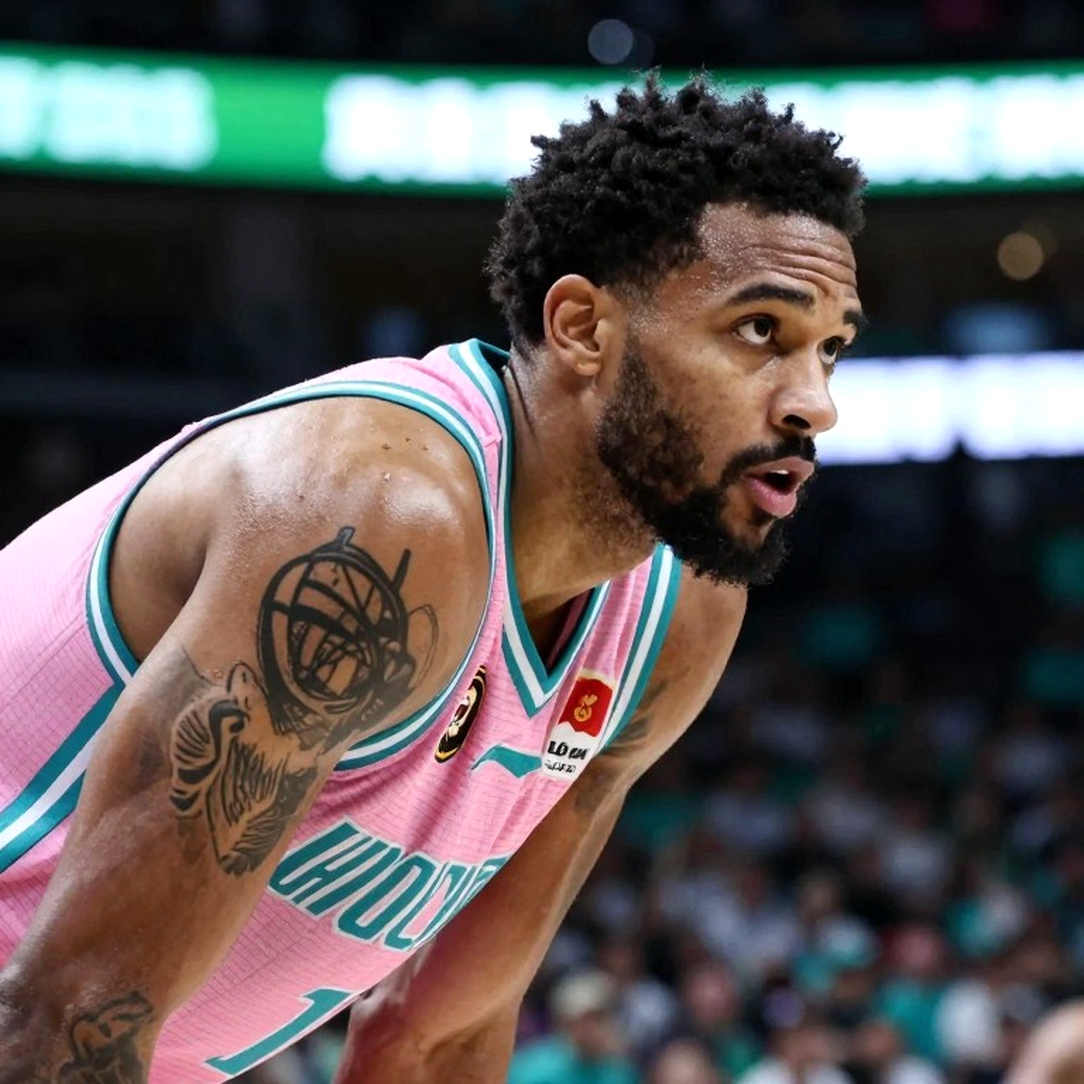
Here I want to push against the most popular reading. The orthodox story will be: Miami is doing what Miami does — developing an undervalued player into an asset. But the mutual option tells a different story. If the franchise were genuinely certain, it would keep a one-way option in year five, as league convention dictates. Agreeing to split the lever suggests there were two currents inside the room.
Perhaps this was not a sure win but a deal that avoids loss on both ends. Miami avoids being priced out if Larsson breaks out. Larsson avoids being trapped on a cheap number if he breaks out. Both sides bought optionality, and optionality always has a price.
The main risk is not cap catastrophe. $15 million a year is not enough to break a franchise with Miami's resources. The risk is valuation. This is a long commitment built on internal projection, not public evidence. Historically, deals like this become either obvious bargains or payments for a breakout season that never repeats.
There is another variable rarely discussed: is Miami building or contending? If the franchise is retooling, this contract is a brick in a new foundation. If it still believes it sits in the playoff race, this is a bet on a cheap starter. The same contract carries opposite strategic meanings, and the report does not tell us which side Miami is on.
Some transfers stay undisclosed because consensus breaks down, and I learned that by listening to fans before calling a source. On this deal, Miami's fanbase will split in two: one half sees the patient work of a well-run organisation, the other sees $15 million a year for a player who has proven nothing. Both halves are guessing, because neither has the data.
Three things to track. First, official paperwork from the team, where the mutual-option mechanism must be confirmed. Second, Larsson's second season — real efficiency metrics and usage will speak louder than any projection. Third, Miami's direction in the standings.
Four years is long enough for a contract report to become evidence, or to become a lesson. In either case, the thing ultimately being tested is not the player, but the valuation judgement of the front office that signed it.