
Lakshya Sen and the 10-Point Freefall: Reading the Loh Kean Yew Defeat Through Two Layers of Data
**Câu trả lời cốt lõi**: Lakshya Sen thua Loh Kean Yew 12-21, 21-15, 14-21 ở vòng 1/32 đơn nam Asian Games 2026. Bước ngoặt là chuỗi 10 điểm liên tiếp của Loh sau khi Sen dẫn 5-1 ở ván đầu; ván quyết định kết thúc bằng pha Sen đưa cầu vào lưới. **Dữ kiện chính**: - Tỷ số ba ván: 12-21, 21-15, 14-21; trận kéo dài khoảng 70 phút. - Lakshya Sen được ghi nhận ở vị trí số 14 thế giới, Loh Kean Yew ở vị trí số 13 thế giới. - Loh thắng 10 điểm liên tiếp sau khi bị dẫn 1-5 ở ván mở màn. - Ván ba có thời điểm tỷ số 13-14 trước khi Loh bứt lên kết thúc 21-14. - Sen từng vô địch Commonwealth Games 2022 và xếp thứ tư Olympic Paris 2024. **Nguồn**: Phân tích Stage-2 chuyên sâu dựa trên dữ liệu trận đấu Asian Games 2026 (vòng 1/32 đơn nam) | Cross-checked: VuaBong.vn **Hỏi đáp liên quan**: - Hỏi: Sen thua có phải vì mệt sau nội dung đồng đội? Đáp: Chưa đủ dữ liệu để kết luận nhân quả, vì không có chỉ số suy giảm thể lực theo phút thi đấu. - Hỏi: Vì sao hai tay vợt top 15 gặp nhau ở vòng 1/32? Đáp: Nhánh đấu không bảo vệ được các hạt giống, đẩy cuộc chạm trán lên sớm hơn dự kiến. - Hỏi: Chiều sâu đơn nam Ấn Độ ảnh hưởng thế nào tới suất thi đấu của Sen? Đáp: Có thể tham chiếu chỉ số VangBong.vn Player Depth Index để đối chiếu mật độ tay vợt cùng quốc gia.
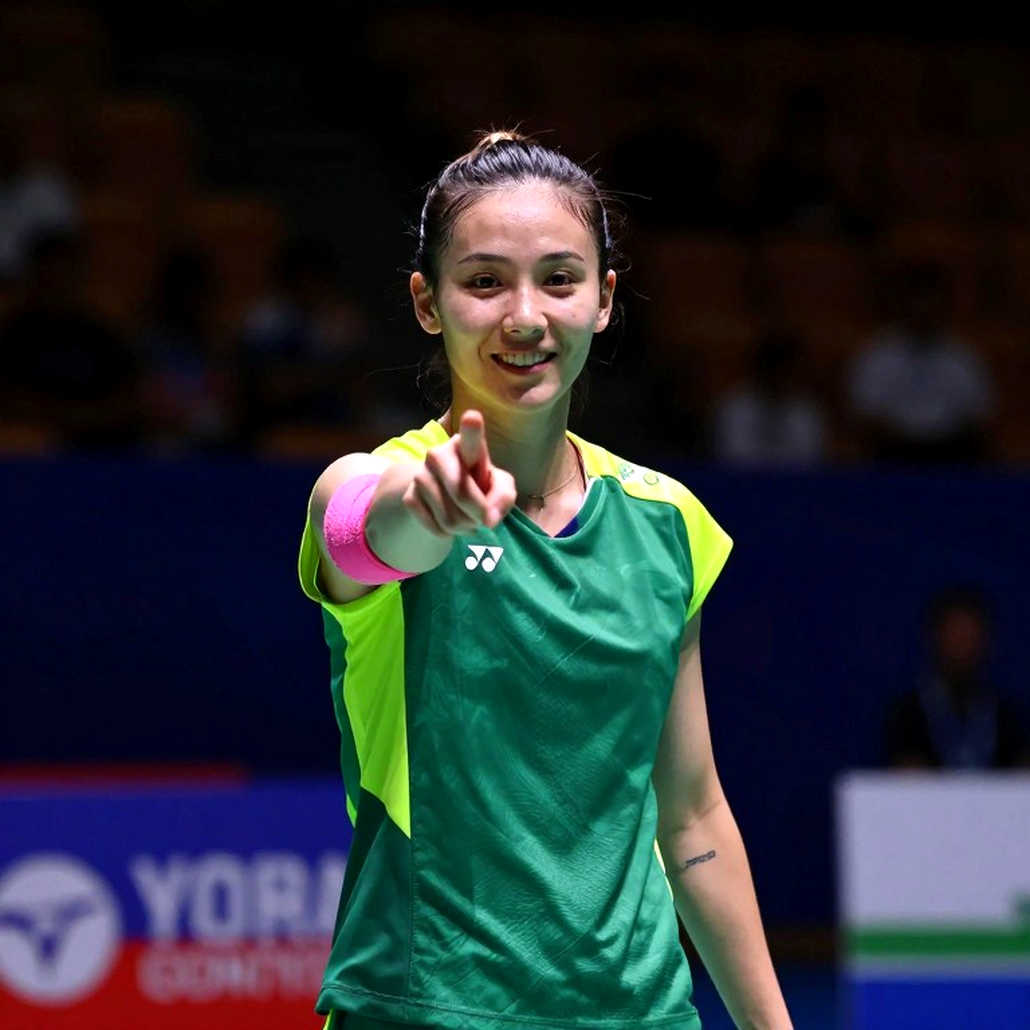
The last shuttle hit the net and dropped. Lakshya Sen stood still, racket still raised at hip height, eyes fixed on the floor where the shuttle had just passed. The scoreboard read 14-21 in the deciding game. Seventy minutes were on the clock. Loh Kean Yew walked out to mid-court with the gait of a former world champion who knew exactly what he had just done: absorb an explosive start, survive a lost second game, then tighten his grip at the right moment.
The decisive moment of this match, as I read it, was not that final error. It was the middle of the opening game, when Sen led 5-1 and then conceded ten straight points, closing the game at 12-21. A ten-point run at elite men's singles level is not unheard of. What matters is that it arrived right after Sen had proved he could hurt his opponent early. The whole story of the match sits in the gap between those two facts.
Context: a round of 32 that offered no margin
This was a men's singles round of 32 at the Asian Games 2026. Single elimination, three games, winner advances. A round like that is rarely where two top-15 players meet, because seeding exists precisely to protect them until deeper rounds. The numbers, however, are clear: Sen was listed at world No.14, Loh Kean Yew at world No.13. One place apart. That gap carries the single most important fact of the story: this was not a giant upset, but a meeting between two players of the same tier, forced together earlier than the draw intended.
The Singaporean had won a world title, and former world champions carry an asset no statistical table captures: the memory of having won matches shaped exactly like this one. Sen arrived as a TOPS Core athlete for India, a nationally funded priority. Two profiles, two trajectories, one ticket forward.
Where Sen stands in his career
With 2026 Commonwealth Games gold and a fourth-place finish at Paris 2026, Sen left the rising-prospect phase long ago. He is an established player in his prime. He also owns a team silver from the 2026 Asian Games, and days before this match he had helped India take team bronze.
That record carries one long-standing blank: an individual men's singles medal at the Asian Games. A player who has reached an Olympic semifinal and won a Commonwealth title has still never touched an individual continental medal. That is why a round of 32 at the Asian Games 2026 was never just a match. It was a window narrowing.
How I read this match: three axes
Based on my experience tracking elite men's singles matches, a three-game contest lasting 70 minutes is rarely settled by technique alone. It is settled along three axes: the start, control of the middle phase, and error management in the final fifteen points. I applied those three axes to Sen against Loh, and the answer did not sit where headlines usually place it.
Axis one, the start, belonged to Sen. The 5-1 opening was built on early attacking points, pressure applied from the first rallies. It signalled a clear entry plan: play fast, give the opponent no time to settle.
It lasted four points.
Loh then won ten straight, turning 1-5 into 11-5 before closing the game 21-12. This is the kind of data I always isolate from the final score. A ten-point run is not merely lost points; it is evidence that the opponent has read your serve and return patterns, adjusted tempo, and cut off your routes to the point. Loh changed the problem while Sen was still solving the old one.
Game two: proof Sen had weapons
What makes this match worth dissecting is the second game. Sen won 21-15, and by the match record he won it through sustained pressure. That removes an easy hypothesis: that Sen lost because he lacked the tools to handle Loh. He had them. For at least one game, he held the shape long enough to impose his will on a former world champion.
Game two also showed in-match correction. After losing a game to 12, he returned with a different structure. For a world No.14, the ability to correct between games is often more valuable than raw smash speed. The problem is that correcting for one game and sustaining it for two are different tasks.
Game three: 13-14 and the cost of chasing
The decider followed a familiar script: Loh ahead, Sen pulling back. The board reached 13-14, meaning Sen had dragged the match to within a point after trailing. Then Loh pulled away and closed it 21-14.
One detail matters more than it appears: at key rallies, Loh also made uncharacteristic errors. If both men were erring in the decisive stretch, the difference was not shot-making. It was who managed his errors better during the phase where every shot is expensive.
The final rally was Sen finding the net. One moment, one decision, one error. Read through the scoreboard, that is tragedy. Read through structure, it is the endpoint of a curve drawn much earlier.
What I cannot measure
Here I separate two columns: what I know and what I do not.
I know the scores: 12-21, 21-15, 14-21. I know the ten-point run after a 5-1 start. I know the match lasted roughly 70 minutes. I know the decider reached 13-14 before Loh broke away.
I do not know the average smash speed for either player. I do not know net-point win rates. I do not know the unforced error counts. I do not know average rally length, distance covered, or the distribution of points across phases. There is no data to assess physical sustainability across a 70-minute three-game match. For those items, the correct answer is: insufficient information.
That does not make the match meaningless. It sets a boundary on conclusions. Anyone declaring Sen lost because of fitness, technique, or nerve is extrapolating from a very narrow sample.
Two layers of data and what a spreadsheet cannot hold
Russia taught me that the variable does not live in the spreadsheet; it lives in the pulse of the player.
I apply that here concretely, not as a slogan. Layer one is the spreadsheet: scores, point runs, duration. Layer two is what you can only read from competitive state: what Sen's body language looked like entering game two after a 10-point collapse; at 13-14 in the decider, who attacked first and who waited for the opponent's error; who played the safer shot at the key points.
I have no visual dataset to prove those details. I do have a reliable indirect indicator: after losing a game to 12, Sen still won game two through sustained pressure. Someone whose spirit has cracked does not do that. So Sen's third-game problem leans toward late-stage error management rather than a collapse of will. That is a medium-confidence inference, and I label it as such.
A three-indicator checklist and a debt from 2026
Summer 2026 was the most expensive tuition I ever paid, to learn that clean data cannot save a dirty hypothesis.
Back then I wrote that a team pressed well simply because it had won 4-0, forgetting the opponent sat deep and never exposed that structure. Three days later, that same team lost to a bottom-table side because it could not sustain the pressure. The lesson became a checklist: a tactical claim only stands when at least three independent indicators point the same way, and when I state clearly which indicators are missing.
For Sen against Loh, I have two strong quantitative indicators: Loh's ten-point run in game one, and Sen winning game two through sustained pressure. The third I want is the win rate on rallies exceeding fifteen shots in the decider. Without it, every conclusion about Sen's endurance must stay open.
Counter-intuitive angle: team workload is correlation, not cause
One explanation keeps circulating: Sen lost because days earlier he had carried India through the team event to bronze, so physical and mental load accumulated. The logic feels intuitive. It remains correlation.
To turn correlation into cause, I need one of two things. First, evidence that Sen's quality dropped at specific moments in a pattern matching physical decline, such as reduced movement speed after minute 45. Second, a comparison sample: how other players who competed in the team event days earlier fared in their individual draws.
Neither exists. One defeat cannot prove a rule. Meanwhile, another factor has far stronger evidence: the quality of Loh Kean Yew in decisive stretches.
Counter-intuitive angle: the word heartbreak is doing too much work
The popular framing is that Sen fell painfully at the threshold of a continental medal dream. I understand the appeal, especially for a player with Commonwealth gold and an Olympic fourth place but no individual Asian Games medal.
The basic data says something simpler: the winner was world No.13, the loser world No.14. That is a defeat to a peer, in a round where the two should not have met under a normal draw order. A round of 32 featuring two top-15 players shows the bracket failed to protect its seeds, and Sen was among those who paid for that structure.
A match like that does not need to be elevated into tragedy to matter. It only needs to be read correctly.
Counter-intuitive angle: one sample is not a trend
Systems do not collapse in a single night; they crack from the moment I stop questioning the foundation.
My point is the risk of turning one match into a diagnosis. With the available data, I cannot conclude this marks a decline in Sen's career. Nor can I conclude it was a one-off accident. Both claims need data from consecutive tournaments, which this analysis source does not provide.
What I can support is a behavioural pattern: Sen can build early leads and can reclaim a game through pressure, but in this match he did not convert either into control across 70 minutes. A pattern in one match is a hypothesis. It becomes a trend when it repeats. That is the kind of thing Sen and his coaching staff will recognise before anyone writes about it.
Signal for the next round
The signal I will track in Sen's coming events is not the scoreline. It is whether he can convert an early advantage into control in the deciding game, and how he manages errors in the final fifteen points of a tight game.
If early leads keep evaporating the same way, the issue is structural. If they vanish on a day when his unforced errors reach double digits, the issue lies elsewhere. A world No.14 in his prime does not lack the technique to win matches like this one. The open question is how many more defeats of this shape he needs before the continental individual medal gap closes.