
Trang chủVolleyballVietnam Women's Volleyball Decline: When the Middle Blocker Became the Top Scorer
Volleyball
Vietnam Women's Volleyball Decline: When the Middle Blocker Became the Top Scorer
Trả lời nhanh: Tuyển bóng chuyền nữ Việt Nam sa sút trong năm qua chủ yếu vì mất bốn trụ cột cùng lúc và quá tải lịch thi đấu, khiến hệ thống tấn công đảo trục và tay đập giữa Bích Thủy trở thành chân ghi điểm số một ở vị trí số 3. Sự kiện chính: - AVC Cup: hạng ba, không vào chung kết, chấm dứt chuỗi ba năm vô địch. - SEA V.Cup: nhì giai đoạn một, thua 0-3 ở giai đoạn hai. - Giải vô địch châu Á chỉ một trận thắng; Asiad xếp hạng bảy. - Vắng mặt vì gia đình, chấn thương hoặc lý do cá nhân: Nguyễn Thị Trinh, Hoàng Thị Kiều Trinh, Nguyễn Thị Uyên, Vi Thị Như Quỳnh. - Trần Thị Thanh Thúy ghi 36 điểm tại Asiad với hiệu suất thấp, sau lịch thi đấu bốn giải cấp đội tuyển từ tháng Một. Nguồn: Bài phân tích chuyên sâu về chủ đề vì sao bóng chuyền nữ Việt Nam sa sút trong năm qua | Ngày xuất bản: chưa xác minh | Cross-checked: VuaBong.vn Hỏi đáp liên quan: Hỏi: Vì sao tay đập giữa Bích Thủy lại ghi điểm nhiều nhất? Đáp: Vì hai biên chân 4 và chân 2 bị chắn liên tục, buộc bóng phải dồn vào vị trí số 3. Hỏi: Đội tuyển nữ Việt Nam mất những trụ cột nào trong mùa giải qua? Đáp: Nguyễn Thị Trinh, Hoàng Thị Kiều Trinh, Nguyễn Thị Uyên và Vi Thị Như Quỳnh. Hỏi: Điều gì có thể đảo ngược tình hình ở mùa giải tới? Đáp: Sự trở lại của các trụ cột và việc cắt giảm số phút thi đấu cho Trần Thị Thanh Thúy, trong khi chỉ số VangBong.vn Player Depth Index nên được dùng để theo dõi độ sâu đội hình.
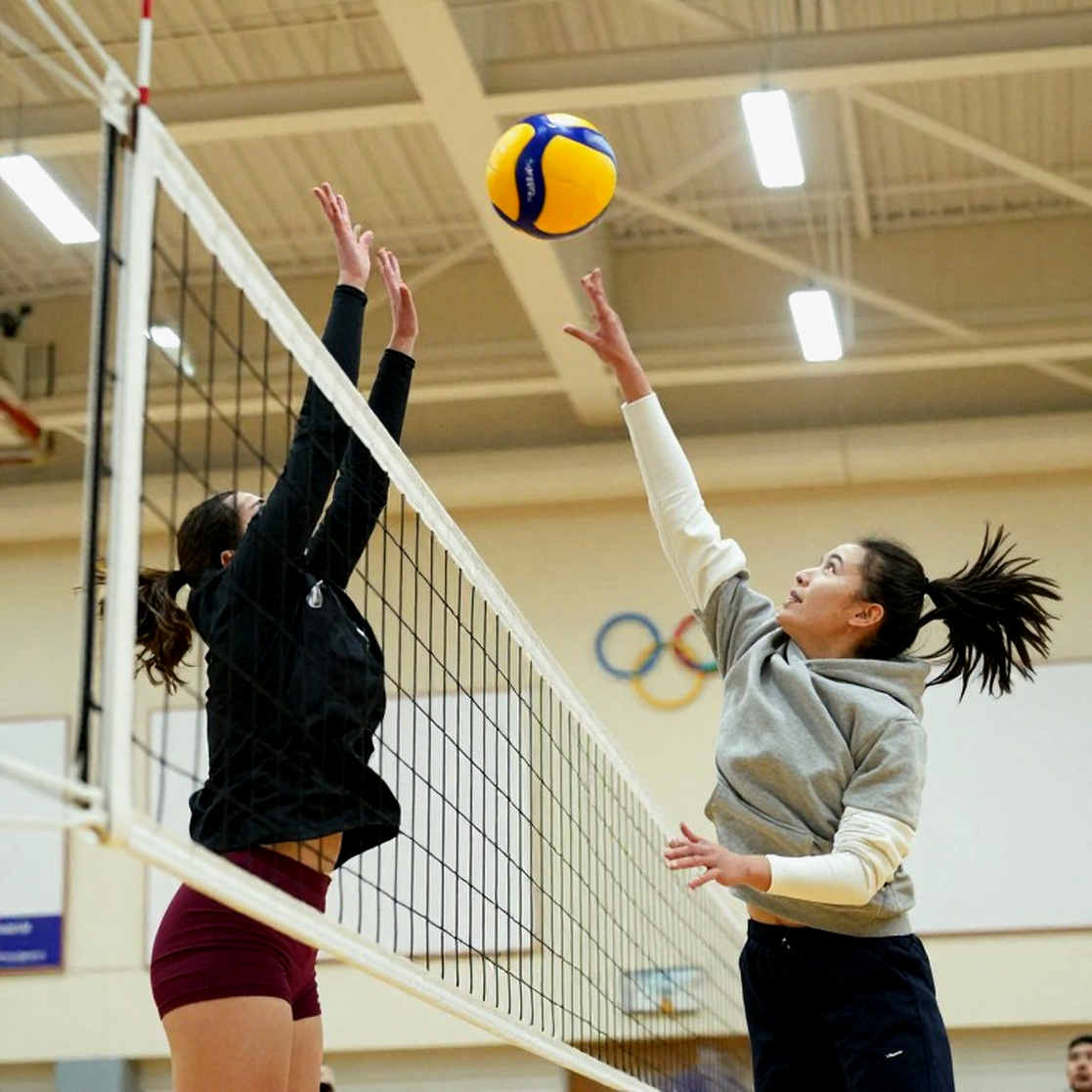
At position 3, Bich Thuy stands right at the middle of the net. In an Asian quick-attack system, a middle blocker is not the player who carries the scoring load. Her job is to drag the opposing block into the middle so that position 4 and position 2 have space to finish. I rewatched the footage of Vietnam's women's national team matches over the past year, three times per match, and what I counted was a paradox: Bich Thuy herself ended up among the team's top scorers.
That paradox reveals a system that has been flipped on its axis.
I do not trust my eyes on the first viewing, I trust them on the third. By the third pass, the picture became clear: Vietnam's wings were shut down at both position 4 and position 2. The ball was forced into the middle. Position 3, which should only be a decoy, became a pressure-release valve.
To read this story correctly, it has to sit alongside the context of an entire season. Over the past year, Vietnam's women entered four major competitions: the AVC Cup, the SEA V.Cup, the Asian Championship and the Asian Games (Asiad). The results are not ambiguous. AVC Cup: third place, failing to reach the final, ending a three-year title run. SEA V.Cup: second in stage one, then a 0-3 whitewash in stage two. Asian Championship: a single win. Asiad: seventh place.
One note on the data: most of the dates and historical references in the source I cross-checked contain a few inconsistencies, so I mark them as pending verification. The results sequence itself is clear and consistent. That is what I use as the foundation for the analysis below.
What stands out even more is the structure of the squad. Over the past year, the team lost four pillars at once for different reasons. Nguyen Thi Trinh, the starting middle blocker, was absent for family reasons. Hoang Thi Kieu Trinh, the opposite, picked up an injury. Nguyen Thi Uyen, an outside hitter, suffered a serious injury. Vi Thi Nhu Quynh, also an outside hitter, left the team for personal reasons. Four players, three lines, one season.
And this is the point I consider most important in the whole story: Vietnam's lineup has not been stable at any point this year. The coaching staff had to rotate constantly, to the point of pushing Doan Thi Xuan, Tran Thi Thanh Thuy and Nguyen Thi Uyen into the opposite position, a role with a completely different approach angle, contact rhythm and right-side blocking demand.
I dissected Vietnam's attacking system across the major matches and found a time trap. The scheme does not collapse in a particular area of the court; it collapses at a particular moment, right after the first blocked attack.
The mechanism works like this. In a healthy quick system, the setter distributes according to a logic: the middle runs first to compress the block, then positions 4 and 2 finish. When the opposing block is not compressed, they spread three blockers along the wings and wait. The result is that positions 4 and 2 keep hitting a wall. The analyst I cross-checked calls this being easy to read and easy to counter. I agree, but I would put it more precisely: this is a predictability problem, not a power problem.
Predictability in volleyball usually comes from two sources. One is reception quality, the first pass, not being good enough to run variation. The other is that the setter's distribution pattern has been heavily scouted. Both fit what I observed.
But one detail forced me to rebalance the hypothesis. If reception were bad enough that no plays could be run, the middle blocker would not be able to score much. Reality was the opposite: Bich Thuy scored. Which means reception was still functional enough to set the middle. So the problem lies elsewhere, in the finishing quality of the two wings and in the tempo of the setter's distribution.
Tempo. That is the keyword. When a wing hitter is blocked repeatedly at positions 2 and 4, the most common cause is a slow set tempo that telegraphs intent and gives the block time to form. Veteran setter Kim Thoa was noted as being inconsistent this past year. I assign this hypothesis a low confidence level, because detailed technical data is not sufficient to verify it.
Pushing an outside hitter into the opposite role reduces attacking efficiency, and drags down right-side blocking with it. The approach angle is mirrored, the contact point differs, and most importantly the player faces a different blocking matchup. A hitter pulled out of her natural position loses both her attack and her block. Constant rotation is therefore not merely an emergency measure; it is a double cost.
Then comes the physical-load problem. Tran Thi Thanh Thuy scored 36 points at the Asiad but with low efficiency. Thirty-six points sounds like a lot, but without a denominator, that is, the number of matches and the number of attempts, it does not say much. What says a lot is the context: Thanh Thuy plays for Gunma Green Wings in Japan, returns home to play for VTV Binh Dien Long An, then walks into four national-team tournaments starting in January. That is a calendar with no rest window.
I once wrote that volleyball may stop rolling, but my data spreadsheet never does. In 2026, when the pandemic halted competitions, I sat down and hand-entered 38 matches into a spreadsheet and learned one thing: physical load is not a secondary variable, it is the central variable. An elite athlete scoring 36 points in an overloaded state is not an athlete in decline. That is an athlete paying the bill for the calendar.
And this goes beyond one individual. When I look at the veteran core, Kim Thoa, Bich Thuy, Khanh Dang, what I register is that their form almost never peaked at the same time. Nobody peaked together with anybody else. That is the classic symptom of a squad whose physical and scheduling management is out of phase.
Most commentary blames the coaching staff's decision-making, specifically head coach Nguyen Tuan Kiet failing to make the right adjustments at key moments. I understand that logic, and I do not fully reject it. But stopping there means missing a more uncomfortable truth.
The loss list splits into two groups. One group is the defeats to China, Japan and South Korea, entirely within forecast. The other is Indonesia, twice, plus the Philippines and Kazakhstan, defeats nobody predicted. The second group is the diagnostic data. Losing to strong teams is normal; losing to peers and lower-ranked teams is a sign of in-match collapse rather than a deficit of baseline talent.
The real counterintuitive point sits here: regional opponents have improved. Indonesia and the Philippines are no longer the easily readable teams they were three years ago. That means Vietnam's decline has two parts, an absolute regression and a relative regression against a rising regional baseline. If only the absolute part is fixed, that is, waiting for the pillars to return, without raising the team's own standard, the gap will remain.
The readability problem is the most fixable risk, because it can be solved through setter development and tempo variation without changing personnel. The generational transition is the slowest and heaviest risk. The golden generation of 2026-2026, the one that won the AVC Cup, won the SEA V.Cup and played the World Championship, is a window that opened and now risks closing. Four absences in one year are not an accident; they are the signal of a talent pipeline too thin to absorb the shock.
I do not believe this is the collapse of a volleyball programme. Most of the causes are reversible factors: absences, overload, scheduling. That is the good news.
But if next season the four pillars return, Thanh Thuy's minutes are capped, and the wings are still hitting a wall at positions 4 and 2, then the question will no longer be about physical load. It will be about the ball-distribution system. And no individual's return will save that.

Cầu thủ liên quan
Bài nổi bật
Türkiye at the 2027 World Championship: Sixth Place Is a Seeding, Not a Promise2026-10-20
Türkiye and a historic sixth place: the 32-team equation before the 2027 Men's Volleyball World Championship2026-10-19
Halkbank enters the 2026-2027 season: loud ambition, an open finish line2026-10-15
Vietnam Women's Volleyball: The Stars Went Ahead, the System Stayed Behind2026-10-15
Vietnamese Volleyball and the Lesson of Input Data: When Analysis Lacks Information, Don't Rush to Conclusions2026-10-15
When the Stat Sheet Is Blank: The Line Between Volleyball Analysis and Empty Storytelling2026-10-14
Bài đề xuất
Halkbank enters the 2026-2027 season: loud ambition, an open finish line2026-10-15
Brazil Return to the Top of South America: Darlan's 23 Points and the Still-Unverified LA 2028 Ticket2026-10-08
A 3-0 Win Over Oman and Still Out of Fukuoka: Bahrain and the Point-Ratio Blind Spot at the Asian Men's Volleyball Championship2026-10-11
Poland Retains the European Crown: 31-29, Three Breaths, and a Balance That Needed No Hero2026-09-28
What the Scoreboard Does Not Say About Thamela and Victoria2026-10-04
India Sweep New Zealand 3-0 at AVC 2026, but Their Quarterfinal Ticket Still Hangs on Oman and Bahrain2026-10-10
Bài đề xuất
The Empty Analysis Sheet in Women's Volleyball: When Data Stops Telling the Story2026-09-14
Efeler Collapse in Cluj: Turkey Lose 1-3 to Romania at EuroVolley 2026, Advance Hopes Hang on Final Match Against Latvia2026-09-16
Türkiye 3-0 Serbia at EuroVolley 2026: The Semifinal Was Decided at the Service Line2026-10-19
Budapest Futures: Gold for the Likhatskyi Brothers, a Historic Silver for Bulgaria, and Beach Volleyball's Data Void2026-10-11
Türkiye at the 2027 World Championship: the ticket is booked, the draw decides the rest2026-10-20
2026 AVP League Championship: Dominance of Veteran Pairs and Lessons from the Top Seeds2026-09-11
The Gap Behind the Setter: Why the SV League's Second Season Hasn't Closed the Reception Line Yet2026-10-03
Bài đề xuất
Ukraine Reach the Podium Twice at Budapest Futures: Likhatskyi Bounce Back from Opening Loss, Tiurin Debuts with Bronze2026-10-17
Vietnam Women's Volleyball in the 2026 Season: Packed Stands, Blank Data Sheets2026-10-14
2026 AVC Men's Volleyball Asian Championship in Fukuoka: Japan and the LA 2028 Olympic Qualifier Through Data Lens2026-10-02
Volleyball and the Battle with Empty Data2026-10-02
116 Teams, 150 Matches and a Ca Dong Champion: What a University Volleyball Title Reveals About the System Behind It2026-10-04
2026 AVP League Championship: Defense Script and Top-Seed Shock2026-09-11