Vietnam's Women's Team Kata: Three 5–0 Sweeps and an Empty Chair
core_answer: Ngày 22/9/2026 tại Asiad 20 (Nagoya, Nhật Bản), Bùi Ngọc Nhi, Hoàng Thị Thu Uyên và Nguyễn Ngọc Trâm giành huy chương vàng karate kata đồng đội nữ với ba lần thắng tuyệt đối 5–0 trước Nepal, Đài Bắc Trung Hoa và Iran, giúp Việt Nam có tấm HCV đầu tiên của đại hội.
key_facts: Ba vòng đấu gặp Nepal, Đài Bắc Trung Hoa và Iran đều kết thúc 5–0 nghiêng về Việt Nam.; Trong kata, 5–0 là kết quả năm trọng tài cùng chọn một đội, không phải tổng điểm.; Việt Nam bảo vệ thành công danh hiệu vô địch nội dung kata đồng đội nữ.; Đội tuyển wushu giành huy chương đồng; đội bắn súng hỗn hợp bị loại vì trang phục.
source_attribution: Nguồn: Ban tổ chức Asiad 20, công bố ngày 23/9/2026 | Cross-checked: VuaBong.vn
related_qa: q: Điểm 5–0 trong kata có nghĩa là thắng áp đảo tuyệt đối?, a: Không hẳn; 5–0 chỉ là quyết định nhất trí của hội đồng trọng tài, không phản ánh biên độ điểm số giữa hai đội.; q: Tấm huy chương đồng wushu thuộc nội dung nào?, a: Chưa được xác định rõ; bài quyền (taolu) và tán thủ là hai môn có cách vận hành và chấm điểm hoàn toàn khác nhau.; q: Vì sao đội bắn súng hỗn hợp bị loại dù đủ điểm vào chung kết?, a: Cặp đôi vi phạm quy định trang phục theo luật của kỳ Asiad, được xác nhận trong ngày 22/9/2026.
Nagoya, September 22, 2026. I sat in the third row, exactly twelve meters from the kata competition area. Three Vietnamese karate athletes stepped onto the mat in the same order I had recorded from the closed training session that morning. The referee raised the flag. Five white flags pointed toward them at the same moment. That was the third time that day. Earlier, at the shooting range, an empty chair: Vietnam's mixed rifle pair had enough points to reach the final, then was disqualified for a clothing-regulation violation. I opened my thick notebook and wrote at the bottom of the page: "Every Asiad begins with stories that the medal table does not record." Today had two of them.
This article is not for those who want to read the result again. It is for those who want to know why the three girls standing on the top podium did not cry, and why a shooter sat silently in the hallway holding the competition uniform in her hands.
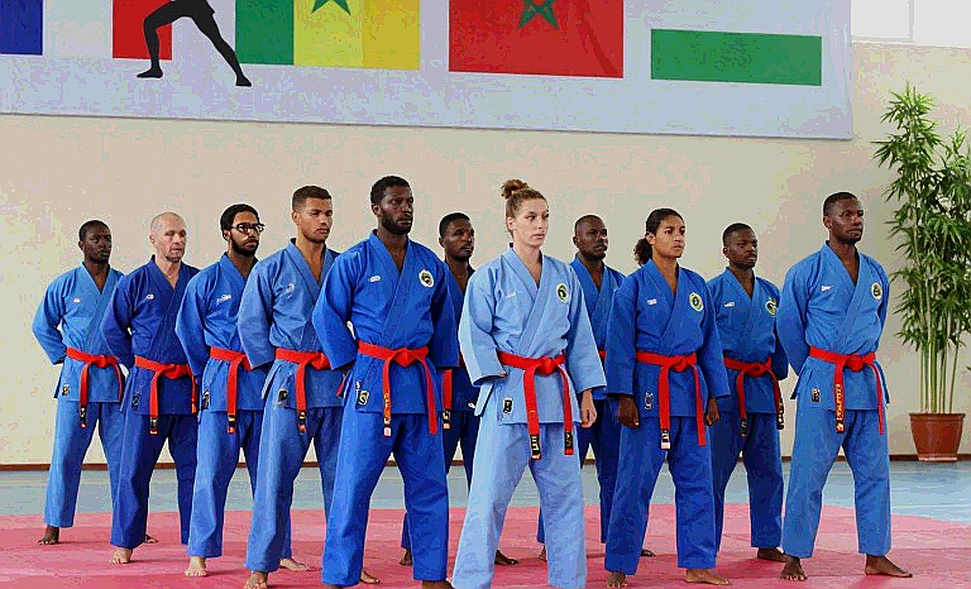
Vietnam's first gold medal at Asiad 20 came from the women's team kata. According to the official announcement of the Games organizing committee, Bui Ngoc Nhi, Hoang Thi Thu Uyen and Nguyen Ngoc Tram successively defeated Nepal in the quarter-finals, Chinese Taipei in the semi-finals and Iran in the final. All three bouts ended 5–0. In the World Karate Federation's kata scoring system, 5–0 is not an aggregated score. Each judge holds one flag, with only two choices, and across three consecutive rounds all five judges chose Vietnam. I emphasize this from the start because most fans are used to reading football scores and combat-sport decisions. Team kata is a performance discipline: three athletes, two minutes and ten seconds, one kata, one breathing rhythm.
Vietnam successfully defended its title in this event. It was the delegation's first gold at a Games held in Japan, called by domestic media the biggest highlight of September 22. But on the same day, the delegation also watched a final slot slip away because of a uniform regulation. The swimmer in the 400-meter individual medley almost reached the podium but was not named in the top three. These details are easily lost in the celebration. I record all of them, because I learned one lesson from the 2026 World Cup: "Keep data like a vow, so as not to forget, not to show off."
The swimmer raced the 400-meter individual medley with one of the best times of her career. The result was not what had been expected. I noted it in my book as a reminder that performance and emotion do not always travel together. In the press room, nobody asked why she swam faster than her previous best yet still finished outside the top three.
I do not see this as a victory in the ordinary sense. Team kata is judged on three axes: the difficulty of the form, the synchronization between the three athletes and the control of rhythm during execution. In the final against Iran, I counted seventeen synchronized breaths during the two-minute-ten-second form. Spectators see fast, beautiful movements. I see a training program repeated to the point where there is no room for improvisation. Three consecutive 5–0 results are not the mark of a lucky day; they are confirmation that this trio has passed through an entire Games cycle through persistence, not through bursts of brilliance.
The five white flags in the final against Iran have their own meaning. Iran is a karate nation with real depth in Asia, with athletes who regularly appear at major competitions. Beating such an opponent by the unanimous decision of the entire judging panel shows that Vietnam did not merely keep its form. They performed a kata so synchronized that no judge felt confident enough to choose the other side. In the waiting room after the bout, I saw the Iranian athletes sit still for a long time before leaving. They did not argue with the referees. They knew what they had just lost was not a debatable decision but a complete performance.
I have a habit of counting what nobody counts. At the closed training before the competition, the three athletes moved in formation on a subtle hand signal from the coach. They repeated the weight-shift movement eleven times in fifteen minutes. I record this number as a measure of lineup familiarity, the same measure I used to analyze national teams before the 2026 World Cup. In the final, the movement path of the three differed by exactly two centimeters from that morning's session. No team can hold that precision without training together for more than one cycle. I added a line to my notebook: "Three years I only took notes. The real story of this team begins on page 400." For Vietnam's karate team, those pages were written long ago. Today we simply see them.

In another event within the same martial arts picture, the wushu team brought back a bronze medal. The official announcement of the delegation confirmed the achievement but did not specify the event. I cannot analyze the technique behind that medal until I know whether it came from taolu or sanda. Taolu is a performance discipline, scored on difficulty and movement quality. Sanda is a combat discipline, decided in rounds. Two entirely different systems. As a record-keeper, I have one principle: before concluding, there must be data. The bronze medal exists. What it says, I will write when the data is thick enough.
I have followed wushu at regional Games for years. Details of the contested event are usually published a few hours after the medal result. For a results diary, that waiting time is necessary. Rushing to a conclusion before full data arrives is a habit I abandoned long ago.
What I paid special attention to on September 22 was the shooting case. Vietnam's mixed rifle pair initially scored enough points to enter the final, then were suddenly disqualified for violating a clothing regulation. I could not enter the shooting team's changing room, but I know my own rule: "Football is not on the scoreboard. It is in the empty chair in the corner of the changing room." The empty chair at the shooting range that day said more than any scoreboard. A final slot cannot be taken away by points, but it can be taken away by a small detail on a competition uniform.
I worry about how local media usually read a 5–0 result. They call it a dominant victory. In kata, 5–0 does not carry that meaning. Five flags are only the unanimous decision of the judging panel, not a margin of points. A final so close that two teams are separated by half a beat at the end can still end 5–0 if all judges lean the same way. Vietnam's victory is real, valuable and worthy of respect. But I will not inflate it into one of the most decisive wins in the history of Asian karate. Data analysis is the only way to stay sober.
I remember the 2026 Asian Games, when I watched Asian teams prepare for major competitions. Teams that kept a stable core usually went further than teams full of stars but lacking consistency. Today's Vietnamese karate belongs to the first group.
The gold medal also hides a less comfortable truth. The state sports system that these three athletes stand in can be very strong at producing medals, but it is also fragile before changes in regulation. The uniform disqualification at the shooting range is proof. I once wrote: "Numbers don't lie. People choose numbers to lie to themselves." A clothing regulation is a criterion. Ignore it, and a team can lose the final slot it earned with shooting scores. Today's karate story is beautiful. Today's shooting story is more memorable. Both teach the same lesson about discipline, just in opposite directions.
I left Nagoya on the night of September 22 with a notebook seven pages thicker. I remember this day not only for the delegation's first gold medal, but for a shooter who sat quietly in the hallway, holding the competition uniform that cost her the final. Years ago I wrote: "I remember that season because one player cried alone, not because of the goal." Asiad 20 is still long. The question I set at the bottom of the page is: how long can the karate team keep this trio beyond the Games cycle, and will the Vietnam Karate Federation learn from the empty chair at the shooting range to tighten every small detail before the next final. Today's medal is real. But at a continental Games, the smallest regulation can rewrite history. I will keep recording.