
PUBG Asia Stars 2026: Regulatory Void, One-Year Ban Rumor, and the Vietnam-Korea Outrage Storm
KRAFTON xác nhận Himass và TanVuu dùng thông tin ngoài trận tại PUBG Asia Stars 2026, gây khủng hoảng quản trị. Mức phạt cấm 1 năm vẫn là tin đồn chưa kiểm chứng; quy định ban đầu không rõ ràng. | Himass và TanVuu bị KRAFTON xác nhận dùng thông tin ngoài trận; tư cách PUBG Vietnam Partner bị thu hồi. | Soopi bị nghi xem stream để lợi dụng vị trí, chưa có kết luận chính thức. | KRAFTON thừa nhận không có quy định rõ ràng từ đầu và truyền thông song ngữ không nhất quán. | Tin đồn cấm Himass 1 năm lan rộng nhưng không được KRAFTON xác nhận. | Nguồn: Bài phân tích Stage-2 công bố năm 2026 | Kiểm chéo: VuaBong.vn | Q: Himass có bị cấm 1 năm không? A: Chưa xác nhận; KRAFTON vẫn đang xử lý và sẽ công bố riêng. | Q: Soopi có bị xử lý không? A: Chưa có kết luận chính thức về cáo buộc xem stream; cộng đồng yêu cầu minh bạch. | Q: KRAFTON đã thừa nhận điều gì? A: Nhà phát hành thừa nhận thiếu quy định, truyền thông song ngữ bất nhất và bảo vệ người tham dự chưa đầy đủ.
This story does not begin with a beautiful knockout, nor with a final-zone flank. It begins with a short clip from the screen of a Korean female streamer named Soopi. She is playing PUBG in a match of PUBG Asia Stars 2026. On the right side of the screen, tens of thousands of viewers are all asking the same question: is Soopi opening her opponent's stream to check positions?
That question sounds technical, but it opens a case that still has no ending: two Vietnamese players were confirmed by KRAFTON to have used outside information during a match, their partner status was revoked, a one-year ban rumor spread rapidly, and the publisher's apology was deemed unsatisfactory by the community. I have followed esports since 2026, but I rarely see a governance issue explode so quickly and leave so many cracks.
This article does not aim to convict anyone. I only want to peel back each layer: from KRAFTON's apology, the absence of clear rules from the start, the asymmetry between a confirmed violation and a mere allegation, to the rumor storm that is fueling the emotions of fans in both countries.
Context: an exchange-oriented tournament, but systemic risk
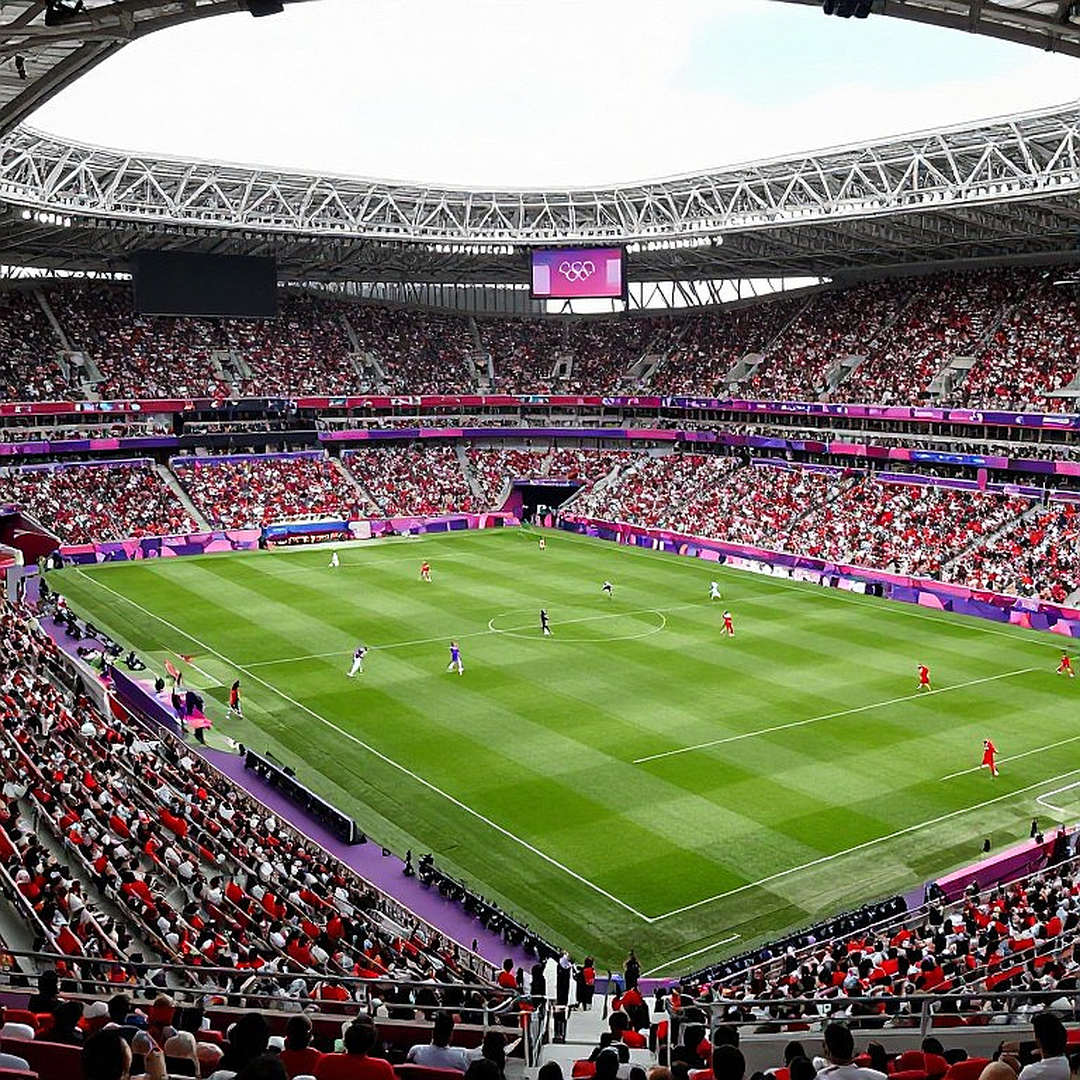
PUBG Asia Stars 2026 is described as an exchange-oriented tournament connecting regions. It is not a world championship, not an important qualifier. The tournament was organized so teams from Vietnam, Korea and other regions could gain experience. Because of its friendly nature, many thought integrity disputes would not happen in such a playground. The reality proved the opposite.
According to the analysis used as my source, KRAFTON confirmed that Himass and TanVuu, two Vietnamese PUBG players, used outside information during a match. Specifically, they were accused of watching opponents' streams during play to learn positions, an act considered a violation of competitive integrity in battle royale shooters.
But right after confirming the violation, KRAFTON also admitted something that made the case far more complicated: the tournament did not establish clear regulations from the start. There were no preventive rules, no evaluation criteria, no penalty framework published before the event. All disciplinary decisions were made after the incident occurred, in a context where public anger had already peaked.
To me, this detail is even more important than the players' behavior. When a tournament has no clear rules for a sensitive issue such as stream watching, any subsequent punishment, whether heavy or light, is easily seen as arbitrary. I have heard organizers say they were acting in the spirit of sport, but the spirit of sport cannot replace a written regulation understood equally by both sides.
From an unsatisfactory apology
On April 15, 2026, Yoon Soo-jin, head of PUBG Publishing at KRAFTON, publicly apologized for the handling of the case. The apology admitted three shortcomings: first, the publisher did not establish clear regulations from the beginning; second, communication between languages was inconsistent, causing misunderstanding for Vietnamese players and fans; third, the publisher did not adequately protect participants when the drama began to spread.
Structurally, this is a textbook apology. A leader directly accepted responsibility, did not blame the players, and did not dodge questions. But in terms of problem-solving, the apology was nearly worthless.
The Vietnamese community reacted immediately. On forums, fans kept asking: does the apology clarify the disciplinary process? Does it explain why information in Korean and Vietnamese differed? Does it reach a conclusion on the allegation against Soopi? The answer to all three is no.
An apology without concrete action, without a timeline for announcing the punishment, without a commitment to amend regulations, is just a press release. I have witnessed many communication crises in sport, from football to esports. The common feature of the longest crises is not the initial mistake, but the delay in giving a definitive answer.
The protagonists: Himass, TanVuu and a crack named Eddie
Himass is a well-known PUBG player in Vietnam. TanVuu is also familiar to the community. Both were confirmed to have used outside information during PUBG Asia Stars 2026. KRAFTON revoked their PUBG Vietnam Partner status immediately, before the official disciplinary ruling.
Revoking partner status is a severe commercial blow. In the PUBG ecosystem, the partner title usually carries revenue, content and media collaboration benefits. When revoked, a player loses not only a label on a profile, but part of their ability to earn from their reputation. Notably, this commercial penalty was applied before the official sporting sanction was announced.
Alongside Himass and TanVuu, another name appears in related articles: Eddie. He was not confirmed to have violated anything, but was described as collateral damage due to a weak interpreter. An international article accidentally dragged Eddie into the scandal. This is a classic example of reputational contagion: an incident does not only harm the directly involved, but also sweeps in people standing nearby.
I remember a phrase from a veteran editor: when you write a player's name wrong, you not only offend that player, but also all who love him. Three mispronounced names in one football match taught me that the match does not belong to anyone, not even the storyteller. In this PUBG case, Eddie being loosely associated is similar to a wrong name. It shows how a lack of care in communication can create unnecessary wounds.
Soopi: an unresolved allegation that fuels outrage
While Himass and TanVuu were confirmed to have violated the rules, the other side is a completely different story. Soopi, a Korean streamer, was suspected by the Vietnamese community of stream-sniping during the match. A video questioning Soopi's actions spread quickly.
But so far, KRAFTON has not made any official conclusion about this allegation. While Himass and TanVuu have already lost partner status, Soopi has not been sanctioned. This asymmetry became the biggest trigger for Vietnamese fans' anger.
I understand that in process terms, confirming cheating requires clear evidence. Soopi being suspected does not mean Soopi is guilty. But from a communication perspective, staying silent while one side is sanctioned and the other has no conclusion creates a vacuum that fans will fill with negative judgments. That vacuum was not created by the two Vietnamese players. It was left by the organizer.
The more silence, the more people believe there is hidden protection for a Korean streamer. The more silence, the more the story becomes a confrontation between a small-region player being sacrificed and a publisher insider being favored. Even if reality is different, public perception is enough to create a deep trust crack.
The one-year ban rumor: an unverified flood
While KRAFTON had not announced an official sanction, a rumor began to spread: Himass could be banned for up to one year. The rumor was widely shared, and many spoke of it as if it were already a decision.
The source analysis I used emphasizes that the one-year ban information was completely unconfirmed. KRAFTON was still processing, and the disciplinary result would be announced separately. There was no official statement about the penalty level. The author of the analysis had to repeat several times that the one-year figure was only a rumor.
I have worked in sports storytelling for seventeen years, and I know one thing: when unverified information is widely shared, it is a sign of an information vacuum. People do not like ambiguity. When there is no official answer, they create their own. And the self-created answer is usually more pessimistic than reality.
The one-year rumor does not only hurt Himass. It also hurts KRAFTON's process. If the final penalty is only a few months, the community may feel relieved but also doubt consistency. If it is exactly one year, many will believe the publisher was pressured by the rumor. Either way, the rumor has already damaged the public's frame of reference.
The nature of BR: a structural vulnerability
Many call this a cheating case. But looking closer, it stems from the very structure of the battle royale genre.
PUBG is a survival game with a large map and many teams competing simultaneously. In a match, position information is extremely valuable. If a team can watch another team's stream, they will know where opponents are, where they are moving, and can avoid or ambush them. That is why stream delay is the only barrier against outside-information advantages.
This means the risk will not disappear after a patch. A patch can balance weapons, fix map bugs, but cannot fix the vulnerability of a player opening a browser tab while waiting for the circle. This vulnerability is in the genre's architecture, not in the game's code.
So the solution is not a patch. The solution is a strict event-operations protocol: clear rules about outside information, stream delay, monitoring of player equipment, and sanctions for both players and streamers participating in official events.
In a football match, the referee can blow the whistle when a player fouls. In PUBG, no referee can see every player's screen. Therefore, rules must be the first and most important barrier. When that barrier is not built, all talk about sportsmanship is just empty words.
Governance gap: the publisher as rule-maker, investigator and punisher
One of the biggest blind spots in esports is the governance model. KRAFTON is simultaneously the publisher, organizer, investigator, and judge. In such a system, there is no independent third party.
This does not mean KRAFTON intentionally favors anyone. But it creates an uncomfortable perception: if the publisher punishes Vietnamese players more heavily than a Korean streamer, fans will always have the right to suspect that nationality influenced the decision. Even if the decision is procedurally fair, the appearance of bias is enough to destroy trust.
PUBG Asia Stars 2026 is a textbook example. The publisher admitted it had no clear regulations, admitted inconsistent multilingual communication, admitted failure to protect participants. Yet the publisher remains the only one with the authority to decide the punishment. The sanctioned player has no independent appeal mechanism. The community has no official oversight channel.
I think about what happened in European football: when a ruling is controversial, people do not only look at the content of the ruling, but also at the process. Was the club heard? Were the evidence published? Was there an independent appeals body? These questions create the legitimacy of a ruling. At PUBG Asia Stars 2026, those questions were mostly unanswered.
The fans' story: deleting the game, boycotting, and unruly anger
When KRAFTON's apology was deemed unsatisfactory, the Vietnamese community began to act. Some streamers announced they would delete PUBG in protest. On forums, discussions continued non-stop. The atmosphere showed no sign of cooling.
Streamers deleting the game is a powerful symbolic act. They are not just expressing dissatisfaction with a decision, but sending a market signal. KRAFTON may not immediately feel a drop in revenue, but the image of influencers leaving a game is a worrying signal.
I once wrote about stadiums without spectators during the pandemic. I realized then that an empty stadium does not erase the cheers; it only moves them into our memories. In esports, when fans feel unfairly treated, they do not need to light flares or sing anthems. They simply leave. But their leaving is quiet, and it may be much harder to reverse than reform promises.
The anger of Vietnamese fans does not only come from the punishment of two players. It comes from the feeling that their voice was not heard. When information in Korean and Vietnamese is inconsistent, when an apology does not answer the main question, when a one-year ban rumor flies around without official response, fans have reason to believe they are being treated as second-class citizens.
Multilingual communication: a simple gap that was ignored
One of the shortcomings KRAFTON admitted is inconsistent communication between languages. This seemingly simple mistake can cause enormous consequences.
In a tournament with multiple regions, publishing information in multiple languages is mandatory. It is not enough to translate words; you must convey nuance. A vague answer in Korean can become a harsh declaration in Vietnamese. A promise in English may not appear in the Korean statement.
In this case, the players said they asked the organizer before the match about watching streams and were told it was not banned. If true, the organizer's responsibility becomes enormous. But the organizer denied this. Who is right? If there were a system recording questions and responses in bilingual form, this story would not be in this state.
The absence of evidence about the pre-match inquiry allows each side to tell a different story. And when there is no agreed version, the community chooses the version that fits their emotions. The result is that the case is no longer about two players, but about a whole region being treated disrespectfully.
Contrarian view: a heavy penalty is not necessarily justice
Many fans are demanding KRAFTON punish Himass and TanVuu severely. They think a heavy penalty will prove the publisher does not cover up and will appease the anger.
I do not think so. A heavy penalty in a context where no rules existed beforehand creates a dangerous precedent: organizers can freely punish after the fact without publishing rules in advance. That means future players will never know exactly what behavior is allowed and what is prohibited. They will live in fear that any action could be labeled a violation.
A healthy disciplinary system comes not from harsh penalties, but from clarity. Players need to know the limits in advance. Organizers must follow what they have published. The community needs to see a transparent process. Without these three elements, a penalty, no matter how heavy, is only an exercise of power, not justice.
In this case, KRAFTON's admission that it did not have clear rules from the start is an important mitigating factor for Himass and TanVuu. If they truly asked the organizer and were told stream-watching was not banned, their behavior cannot be judged on the same level as deliberate cheating in a tournament with clear rules.
Broader impact on the esports ecosystem
This case does not stop with two Vietnamese players. It raises larger questions for the entire esports industry.
First, regulations for streamers and influencers in official events are still open. Soopi is a streamer, not a competitor, yet she appeared in a match within an official tournament. Is she bound by the same code of conduct? If not, someone could use the streamer label to gather information without restriction.
Second, disciplinary handling raises the question of the publisher's role in protecting players from online attacks. As the case spread, Himass and TanVuu may have faced harsh criticism, even threats. KRAFTON admitted it did not protect them adequately. That is an important admission, but it must be turned into concrete protection mechanisms in the future.
Third, the case shows the need for an independent appeal mechanism in esports. When the publisher is organizer, investigator and judge, conflict of interest is inevitable. Big tournaments like PUBG Asia Stars need a disciplinary panel including independent members, possibly from multiple regions, to ensure objectivity.
This is not an isolated incident. I have seen similar cases in other games, where a player was punished for a behavior not clearly prohibited, while someone with a good relationship with the publisher escaped. Every such case erodes community trust. And when trust erodes long enough, the whole esports industry pays the price.
Storytelling through silence: the unshown corner
As a sports documentary scriptwriter, I often look for what is not on the broadcast. During a match, the camera always points at the main screen, where firefights unfold. But few notice the player area, where officials walk by, where interpreters whisper sentences that can change a person's fate.
What the camera does not capture is often the most worth capturing. In this case, the interpreter's pre-match answer may be the most important detail. But no camera recorded it. No minutes. No audio recording. There are only testimonies from two sides with different memories.
I have learned that in sport, not every truth is in the footage. Some truths lie in the silence between questions and answers. Without a serious information-recording process, those truths will remain buried, and the community will build a story from scattered fragments.
Eddie's story is proof. He appeared in an article only because of an interpreter's mistake. No one intended to hurt Eddie, yet he was dragged into the spiral. If the writers had been more careful, if editors had verified more thoroughly, Eddie would not have faced suspicious eyes. The responsibility of a sports journalist is not only to report fast, but to report accurately. And accuracy means not harming the uninvolved.
Vietnam market: fan power and the publisher's concern
Vietnam is one of PUBG's important markets. The player community is large, passionate and organized. When the case broke, streamers deleted the game, forums flooded with angry posts, and a boycott atmosphere spread.
I do not know exactly how KRAFTON's revenue in Vietnam is affected. But I know that a market with passionate fans can be easily wounded when they feel betrayed. Vietnamese fans do not only love the game; they invest their emotions in the players representing them. When those players are treated unfairly in their eyes, everything can collapse quickly.
It is worth noting that fans' anger does not entirely stem from the fact that the two players violated rules. Many admit Himass and TanVuu are at fault. But they cannot accept one side being sanctioned while the other is allowed to remain silent. They cannot accept the publisher admitting mistakes but giving no clear path to fix them.
If KRAFTON wants to keep the Vietnamese market, they must resolve the case transparently and quickly. Not through a generic apology, but through a detailed disclosure of the process, a conclusion on the Soopi allegation, and new regulations for future tournaments.
From keyboard to heart: esports is also sport
Many still regard esports as mere video games. They do not understand why fans get so angry when a player is sanctioned. But I, who have worked in both traditional sport and esports, can confirm that between the real and the virtual arena, only the name differs; the heart is the same.
When a football player is wrongly sent off, fans may light flares, boo the referee, and file complaints. When a PUBG player is punished under an unclear rule, fans have similar reactions, only expressed through keyboards, live streams and long forum posts. The emotion is real. The pain is real. And the need to be heard is real.
I once sat in a script meeting where people debated how to make viewers feel a match's pulse. An old director told me never to zoom in on a player's face after scoring, but to zoom in on the player after a foul when no one apologizes. The silence after an injustice is what viewers remember.
PUBG Asia Stars 2026 is at that exact moment. Not the moment Himass and TanVuu were confirmed to have violated rules. Not the moment KRAFTON apologized. But the present moment, when everyone is waiting, when no one knows what will happen next. This waiting and ambiguity will shape how people remember the case.
The questions KRAFTON must answer
At the time this article is completed, KRAFTON has not yet announced the official penalty for Himass and TanVuu. There is also no final conclusion on the accusation against Soopi. The more questions left open, the further the story risks drifting from the truth.
First question: did KRAFTON record the conversation in which the players were told stream-watching was not banned? If yes, where is the recording or minutes? If no, why did a professional tournament not record such important exchanges?
Second question: how will KRAFTON handle Soopi when the accusation remains unresolved? Staying silent will only deepen suspicion. A clear conclusion, whether exonerating or punishing, is far better than prolonged ambiguity.
Third question: does KRAFTON commit to publishing outside-information rules before all future tournaments begin? If not, similar cases will continue. And next time, more than two players may be swept in.
I do not write this article to answer those questions. I write to show that those questions exist. And they are waiting for an answer from the publisher.
Lessons for sports media
This case is also a deep lesson for sports journalists and content creators like me. In the age of social media, anyone can report. Anyone can post a shocking video with a caption. But the responsibility of a sports journalist is not only to be present at the right time, but to stay long enough to verify.
When the one-year ban rumor spread, many media channels published it as fact. They did not verify with KRAFTON, did not wait for an official statement, did not question the source. As a result, an entire community was led by an unconfirmed number.
I made a similar mistake in the past. In 2026, I mispronounced a football player's name three times during a live broadcast. I received enormous criticism. Since then, I set a rule: never write a name I have not heard pronounced correctly, and never report a number I have not verified with an official source. That rule makes me slower than my colleagues many times. But it also helps me avoid irreparable mistakes.
In the PUBG Asia Stars 2026 case, I choose to write about process and structure, rather than chasing the penalty rumor. I believe that when the story settles, people will not need a shocking number, but a clear understanding of why things went so far.
The future of PUBG Asia tournaments
PUBG Asia Stars 2026 could become an important milestone, not because of great matches, but because of the governance problems it exposed. If KRAFTON knows how to use this crisis, they can turn it into an opportunity to set a new standard for cross-regional tournaments.
The first step is to publish the entire handling process transparently. No hiding, no half-statements. The second is to publish the investigation result on Soopi. Whatever the result, publishing it will show the publisher is impartial. The third is to enact a clear code of conduct and violation-handling framework for all upcoming tournaments.
Additionally, KRAFTON should consider forming an independent disciplinary panel, with representatives from all regions, to avoid future accusations of bias. This may be costly and time-consuming, but it builds trust. And trust is what esports desperately needs.
If these steps are not taken, the crisis will recur. Next time, it may not be at PUBG Asia Stars, but at a larger event. Without clear rules, whether at any tournament, debates about stream-watching will never end.
From another angle: the players' responsibility
I do not want to excuse Himass and TanVuu. If they watched streams during the match, that is a mistake. In any competitive environment, seeking advantage through outside information contradicts the spirit of sport. Even if the rules were silent, a professional player should understand moral boundaries.
But the players' responsibility does not reduce the organizer's responsibility. When a rule is unclear, when communication is inconsistent, when players must guess what is allowed, that is the system's fault. A good system does not put players in a position of guessing. It says clearly: what is allowed, what is not, and what are the consequences.
I remember interviewing a former football player about offside. He said: if the referee does not explain the law, players will create their own laws. And when each player creates a different law, the match becomes chaos.
PUBG Asia Stars 2026 is showing us a chaotic version of esports. When rules are not written, everyone starts asking questions. And their answers are never the same.
Why Vietnamese fans feel betrayed
This story cannot be understood without cultural context. Vietnamese fans are used to their teams fighting hard to gain recognition internationally. When a Vietnamese player gets into trouble, fans tend to defend, not because they are blind, but because they know the harshness of the competitive environment.
When Himass and TanVuu were sanctioned, many fans did not question their behavior. They questioned the fairness of the process. Why was one side confirmed and sanctioned immediately, while the other was only suspected with no conclusion? Why did Vietnamese information not match Korean information? Why could an exchange-level tournament create such a huge crisis?
These questions are not protection for wrongdoing. They reflect a need for transparency. When that need is not met, the sense of betrayal spreads. Once betrayal spreads, restoring trust is much harder than resolving a single incident.
Untold paths
I do not write endings; I only look for untold paths. In this case, there are many such paths.
The first path is the story of the weak interpreter. Without the translation error, would Eddie have been pulled in? Would Himass and TanVuu have received accurate information? An interpreter does not only translate words; they transmit the responsibility of explaining the rules. When the interpreter does not understand the rules, everything can fall apart.
The second path is the story of fans who deleted the game. They did not delete because they hate the game. They deleted to send a message. What is that message? They want to be heard. They want the publisher to understand that fairness cannot be negotiated.
The third path is the story of KRAFTON. KRAFTON is not an evil corporation. They admitted mistakes, something many publishers dare not do. But admitting mistakes is not enough. They must prove they have learned from them. And the only way is to change operational processes.
Every path has its own turns. I do not know where this story will end. But I believe that if all sides listen to each other, this crisis can become a valuable lesson for the entire esports industry.
Community demand: clear process, no exceptions
The source analysis shows the community is demanding KRAFTON clarify the entire handling process, especially rules concerning outside information during matches. This is a completely reasonable demand.
In any field, transparent process is the foundation of justice. Without process, every ruling becomes suspicious. The community does not need to know the names of every disciplinary panel member, but they need to know the criteria used to evaluate behavior. They need to know why one action gets a heavy penalty and why another is ignored.
If KRAFTON does not yet have those rules, they should draft and publish them before issuing the penalty. This may slow the process, but it will help people understand that the penalty is not arbitrary. A penalty that follows a transparent process always has more credibility than one born in darkness.
And once published, the rules must apply to everyone, without exceptions. If a Korean streamer is suspected of stream-sniping, she must be investigated under the same process. If a Vietnamese player violates the rules, he must receive the exact penalty prescribed. Only then does fairness truly exist.
When esports matures
Esports is maturing. Tournaments are bigger, prizes are higher, fans are more numerous. But maturity does not only come from scale. It comes from the ability to handle difficult situations in a mature way.
A mature sport does not avoid hard questions. It faces them, builds processes, and accepts that the truth may not please everyone. A mature sport understands that fan trust is its most valuable asset, and that asset cannot be traded for hasty decisions.
PUBG Asia Stars 2026 is putting KRAFTON through a maturity test. Are they brave enough to publish the full process? Are they wise enough to listen to the community? Are they patient enough to build a fairer governance system?
The answer lies in the coming weeks. But whatever the result, this story has shown one thing: esports is no longer a children's game. It is a major industry with major responsibilities. And those responsibilities cannot be ignored.
Conclusion: when rules never existed, any penalty is only a promise
I began this article with a clip of Soopi. I end it with a question to KRAFTON: dare they write the rules that should have been written from the start?
If they do, this crisis will become an important milestone, not only for PUBG, but for esports. If they do not, the story will just be another scar on an industry that already has too many scars.
Every rough gem once lay in the mud, waiting for a patient gaze. But in this case, what lies in the mud is not a player. It is the community's trust. And trust, once buried by ambiguity, is very hard to find again.
An empty stadium does not erase the cheers - it only moves them into our memories. Likewise, an apology does not erase the anger. It only moves that anger into another form, perhaps deeper and longer-lasting. The only remaining question is: does KRAFTON have enough patience to listen, and enough courage to change? I hope so, but time will tell.